▶ Watch the original YouTube video
Decoding Detective Precure: The True Purpose Behind Eclair’s Resurrection and the Hidden Threat
A deep analysis of the Detective Precure series reveals that Eclair’s resurrection is far more than a simple character revival—it signals the convergence of fragmented divine power and the emergence of a true antagonist. Drawing on 15 years of Precure franchise analysis, this investigation explores the complex narrative structure, time paradoxes, and hidden connections that suggest the story is only beginning.
What Happened
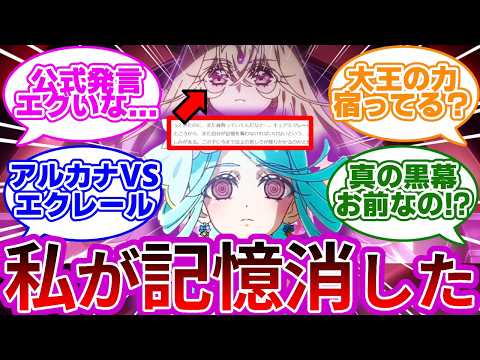
Detective Precure introduces a narrative centered on Eclair’s resurrection, an event that appears to trigger a cascade of consequences throughout the story. According to official interviews, the character Arcana faces a critical dilemma: she must erase Eclair’s memories once again to prevent catastrophe. This setup diverges significantly from typical Precure storylines, suggesting that Eclair’s return marks not a resolution but the beginning of a far more complex conflict involving time manipulation, fragmented divine power, and hidden antagonists.
Why It Matters
The Detective Precure narrative structure represents an evolution in the franchise’s storytelling approach. Rather than presenting a straightforward hero-versus-villain dynamic, the series weaves together themes of temporal paradox, moral ambiguity, and the nature of sacrifice. Understanding Eclair’s resurrection and its implications provides insight into how modern magical girl narratives can explore philosophical questions about destiny, free will, and the cost of altering history. For longtime Precure fans, this complexity signals a maturation of the franchise’s thematic scope.
Background
The Precure franchise has evolved significantly since its debut in 2004. Over the past 15 years, the series has experimented with increasingly complex narrative structures. Early entries like Precure 5 (2008) introduced the concept of antagonists with hidden motivations and moral complexity. Later series such as Heartcatch Precure (2010) and Smile Precure (2012) expanded on themes of fractured power sources and the inversion of good and evil. Detective Precure builds upon these foundations by introducing time travel as a central narrative element, drawing parallels to acclaimed works like Steins;Gate and Re:Zero that use temporal mechanics to explore causality and paradox.
The introduction of Eclair’s distinctive heterochromatic eyes—one eye a different color from the other—carries symbolic weight in anime and gaming traditions, typically representing dual powers, precognition, or the ability to traverse different worlds. This visual design choice suggests that Eclair serves as a vessel for significant supernatural forces.
Key Points
- Eclair’s Resurrection as Narrative Pivot: Eclair’s return is not a simple victory but a trigger event that forces Arcana to confront an impossible choice regarding memory erasure, suggesting deeper stakes than initial appearances suggest.
- Heterochromatic Eyes and Divine Power: Eclair’s distinctive eye coloring likely indicates she harbors the power of a supreme being or deity, making her a critical component in the story’s larger power structure.
- Fragmented Power Distribution: Evidence suggests that divine power has been distributed across multiple characters—Eclair, Arcana, and the Answer Group Phantom—forming pieces of a larger puzzle that, when complete, may manifest a true antagonist.
- Time Paradox and Lulu’s Role: The character Lulu (or the false Waffle) may be a fairy from the future attempting to alter history by erasing specific memories, creating a bootstrap paradox where past and future causality become entangled.
- Hidden Antagonist Theory: Current enemy characters may be manifestations or fragments of a greater threat, with their completion signaling the emergence of the true villain.
- Shared Design Motifs: Detailed visual analysis reveals common geometric patterns in the costume designs of Eclair, Arcana, and the Answer Group Phantom, indicating intentional narrative connection rather than aesthetic coincidence.
Narrative Structure Analysis
Parallels to Previous Precure Series
Detective Precure’s structure mirrors earlier franchise entries in significant ways. Precure 5 established the pattern of antagonists possessing hidden motivations and serving larger forces. The character Dune, initially presented as an absolute villain, was revealed to operate under orders from a superior, fundamentally recontextualizing his role in the narrative. Similarly, Arcana’s compulsion to erase Eclair’s memories suggests she acts under constraint rather than pure malice, implying a greater power directing her actions.
Heartcatch Precure introduced the concept of fragmented divine power distributed among multiple enemy commanders, each possessing pieces of a unified force. The visual and thematic connections between these characters were encoded in their costume designs—a technique that appears replicated in Detective Precure through the shared geometric motifs observed in Eclair, Arcana, and the Answer Group Phantom’s appearances.
The Heterochromatic Eyes Symbolism
In anime and visual media, heterochromatic eyes—eyes of different colors—consistently symbolize duality of power or perspective. Historical precedent includes characters who embody contradictory forces or possess the ability to perceive multiple realities simultaneously. Eclair’s heterochromatic design suggests she functions as a conduit or vessel for a supreme being’s power, making her resurrection not merely a character return but the activation of a dormant force within the narrative world.
Power Distribution and Costume Symbolism
Viewer analysis has identified a compelling pattern: the distribution of divine power across Eclair, Arcana, and the Answer Group Phantom mirrors the structure of Heartcatch Precure, where enemy commanders represented fragmented aspects of a unified force. The shared costume motifs—geometric patterns and design elements appearing across all three characters—suggest intentional visual encoding of their narrative connection. This is not merely aesthetic unity but a storytelling device indicating that these characters are pieces of a larger whole.
Time Travel and Temporal Paradox
Lulu and the Bootstrap Paradox
The hypothesis that Lulu (or the false Waffle character) originates from the future introduces a bootstrap paradox structure similar to acclaimed time-travel narratives. In such scenarios, the protagonist’s attempts to prevent a catastrophic future inadvertently create the conditions necessary for that catastrophe to occur. Lulu’s memory-erasing activities may represent desperate attempts to alter history by removing the causal events that lead to future disaster.
This interpretation explains seemingly contradictory behavior: Lulu’s actions appear destructive from the present perspective but may be motivated by knowledge of future consequences. The memory erasures are not acts of malice but surgical interventions in causality, with Lulu serving as an unwitting instrument of temporal mechanics rather than a traditional villain.
The Artifact “Yoroi” and Temporal Interference
The artifact designated “Yoroi” (referenced with the year 1999) serves as a material anchor for temporal interference, consistent with time-travel narratives where physical objects mediate cross-temporal effects. The distortion of spacetime upon Lulu’s descent suggests that her very existence creates paradoxical ripples through the narrative world, indicating that the present timeline is fundamentally unstable.
The True Antagonist Theory
Multiple Precure series have employed a narrative structure where seemingly independent antagonists are revealed to be fragments or manifestations of a unified greater threat. Heartcatch Precure, Smile Precure, and the All-Stars films all employ this pattern. Detective Precure appears to follow suit, with current enemy characters potentially representing distributed aspects of a supreme antagonist.
The completion of Eclair’s resurrection may constitute the final puzzle piece, allowing the true antagonist to fully manifest. This structure parallels the emergence of “Walpurgis Night” in Madoka Magica, where the convergence of fragmented magical power creates an overwhelming threat. The narrative suggests that the story’s true conflict has not yet begun, with current events representing preparatory stages.
Perspectives
The Redemption Interpretation: Some viewers propose that Arcana and other apparent antagonists are not truly evil but are constrained by circumstances beyond their control, forced to act against their will by a greater power. This reading emphasizes moral complexity and suggests that resolution may involve understanding rather than defeat.
The Sacrifice Narrative: An alternative perspective suggests that Lulu may be engaged in self-sacrifice, deliberately becoming a villain to alter history and prevent greater catastrophe. This interpretation draws from Smile Precure’s thematic exploration of antagonists who choose darkness for utilitarian reasons.
The Skeptical View: Some analysts argue that the “true antagonist” hypothesis, while thematically consistent with Precure tradition, lacks direct textual evidence and may represent over-interpretation of visual motifs and narrative patterns.
Insights
Detective Precure represents a significant evolution in the franchise’s narrative sophistication. By centering the story on temporal mechanics and moral ambiguity rather than straightforward heroism, the series explores how magical girl narratives can engage with philosophical questions about causality, sacrifice, and the ethics of altering history.
The resurrection of Eclair functions as more than a plot device—it serves as the convergence point for fragmented narrative threads. The heterochromatic symbolism, distributed power structure, and shared costume motifs all suggest an intentional design where multiple characters are pieces of a larger puzzle. When assembled, these pieces may reveal a truth that fundamentally recontextualizes the entire story.
The most compelling aspect of Detective Precure is its demand that viewers engage in active interpretation. Unlike earlier Precure series that presented clearer moral distinctions, this narrative requires audiences to question character motivations, analyze visual symbolism, and consider alternative interpretations of events. This approach elevates the franchise beyond simple entertainment into the realm of collaborative storytelling, where fan analysis becomes part of the narrative experience itself.
A critical unresolved question remains: the identity of the detective who rescued Miku. This mystery may represent the final key to understanding the story’s true structure. The emergence of this character could signal the narrative’s true turning point and the revelation of forces operating beyond current visibility.
Detective Precure ultimately demonstrates that magical girl narratives, when executed with thematic depth and narrative complexity, can explore sophisticated concepts while maintaining the genre’s core appeal. The series invites viewers to become detectives themselves, investigating not merely the plot but the deeper structures of storytelling, symbolism, and causality that underpin the narrative.