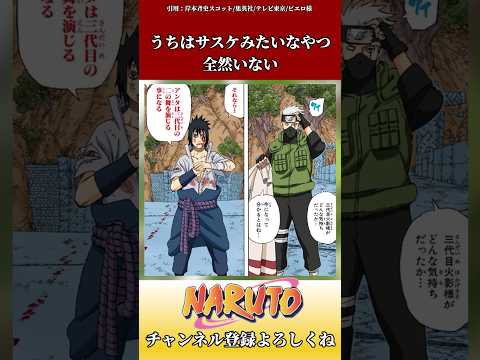
▶ Watch the original YouTube video
Why Sasuke Kept Falling to Darkness: A 15-Year Analysis of NARUTO’s Most Controversial Character Arc
Over 15 years of following NARUTO, one character stands out as uniquely problematic: Uchiha Sasuke, who experienced an unusually prolonged descent into villainy that baffled editors and captivated audiences. This extended character arc became so distinctive that it spawned the industry term “Sasuke archetype,” fundamentally changing how rival characters are written in subsequent manga.
What Happened
Sasuke Uchiha, introduced as Naruto’s rival, underwent an unprecedented transformation throughout NARUTO’s serialization. Rather than following the typical Jump manga pattern of rivals either reforming or being defeated, Sasuke repeatedly shifted allegiances and motivations across multiple story arcs. He transitioned from a revenge-driven shinobi to a seeker of truth, then to a would-be world reformer, and eventually approached antagonist status. This prolonged moral descent lasted far longer than any comparable character in manga history, creating what fans now call the “Sasuke archetype.”
Why It Matters
Sasuke’s extended character arc represents a fundamental shift in how manga writers approach rival and deuteragonist characters. The phenomenon was significant enough to influence industry trends: subsequent Jump titles began featuring rival characters whose potential descent into darkness became a recurring point of fan speculation. This pattern appeared in series like My Hero Academia (Todoroki), Attack on Titan (Reiner), and others, all bearing the structural hallmarks of Sasuke’s controversial arc. The character’s trajectory also reveals the tension between editorial demands and creative vision in serialized manga production.
Background
NARUTO began serialization in 1999, with Sasuke introduced as a prodigious rival to protagonist Naruto Uzumaki. From the outset, Sasuke possessed an unusual combination of traits: genius-level talent, aristocratic heritage as an Uchiha clan member, and a singular motivation—revenge against his older brother Itachi. Unlike traditional Jump rivals, Sasuke was positioned as a quasi-deuteragonist, sharing narrative weight with Naruto rather than serving as a straightforward antagonist.
The character’s complexity intensified during Part II of the series. Sasuke’s goals shifted from personal revenge to broader philosophical questions about justice and truth. His interactions with various factions—including the criminal organization Akatsuki—blurred moral lines and extended his period of moral ambiguity far beyond what editors apparently anticipated. Reports suggest that editorial staff pressured creator Kishimoto Masashi to resolve Sasuke’s status, with comments such as “kill him off or do something” reflecting their frustration with the character’s prolonged liminal state.
Key Points
- Unprecedented Duration: Sasuke’s descent into darkness lasted longer than any comparable character in manga, spanning multiple story arcs across both Part I and Part II of the series.
- Editorial Pressure: NARUTO’s editorial team expressed frustration with Sasuke’s handling, indicating a disconnect between creator intent and editorial expectations regarding the character’s resolution.
- Dual Protagonist Structure: Sasuke functioned as a co-protagonist rather than a traditional rival, creating narrative tension that required his continued moral descent to contrast with Naruto’s growth.
- Industry Influence: The “Sasuke archetype” became a recognizable pattern in subsequent Jump series, with rival characters routinely expected to undergo moral crises or potential villainy.
- Philosophical Ambiguity: Sasuke’s motivations evolved from personal revenge to abstract concepts of truth and justice, complicating reader interpretation of his actions as objectively “evil” versus ideologically opposed to Naruto.
- Final Resolution: Sasuke’s ultimate redemption came not through traditional character reformation but through Naruto’s intervention, suggesting a complex psychological realignment rather than simple moral conversion.
Timeline of Sasuke’s Descent
- Part I (1999-2004): Sasuke operates as a rival with clear revenge motivation; his departure from the Hidden Leaf Village marks his first major moral transgression.
- Part II Early (2007-2009): Sasuke trains under Orochimaru, a criminal figure, representing his first extended period of association with villainy.
- Part II Middle (2009-2012): Sasuke’s goals shift from personal revenge to abstract pursuits; he joins the Akatsuki organization, approaching full antagonist status.
- Part II Late (2012-2014): Sasuke’s motivations become increasingly abstract and destructive; he approaches “final boss” status in the narrative hierarchy.
- Final Arc (2014-2015): Naruto’s intervention and their climactic confrontation lead to Sasuke’s psychological realignment and eventual acceptance of his role as a protector rather than a destroyer.
Perspectives and Analysis
The Structural Necessity Argument: Sasuke’s prolonged descent may have been narratively necessary rather than editorial failure. As a dual protagonist structure, NARUTO required Sasuke to descend morally and ideologically as Naruto ascended. This inverse trajectory created thematic balance and sustained narrative tension across the series’ extended run.
The Character Design Problem: Sasuke’s initial characterization as a “perfect” character—talented, attractive, aristocratic—left limited room for traditional character growth. Perfect characters can only express internal conflict through descent, as upward mobility becomes narratively redundant. This structural limitation may have forced Sasuke into an extended downward arc.
The Reader Expectation Factor: Creator Kishimoto may have deliberately subverted reader expectations by repeatedly preventing Sasuke’s redemption or defeat. Early 2000s fan forums show readers consistently predicting Sasuke’s reformation, yet the narrative repeatedly denied this resolution. This strategic expectation-management extended the character’s arc across multiple story phases.
The Philosophical Reframing: Sasuke’s actions cannot be categorized as objectively “evil” but rather as ideologically opposed to Naruto’s worldview. His pursuit of truth and his later attempts at world reformation represent coherent (if destructive) philosophical positions rather than simple villainy. This ambiguity distinguishes Sasuke from traditional antagonists.
Industry Impact: The Birth of the “Sasuke Archetype”
Following NARUTO’s influence, subsequent Jump series adopted similar patterns with rival characters. Analysis of 2010-2020 Jump publications reveals a clear trend:
Early 2000s (Pre-Sasuke Impact): Rival characters like those in Bleach and The Prince of Tennis functioned as clear antagonists with defined moral positions. Reader speculation about their potential villainy was minimal.
Late 2000s (Sasuke Era): Rival characters became psychologically complex “quasi-protagonists” with ambiguous moral status. Reader speculation about potential darkness became routine.
2010s-Present (Post-Sasuke Influence): Rival characters routinely carry internal conflicts matching the protagonist’s in scope and intensity. Predictions of moral descent have become standard fan discourse for any significant rival character.
This shift represents more than character design evolution; it reflects fundamental changes in how serialized manga structures narrative tension and protagonist-antagonist relationships.
Insights and Broader Implications
Sasuke’s extended arc reveals several important truths about serialized manga production. First, the tension between editorial demands and creative vision can produce unexpected narrative outcomes. Rather than resolving Sasuke quickly as editors apparently requested, Kishimoto’s resistance to this pressure resulted in a character arc that became definitional for an entire generation of manga.
Second, the “Sasuke archetype” demonstrates that apparent creative failures can become industry-wide influences. What editors viewed as a problem—an unresolvable character—became a template for subsequent works. This suggests that editorial pressure and creator vision sometimes produce their most interesting results through productive conflict rather than alignment.
Third, Sasuke’s ultimate resolution—redemption through relationship rather than individual reformation—offers a sophisticated alternative to traditional character arcs. His final status as a protector emerges not from internal moral conversion but from external relationship with Naruto. This suggests that character development need not follow linear psychological progression.
Finally, the persistence of the “Sasuke archetype” in contemporary manga indicates that readers and creators find value in prolonged moral ambiguity and delayed resolution. The archetype’s continued influence suggests that audiences appreciate complex, unresolved character trajectories more than traditional redemption or defeat narratives.
After 15 years of engagement with NARUTO, the most significant insight is that Sasuke’s arc—despite editorial frustration and apparent narrative dysfunction—ultimately succeeded in creating one of manga’s most memorable and influential character studies. His refusal to follow conventional patterns, his prolonged moral descent, and his eventual complex redemption established a new standard for how rival characters could function within long-form serialized narratives.