▶ Watch the original YouTube video
After 15 years of following the Gundam franchise, one mobile suit stands out for the stark disconnect between its commercial name and its actual designation: Super Gundam. Despite being marketed under this name, the unit is never called “Super Gundam” in the anime itself—a naming contradiction that reveals deeper issues about how Gundam mobile suits are designed, marketed, and understood by fans.
What Happened
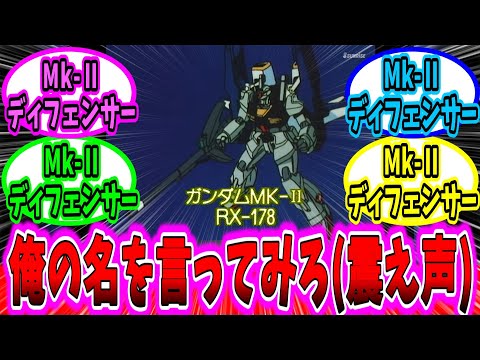
Super Gundam, a support mobile suit from Mobile Suit Z Gundam, carries a fundamental naming paradox. The unit’s official in-universe designation is “Mk-II Defender,” referring to its role as a defensive support system for the Gundam Mk-II. However, when the mobile suit was commercialized as a plastic model kit, Bandai assigned it the product name “Super Gundam”—a designation that never appears in the anime itself. This discrepancy has puzzled fans for decades and raises questions about the relationship between commercial branding and canonical storytelling in the Gundam franchise.
Why It Matters
This naming issue reflects broader tensions in how mecha anime franchises balance merchandising strategy with narrative consistency. The Super Gundam case demonstrates that product names and canonical designations can diverge significantly, creating confusion among fans and potentially undermining the mobile suit’s credibility. Understanding this distinction matters because it reveals how commercial pressures shape the way fictional technology is presented to audiences, and how fans navigate the gap between marketing and canon.
Background
Mobile Suit Z Gundam aired from 1985 to 1986, during a period when Gundam model kit sales were still being refined as a business strategy. The G-Defender system—the support unit that transforms the Mk-II into Super Gundam—was designed as a modular system capable of equipping multiple mobile suits, not exclusively the Mk-II. This universal design philosophy meant the support system lacked a specific identity tied to a single unit, making it difficult to justify a dedicated name in the narrative.
The naming choice of “Super Gundam” followed a marketing logic common in the 1980s: pairing the prestigious “Gundam” brand with the prefix “Super” to suggest enhanced capability and appeal to younger consumers. However, this approach created a semantic problem. In Japanese, the word “super” (スーパー) carries connotations of cheapness or superficiality that differ from its English usage in military contexts like “Super Hornet” or “Super Pershing.” This cultural perception may have influenced the production team’s decision to avoid using the name in dialogue.
Key Points
- Naming Confusion: Super Gundam is a product name assigned during commercialization; the canonical designation is Mk-II Defender, which is what appears in the anime.
- Modular Design: The G-Defender system was engineered as a multi-use support platform, not exclusively for the Mk-II, which explains why it lacks a dedicated narrative identity.
- Cultural Perception: The word “Super” carries different connotations in Japanese than in English, potentially influencing the production team’s reluctance to use the name in dialogue.
- Performance vs. Branding Gap: Despite its generic-sounding name, Super Gundam is actually a highly capable support unit that addresses all of the Mk-II’s combat limitations.
- Retroactive Canon: Later works like Mobile Suit Gundam: Advance of Zeon establish “Super Gundam” as a formal designation, suggesting the name was originally just one of several candidates.
- Fan Perception: Online communities recognize the naming contradiction and often prefer the “Mk-II Defender” designation as more accurate and professional.
Timeline
- 1985–1986: Mobile Suit Z Gundam airs; Mk-II Defender appears in the series without the “Super Gundam” designation.
- 1985–1986 (concurrent): Bandai releases Super Gundam plastic model kit, establishing the commercial product name.
- Later works: Mobile Suit Gundam: Advance of Zeon retroactively establishes “Super Gundam” as a formal designation option.
- 2020s: Online fan communities actively discuss the naming discrepancy, with some proposing hashtags to standardize the “Mk-II Defender” designation.
Perspectives
Production Intent: The production team likely avoided using “Super Gundam” in dialogue because the name conflicted with the unit’s actual role and the franchise’s established naming conventions. Mobile suit names in Gundam typically reflect their function or origin—”Zeon,” “Psycho Gundam,” “Guncannon”—whereas “Super” is merely a generic intensifier that reveals nothing about the unit’s purpose.
Fan Criticism: Online communities express frustration with the name on multiple levels. Some find it aesthetically poor compared to “Mk-II Defender.” Others point out the logical inconsistency: if the G-Defender system can equip multiple mobile suits, why is only the Mk-II version given a special name? This criticism suggests fans recognize the name as a commercial artifact rather than a canonical designation.
Marketing Perspective: From Bandai’s standpoint, “Super Gundam” was an effective product name designed to signal enhanced capability and appeal to consumers unfamiliar with the Gundam universe. The name leverages the prestige of the Gundam brand while suggesting superiority—a proven marketing strategy in the 1980s toy and model kit industry.
Design Philosophy: The G-Defender system represents an evolution of the original Gundam’s G-Armor support unit. Unlike G-Armor, which required the Gundam to transform into a mobile armor configuration, G-Defender maintains the Mk-II’s full combat capability while adding defensive and offensive enhancements. This more sophisticated design philosophy deserves a name that reflects its technical sophistication, which “Mk-II Defender” accomplishes but “Super Gundam” does not.
Insights
The Super Gundam naming paradox reveals a fundamental tension in how long-running franchises manage the intersection of commerce and canon. Product names, once established, develop their own cultural momentum and can overshadow official designations, even when fans recognize the distinction. In this case, the gap between “Super Gundam” and “Mk-II Defender” is not merely semantic—it reflects different priorities: commercial appeal versus narrative consistency.
The case also demonstrates that fans are sophisticated consumers of fictional media who actively analyze and critique the logic of worldbuilding. The online discussion around Super Gundam’s naming shows that audiences notice when commercial decisions conflict with narrative coherence, and they are willing to advocate for alternatives that better serve the story.
Finally, the Super Gundam example suggests that support mobile suits occupy an awkward position in the Gundam franchise. Unlike protagonist units, which receive prominent names and narrative focus, support systems like the G-Defender are often treated as secondary equipment. This hierarchical treatment may explain why the production team felt comfortable allowing a generic commercial name to diverge from the unit’s canonical designation—the support suit was never intended to be a narrative focal point in the way a main mobile suit would be.
For viewers approaching Mobile Suit Z Gundam today, understanding this distinction enriches the experience. The Mk-II Defender is not a poorly named unit—it is a thoughtfully designed support system whose actual designation reflects its true function. The “Super Gundam” name, while commercially useful, remains a product artifact that the narrative itself deliberately avoided, a choice that speaks to the production team’s commitment to internal consistency despite external commercial pressures.