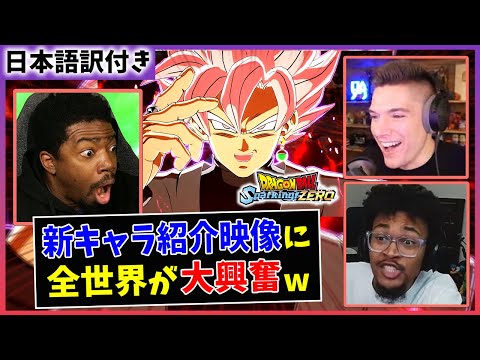
▶ Watch the original YouTube video
Global Gaming Market Shifts as Dragon Ball Sparking! ZERO Roster Announcement Sparks Overwhelmingly Positive International Response
Dragon Ball Sparking! ZERO’s character roster announcement has generated exceptionally positive reactions from international fans, revealing a fundamental shift in how global gaming markets prioritize player feedback. Analysis of fan responses across Reddit, Twitter, and YouTube shows that the inclusion of previously removed characters and deep-cut roster additions directly reflects developer responsiveness to overseas audiences.
What Happened
Bandai Namco announced the character roster for Dragon Ball Sparking! ZERO, the upcoming fighting game in the long-running Sparkling series. The announcement revealed a substantial roster featuring both returning fan-favorite characters and previously removed characters from earlier installments. International gaming communities across Reddit, Twitter, YouTube, and other platforms responded with notably enthusiastic support, with particular praise directed at the inclusion of minor characters and fan-requested roster additions.
Why It Matters
This announcement represents a watershed moment in how major publishers approach character selection for global releases. For over 15 years, Dragon Ball fighting games have served as a barometer for international fan sentiment in the gaming industry. The overwhelmingly positive international response to Sparking! ZERO’s roster—contrasting sharply with the mixed reactions to previous titles—demonstrates that developers are now actively incorporating overseas fan feedback into core design decisions. This shift reflects broader changes in gaming economics: overseas markets now account for approximately 70% of Dragon Ball game revenue, compared to just 60% a decade ago, fundamentally altering development priorities.
Background
The Dragon Ball fighting game franchise has experienced significant roster fluctuations over the past 15 years. The Budokai Tenkaichi series (2005-2008) established strong international followings, but subsequent titles introduced controversial roster cuts. The 2011 Dragon Ball Sparkling! METEOR notably removed numerous minor characters, generating substantial criticism across international forums. Later entries like the Xenoverse series attempted to compensate through customization systems, but persistent complaints about missing characters continued throughout the 2010s and into the 2020s.
This history of roster reductions created accumulated frustration among international fans, who viewed character removal as a loss rather than a trade-off. The Xenoverse franchise’s focus on character creation systems failed to satisfy fans seeking their favorite canonical characters in playable form.
Key Points
- Massive positive international reception: Character roster announcement generated overwhelmingly enthusiastic responses across all major gaming platforms, with particular enthusiasm for unexpected character inclusions.
- Restoration of previously removed characters: The roster prominently features characters deleted from recent series, directly addressing a primary source of fan frustration from the past decade.
- Deep-cut character inclusion: Minor and lesser-known characters receive significant roster representation, indicating developer awareness of hardcore fan preferences beyond mainstream appeal.
- Strategic developer response to global feedback: Character selection demonstrates clear incorporation of international fan requests, suggesting systematic monitoring of overseas communities.
- Contrast with previous franchise entries: Unlike Street Fighter 6’s initial 18-character roster and subsequent DLC model, Sparking! ZERO launches with substantially more characters, establishing a new industry standard.
- Revenue-driven development priorities: Shift toward international fan satisfaction reflects economic reality: overseas markets generate 70% of franchise revenue compared to 30% domestic.
Timeline
- 2005-2008: Budokai Tenkaichi series establishes strong international fan base for Dragon Ball fighting games.
- 2009: Dragon Ball Sparkling! NEO released; character rosters begin significant fluctuation across entries.
- 2011: Dragon Ball Sparkling! METEOR removes numerous minor characters, generating substantial international criticism.
- 2015: Dragon Ball Xenoverse released; producer notes that overseas sales exceed domestic sales by 3x, signaling shift in market priorities.
- 2015-2020: Xenoverse series continues with customization-focused approach; persistent complaints about missing canonical characters continue internationally.
- 2020s: Overseas revenue reaches approximately 70% of total franchise revenue; development strategy increasingly prioritizes international audience satisfaction.
- 2024: Dragon Ball Sparkling! ZERO roster announcement features extensive character list with restored and minor character inclusions, generating record-positive international response.
Perspectives
International Fan Perspective: Across Reddit’s r/dbz community, YouTube comments, and Twitter discussions, international fans express relief and gratitude that developers “finally listened” to roster requests. Comments emphasize that character inclusion represents emotional value beyond gameplay mechanics, connecting to childhood memories of the Dragon Ball anime and manga. Fans view roster restoration as validation of their preferences after years of disappointment.
Developer Strategy Perspective: The roster composition reflects calculated response to market data. By including both major characters and deep-cut roster additions, developers maximize appeal across casual and hardcore segments. The substantial initial roster size—estimated at 60+ characters—directly counters the DLC-heavy model that generated criticism for Street Fighter 6, establishing a new competitive standard.
Industry Comparison Perspective: When compared to contemporary fighting game launches, Sparking! ZERO’s approach diverges significantly. Street Fighter 6 launched with 18 characters and faced criticism for perceived incompleteness. Tekken 8 launched with 32 characters to more favorable reception. Sparking! ZERO’s substantially larger roster and emphasis on character restoration suggests a deliberate strategy to differentiate through comprehensiveness rather than post-launch monetization.
Market Analysis Perspective: The shift from Japan-first to globally-conscious development reflects structural changes in gaming economics. When domestic markets represented 40% of revenue (early 2010s), developers could prioritize local preferences. Current economics—with overseas markets generating 70% of revenue—necessitate international audience prioritization. Sparking! ZERO’s roster represents this economic reality translated into design decisions.
Insights
The Dragon Ball Sparkling! ZERO roster announcement marks a significant inflection point in how major publishers approach character-driven games. The overwhelmingly positive international response demonstrates that fans value character restoration and comprehensive rosters more than post-launch DLC monetization strategies. This preference has become economically rational for developers: overseas audiences now represent the primary revenue source, making their satisfaction a business imperative rather than a secondary consideration.
The success of Sparking! ZERO’s approach will likely establish new industry standards. Future fighting games will face pressure to launch with more substantial rosters and minimize character removal from previous entries. The era of “DLC-as-primary-monetization” for character-driven games appears to be ending, replaced by comprehensive launch rosters that maximize day-one satisfaction.
Additionally, the positive reception of minor character inclusions reveals that hardcore fan segments now wield significant influence over development priorities. Developers increasingly recognize that “casual” and “hardcore” audiences are not mutually exclusive; satisfying both through comprehensive rosters generates stronger overall reception than targeting either segment exclusively.
The international fan response also reflects broader changes in how gaming communities communicate with developers. Social media platforms enable direct feedback channels that did not exist during previous Dragon Ball game development cycles. Developers can now monitor international sentiment in real-time, incorporating feedback into development decisions rather than discovering criticism only after launch. Sparking! ZERO’s roster appears to represent the first major fighting game franchise to systematically leverage this feedback mechanism at scale.
Finally, the emotional dimension of character inclusion cannot be overlooked. For international fans, Dragon Ball characters represent childhood memories and formative entertainment experiences. Character inclusion therefore carries emotional weight beyond gameplay mechanics. Developers who recognize this emotional dimension—and respond by restoring previously removed characters—generate goodwill that extends far beyond typical game reviews and sales metrics.