▶ Watch the original YouTube video
Why the Super Minerva-Class Warship Deserves Its ‘Super’ Name: A Deep Dive Into SEED FREEDOM’s Ship Design Philosophy
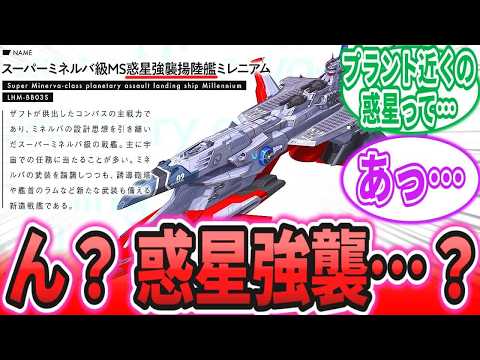
The Super Minerva-class battleship in Mobile Suit Gundam SEED FREEDOM underwent a last-minute name change from “Minerva-class 3rd Ship,” revealing the production team’s commitment to world-building consistency. This design choice reflects not just technical superiority, but a complex geopolitical strategy within the Cosmic Era universe.
- What Happened
- Why It Matters
- Background
- Key Points
- Design Philosophy Comparison
- Perspectives: The Strategic Rationale Behind Super Minerva
- Tactical Implications: Crew Capability and Ship Design
- Insights: What Super Minerva Reveals About SEED FREEDOM’s World-Building
- How to Experience SEED FREEDOM More Deeply
- Community Reception and Analysis
What Happened
The Super Minerva-class warship featured in Gundam SEED FREEDOM was originally designated as the “Minerva-class 3rd Ship” during development. However, the production team at Bandai Namco Filmworks made a last-minute decision to rename it “Super Minerva” based on directorial guidance. According to the film’s production notes, the director objected to calling the ship “Minerva-class” because “Minerva no longer exists,” making the classification feel inaccurate to the established lore. The new name “Super Minerva” was chosen to convey the meaning “a ship that surpasses Minerva,” embedding narrative significance into the vessel’s designation.
Why It Matters
This naming decision exemplifies how modern Gundam productions prioritize world-building consistency and thematic coherence. The Super Minerva-class represents more than a larger warship—it symbolizes the Cosmic Era’s evolving defense strategies and geopolitical tensions. Understanding the ship’s design philosophy reveals how the Gundam franchise uses military hardware as a lens to explore political ideology, technological arms races, and the strategic differences between competing factions. For fans and analysts, this attention to detail demonstrates that even seemingly minor design choices carry deeper narrative weight.
Background
The Cosmic Era timeline, spanning the original Gundam SEED and its sequels, depicts a world divided between Naturals (unmodified humans) and Coordinators (genetically enhanced humans). The original SEED series introduced the Archangel, a mid-sized warship designed by the neutral nation of Orb. By the time of SEED FREEDOM, the political landscape has shifted toward a “peace-keeping framework,” yet underlying mistrust between factions persists. The Plant (ZAFT) faction, representing Coordinator interests, developed the Super Minerva-class as a response to evolving threats—both terrestrial and extraterrestrial. The ship’s capability for planetary-scale operations reflects ZAFT’s strategic doctrine of self-sufficient defense, contrasting sharply with Orb’s design philosophy emphasizing mobile suit integration and tactical flexibility.
Key Points
- The Super Minerva-class was renamed from “Minerva-class 3rd Ship” just before release to honor the original Minerva’s historical significance and emphasize the new ship’s superiority.
- The naming change reflects the production team’s aesthetic and narrative judgment, prioritizing world-building consistency over simple classification logic.
- The ship’s planetary-scale operational capability (referred to as “planetary habituation” in some translations) indicates ZAFT’s defensive strategy against multi-dimensional threats, including potential extraterrestrial dangers.
- The Super Minerva-class embodies ZAFT’s doctrine of technological self-sufficiency and overwhelming firepower, contrasting with Orb’s Archangel design, which prioritizes mobile suit deployment and tactical flexibility.
- The warship serves as a geopolitical symbol of ZAFT’s military dominance and deterrent capability within the Cosmic Era’s fragmented power structure.
- The ship’s design reflects lessons learned from previous conflicts and anticipates future threats, representing a “defensive expansion strategy” rooted in historical trauma and strategic foresight.
Design Philosophy Comparison
| Series | Primary Warship | Design Characteristics | Strategic Doctrine |
|---|---|---|---|
| Mobile Suit Gundam | White Base | Small, high-mobility | Converted transport vessel for rapid deployment |
| Gundam SEED | Archangel | Medium, multi-functional | Earth Alliance advanced warship with mobile suit focus |
| Gundam SEED FREEDOM | Super Minerva | Ultra-large, planetary-capable | ZAFT’s apex defense platform with independent operational capacity |
Perspectives: The Strategic Rationale Behind Super Minerva
Deterrence Through Overwhelming Force: The Super Minerva-class functions as a visible deterrent against potential adversaries. By maintaining a warship of unmatched scale and capability, ZAFT communicates to rival factions that military opposition would be futile. This logic mirrors nuclear deterrence theory, where possession of overwhelming destructive capacity prevents conflict initiation.
Multi-Threat Response Capability: The Cosmic Era features multiple military actors—ZAFT, the Earth Alliance, Orb, and various terrorist organizations. The Super Minerva-class must address threats from all directions simultaneously. Its planetary-scale operational capacity suggests ZAFT’s strategic planners anticipated threats beyond Earth’s boundaries, including potential dangers from space-based adversaries or extraterrestrial entities.
Technological Superiority Maintenance: Within the Cosmic Era, advanced military technology frequently leaks to unauthorized actors. Terrorist groups have deployed stolen mobile suits like the Destroy Gundam, forcing legitimate military powers to continuously innovate. The Super Minerva-class represents ZAFT’s commitment to maintaining technological advantage through constant development and deployment of cutting-edge systems.
Geopolitical Positioning: The Archangel, designed by the neutral nation of Orb, emphasizes flexibility and mobile suit integration—reflecting Orb’s island-nation status and dependence on allied support. Conversely, the Super Minerva-class embodies ZAFT’s space-colony self-sufficiency doctrine. As a space-based faction, ZAFT requires independent operational capacity without reliance on external logistics. The Super Minerva-class fulfills this strategic necessity.
Tactical Implications: Crew Capability and Ship Design
An interesting contrast emerges between the two warships’ operational characteristics. The Archangel’s crew performs extraordinary maneuvers—barrel rolls, evasive drifts—that would be impossible for a conventional warship. This reflects Orb’s design philosophy: the warship itself functions as a high-mobility platform, similar to a fighter aircraft, enabling close coordination with mobile suit operations.
The Super Minerva-class, by contrast, prioritizes overwhelming firepower and planetary-scale capability over tactical mobility. Its design assumes the warship operates as an independent strategic weapon rather than a mobile suit support platform. This fundamental difference in design philosophy reveals how each faction’s geopolitical position shapes its military doctrine.
Insights: What Super Minerva Reveals About SEED FREEDOM’s World-Building
The Super Minerva-class exemplifies how Gundam SEED FREEDOM uses military hardware as a narrative device to explore political complexity. The ship’s existence and capabilities communicate ZAFT’s strategic anxieties, historical experiences, and future aspirations without explicit exposition. The last-minute naming decision—changing from a simple classification to a designation emphasizing superiority—demonstrates the production team’s commitment to embedding thematic meaning into every design element.
The warship also illustrates the Cosmic Era’s fundamental instability. Despite the establishment of a “peace-keeping framework,” underlying mistrust between factions drives continuous military escalation. ZAFT’s development of the Super Minerva-class suggests that official peace agreements mask persistent strategic competition and threat perception. The ship’s planetary-scale capability hints at threats that extend beyond conventional military conflict—potentially including extraterrestrial dangers or large-scale environmental threats.
Furthermore, the contrast between the Archangel and Super Minerva-class reveals how geography shapes military doctrine. Island nations like Orb design warships emphasizing flexibility and alliance integration. Space-based factions like ZAFT design warships emphasizing self-sufficiency and overwhelming independent capability. This geopolitical realism enriches the Cosmic Era’s credibility as a fictional world.
One remaining question persists: what became of the Minerva-class 2nd ship? The naming change creates ambiguity in the Minerva-class lineage. This gap suggests that even the production team’s meticulous world-building occasionally encounters logical inconsistencies when aesthetic judgment overrides systematic classification logic. Nevertheless, the Super Minerva-class remains one of SEED FREEDOM’s most successful design achievements, effectively communicating complex strategic concepts through visual and narrative design.
How to Experience SEED FREEDOM More Deeply
For viewers encountering SEED FREEDOM for the first time, focus on three critical scenes featuring the Super Minerva-class. First, observe the ship’s initial appearance and absorb its overwhelming scale—this visual impression communicates ZAFT’s military dominance. Second, watch the planetary-scale operation sequence to understand the strategic threats this warship was designed to counter. Third, examine scenes where the Archangel and Super Minerva-class confront each other, noting how their contrasting designs reflect different strategic philosophies.
Rewatching previous SEED series, particularly scenes highlighting the Archangel’s capabilities, will sharpen the contrast with the Super Minerva-class. For additional context, Mobile Suit Gundam UC explores similar themes of warship design philosophy and national defense strategy, providing valuable comparative analysis for understanding the Super Minerva-class’s role within Gundam’s broader narrative universe.
Community Reception and Analysis
Online discussions reveal strong fan engagement with the Super Minerva-class’s design rationale. Social media commentary frequently highlights the significance of the last-minute naming change, with viewers recognizing this decision as evidence of the production team’s commitment to world-building consistency. Forum discussions on platforms like 5channel emphasize the ship’s planetary-scale capability as a reflection of the Cosmic Era’s threat perception, moving beyond simple performance analysis toward strategic interpretation.
YouTube comments frequently compare the Archangel and Super Minerva-class design philosophies, suggesting viewers intuitively understand how military hardware embodies geopolitical ideology. This sophisticated engagement indicates that SEED FREEDOM audiences appreciate the franchise’s attention to thematic depth and world-building coherence.