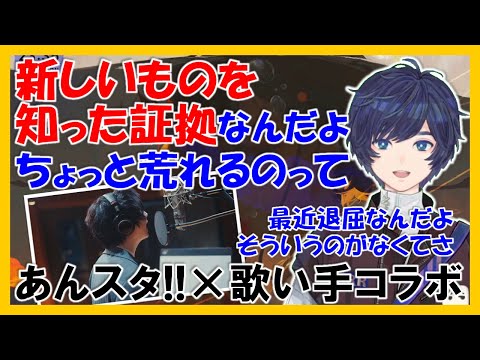
▶ Watch the original YouTube video
In April 2022, the mobile game Ensemble Stars announced a collaboration with prominent vocaloid singers including Soraru, a moment that visibly delighted the artist as he watched fan reactions online. This crossover represents a historic fusion of two distinct fan communities—the vocaloid music culture and the bishonen game culture—signaling the mainstream legitimization of internet-native music creators.
What Happened
Ensemble Stars, one of Japan’s leading mobile games, announced an official collaboration with vocaloid singers, with Soraru among the featured artists. In a video clip from April 28, 2022, Soraru is shown reading positive fan reactions to the announcement, visibly pleased by the overwhelming support from both fan communities. The collaboration includes in-game music contributions, limited character implementations, and dedicated collaboration events.
Why It Matters
This collaboration represents a watershed moment in digital culture. For over a decade, vocaloid singers operated in what was perceived as a niche, internet-based subculture. The decision by a major commercial game title to formally partner with these artists signals official recognition that vocaloid culture has transcended underground status and achieved mainstream legitimacy. This is not merely a business partnership—it is cultural validation. The collaboration demonstrates that internet-native music creators now possess sufficient market value and cultural influence to be integrated into major commercial properties.
Furthermore, the collaboration exemplifies a broader industry trend toward “fandom fusion,” where previously separate fan communities are brought together through strategic partnerships. This has implications for how entertainment properties will be developed and marketed in the coming years.
Background
Ensemble Stars launched in 2015 and has grown into a major franchise, spawning anime adaptations and extensive merchandise. The game centers on music and character-driven narratives, making it structurally compatible with vocaloid culture, which similarly prioritizes both musical composition and character identity.
Vocaloid culture emerged in 2007 with Hatsune Miku and developed primarily through platforms like Niconico Douga and YouTube. Singers like Soraru rose to prominence by performing vocaloid-produced songs, eventually establishing themselves as independent artists. However, despite their popularity within online communities, vocaloid singers have historically been perceived as secondary creators—performers of others’ compositions rather than primary artists.
The announcement comes at a moment when both communities have matured significantly. Ensemble Stars has established itself as a legitimate entertainment property with professional production values, while vocaloid singers have developed substantial independent fanbases and demonstrated sustained commercial viability.
Key Points
- Ensemble Stars’ collaboration with vocaloid singers represents the first major official fusion of bishonen game culture and vocaloid music culture at the commercial level
- Soraru’s visible joy upon reading fan reactions reflects the significance of this moment for vocaloid artists, who have historically occupied a marginalized position despite substantial popularity
- Fan response across Twitter, YouTube, and other platforms was overwhelmingly positive from both communities, a rarity for major collaborations that typically generate mixed reactions
- The collaboration is structurally sound because both Ensemble Stars and vocaloid culture share music as their core element, reducing expectation misalignment that often undermines cross-cultural partnerships
- This partnership exemplifies the broader 2020s trend of “fandom convergence,” where entertainment properties increasingly target audiences with overlapping interests across multiple subcultures
- The collaboration may signal a shift in how vocaloid singers are perceived—from secondary performers to independent artists with standalone commercial value
Timeline
- 2007: Hatsune Miku released, establishing the foundation of vocaloid culture
- 2010s early: Soraru and other singers establish themselves as prominent vocaloid performers
- 2015: Ensemble Stars launches, beginning its rise to major franchise status
- 2017-2018: Ensemble Stars experiences explosive growth in fan content and cultural influence
- 2020-2022: Industry-wide trend toward cross-fandom collaborations accelerates
- April 28, 2022: Ensemble Stars announces official collaboration with vocaloid singers including Soraru
Perspectives
For Vocaloid Artists: This collaboration represents validation and economic opportunity. Vocaloid singers have built substantial audiences through grassroots online communities, but major commercial partnerships have been limited. This collaboration legitimizes their work as commercially valuable and culturally significant, potentially opening doors to additional partnerships and revenue streams beyond YouTube advertising and platform donations.
For Ensemble Stars Fans: The collaboration offers the opportunity to experience beloved game characters interacting with respected musicians they admire. It also signals that the game’s developers understand and value their community’s broader musical interests, strengthening fan loyalty.
For the Gaming Industry: This partnership demonstrates that vocaloid culture and internet-native music creators represent a viable market segment worthy of investment. It suggests that future game titles, particularly music-focused ones, should seriously consider similar collaborations.
For Digital Culture Scholars: The collaboration exemplifies the maturation of internet subcultures into mainstream commercial forces. What began as niche communities on platforms like Niconico Douga have evolved into significant cultural and economic entities.
Insights
The Ensemble Stars collaboration marks a turning point in how digital culture is recognized and commercialized. For fifteen years, vocaloid culture operated with an implicit understanding that it occupied a secondary position relative to “mainstream” entertainment. This collaboration shatters that assumption by positioning vocaloid singers as artists whose creative contributions are valuable enough to integrate into major commercial properties.
Soraru’s visible joy reflects something deeper than simple professional success. It represents the moment when a community’s cultural contributions receive official institutional recognition. This is comparable to historical moments when underground art movements achieved mainstream acceptance—not because the art changed, but because society’s perception of it fundamentally shifted.
The overwhelmingly positive response from both fan communities suggests that this collaboration addresses a genuine demand that existed but had not been formally acknowledged. Many fans belong to both communities simultaneously, and this partnership validates their dual interests rather than forcing them to choose between separate identities.
Looking forward, this collaboration will likely accelerate several trends. Other game developers will recognize the commercial viability of vocaloid partnerships. Vocaloid singers will gain access to new revenue streams and audience expansion opportunities. Most significantly, the boundary between “vocaloid culture” and “mainstream game culture” will continue to blur, creating new opportunities for creative fusion and cross-community engagement.
The collaboration also signals a shift in how vocaloid singers are perceived professionally. Rather than being positioned as secondary performers of others’ compositions, they are now recognized as independent artists whose vocal talent and artistic identity possess standalone commercial value. This distinction may reshape career opportunities and industry standards for vocaloid creators.
Ultimately, this moment represents the maturation of digital-native culture. Communities that formed organically through internet platforms have developed sufficient scale, cultural influence, and economic viability to command the attention of major commercial entities. The Ensemble Stars collaboration is not an anomaly—it is a harbinger of how entertainment industry partnerships will increasingly function in the 2020s and beyond.