▶ Watch the original YouTube video
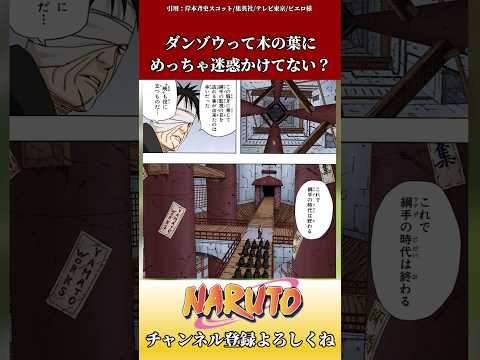
After 15 years of analyzing the Naruto series, one character stands out as uniquely problematic: Danzo, the Third Hokage’s advisor. Unlike typical villains driven by clear malice, Danzo represents a more insidious threat—a well-intentioned leader whose pursuit of power through unethical means caused immense damage to the Hidden Leaf Village and its inhabitants.
- What Happened
- Why It Matters
- Background
- Key Points
- The Nature of Danzo’s Villainy
- Comparative Analysis with Other Antagonists
- Impact on the Next Generation
- Why Danzo Generates Endless Debate
- Thematic Significance in Modern Anime
- Evaluation Framework: What Makes Danzo Exceptional
- The Core Question Danzo Presents
- Broader Implications
What Happened
Danzo Shimura, a high-ranking official in the Hidden Leaf Village, conducted numerous covert operations and experiments under the guise of protecting the village. His actions included unauthorized human experimentation to harvest Sharingan eyes, involvement in the Uchiha clan massacre, obstruction of Sasuke’s pursuit, and attempts to weaponize Naruto. These activities caused widespread suffering among the village’s ninja population and destabilized international relations.
Why It Matters
Danzo represents a critical examination of how power corrupts even those with seemingly noble intentions. His character challenges viewers to confront uncomfortable questions: Can actions motivated by good intentions still be fundamentally wrong? How do we prevent leaders from abusing authority in the name of security? These themes resonate far beyond the anime world, touching on real-world governance and ethics. The character’s enduring relevance in fan discussions demonstrates the effectiveness of creator Masashi Kishimoto’s exploration of institutional corruption and moral ambiguity.
Background
Danzo emerged as a significant antagonist during the later arcs of Naruto, particularly as the series explored themes of power, governance, and the cost of security. Unlike earlier villains who possessed clear malevolent intent, Danzo genuinely believed his actions served the village’s interests. This fundamental difference—his unwavering conviction that he was acting righteously—makes him a uniquely troubling character. Kishimoto deliberately crafted Danzo to embody the dangers of unchecked authority and the corruption that occurs when individuals prioritize security over ethics and individual freedom.
Key Points
- Political Conspiracy: Danzo pursued power as the village’s leader through multiple covert schemes and manipulations
- Ethical Violations: He conducted forbidden human experiments in secret, destroying the lives of numerous ninja through unauthorized Sharingan harvesting
- International Destabilization: His unilateral decisions damaged the Hidden Leaf Village’s relationships with other nations
- Generational Impact: His actions profoundly affected younger ninja, particularly Sasuke and Naruto, altering the trajectory of their lives
- Institutional Erosion: His secretive operations undermined trust and transparency within the village hierarchy
- Moral Ambiguity: Unlike typical villains, Danzo believed genuinely in the righteousness of his cause, making him philosophically complex
The Nature of Danzo’s Villainy
What distinguishes Danzo from other antagonists is his unwavering self-conviction. He did not pursue power cynically; he truly believed that his methods were necessary to protect the village. This psychological profile mirrors characters like Erwin Smith from Attack on Titan, yet with a crucial difference: Erwin possessed self-awareness about his ambitions, while Danzo rationalized his actions through the justification of village protection.
This distinction proves critical. A villain who knowingly commits evil can be morally judged with clarity. A leader who commits atrocities while genuinely believing in their righteousness presents a more insidious threat to society. Danzo’s conviction that his human experiments, political manipulations, and ethical violations were justified by the greater good represents the most dangerous form of institutional corruption.
Comparative Analysis with Other Antagonists
Danzo occupies a unique position among anime antagonists. Compared to Erwin Smith (Attack on Titan), who consciously pursued his ambitions while acknowledging their cost, Danzo lacked this self-awareness. Unlike Emperor Charles (Code Geass), who wielded explicit malevolence, Danzo operated under the banner of benevolence. And unlike All For One (My Hero Academia), who represented pure villainy, Danzo embodied the corruption of good intentions.
This ambiguity makes Danzo exceptionally difficult to dismiss. Viewers cannot simply condemn him as evil; instead, they must grapple with the uncomfortable reality that his motivations, while corrupt in execution, originated from a place of genuine concern for the village’s survival.
Impact on the Next Generation
Danzo’s influence on younger ninja proved particularly consequential. For Sasuke, the revelation of Danzo’s involvement in the Uchiha massacre fundamentally altered his understanding of his own tragedy and his path forward. Had Danzo successfully concealed this truth, Sasuke’s entire narrative arc would have diverged dramatically.
Similarly, Danzo’s attempts to weaponize Naruto tested the very foundation of Naruto’s greatest strength: his capacity for trust and connection. These interactions forced Naruto to confront the reality that even those in positions of authority could betray fundamental principles in pursuit of power.
Why Danzo Generates Endless Debate
Online communities—from Twitter to Reddit to traditional forums—continue to debate Danzo’s moral status years after his defeat. This sustained discussion reflects the character’s successful embodiment of moral complexity. Unlike other villains who inspire consensus about their evil nature, Danzo provokes genuine disagreement: Was he truly wrong? Could his methods have been justified? Did his intentions matter more than his actions?
This debate itself serves as evidence of Kishimoto’s success in creating a character that forces viewers to examine their own moral frameworks. Danzo refuses easy categorization, demanding that audiences think critically about power, ethics, and the price of security.
Thematic Significance in Modern Anime
Danzo emerged as a precursor to a broader trend in anime storytelling. Beginning around 2015, series increasingly moved away from depicting simple villains toward exploring the psychology of power-corrupted individuals. Works like Attack on Titan, Jujutsu Kaisen, and Demon Slayer all examine how authority figures become corrupted by their own conviction in their righteousness. Kishimoto’s creation of Danzo in 2009 demonstrated remarkable prescience regarding this thematic shift.
Evaluation Framework: What Makes Danzo Exceptional
Using five critical criteria for character evaluation—behavioral consistency, capacity for growth, societal impact, philosophical challenge to viewers, and ethical complexity—Danzo scores exceptionally high across all dimensions. Few antagonists in anime achieve this level of sophistication across all categories.
- Behavioral Consistency: Danzo’s actions align perfectly with his stated belief in protecting the village
- Capacity for Growth: His fundamental conviction prevents meaningful change, making his arc tragic rather than redemptive
- Societal Impact: His decisions directly shaped the political landscape and individual fates within the narrative
- Philosophical Challenge: He forces viewers to question the relationship between intention and morality
- Ethical Complexity: His actions cannot be reduced to simple good or evil categories
The Core Question Danzo Presents
Ultimately, Danzo embodies a fundamental question: Can actions motivated by good intentions be fundamentally wrong? The answer, as demonstrated through his character arc, is unequivocally yes. Regardless of his genuine desire to protect the village, Danzo’s willingness to conduct human experiments, suppress individual freedom, and manipulate others in pursuit of his vision represents a betrayal of the very principles that make a community worth protecting.
His tragedy lies not in his evil nature but in his inability to recognize that security achieved through the destruction of ethics, trust, and individual autonomy is no security at all. A village protected through fear and manipulation is a village destroyed from within.
Broader Implications
Danzo’s character transcends anime fandom to address universal concerns about governance, institutional power, and moral philosophy. His story serves as a cautionary tale about how even well-intentioned leaders can become corrupted by their conviction in their own righteousness. The character demonstrates that the most dangerous threats to institutional integrity often come not from those who knowingly pursue evil, but from those who commit atrocities while genuinely believing in their moral justification.
For contemporary audiences, Danzo remains relevant precisely because these questions about power, security, and ethics continue to shape real-world political discourse. His character invites viewers to examine how institutions can become corrupted, how leaders rationalize unethical behavior, and how societies can protect themselves against the gradual erosion of fundamental principles in the name of security.