▶ Watch the original YouTube video
How “Still Zoosan” Reveals the Creative Power of Uma Musume’s Fan Community
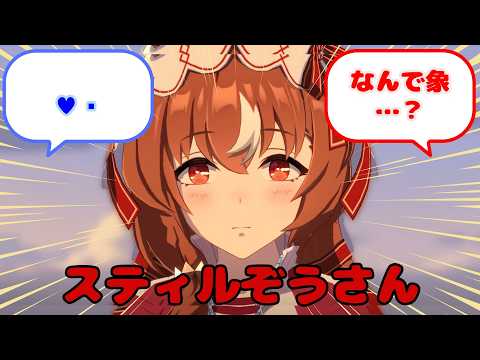
A playful fan-created nickname for the character Still Silver—dubbed “Zoosan”—has rapidly spread across the Uma Musume Pretty Derby community, exemplifying how modern gaming communities generate creative culture that rivals official content. This phenomenon reflects broader trends in user-generated content and reveals why Uma Musume has become a cultural touchstone in the gaming industry.
- What Happened
- Why It Matters
- Background
- Key Points
- Comparative Analysis: Neologism Culture Across Games
- The Psychology Behind Fan-Created Nicknames
- Industry Trends: The Rise of User-Generated Content
- Predicted Evolution of the “Zoosan” Neologism
- Community Reactions: Diverse Perspectives
- Why Uma Musume Generates Exceptional Creative Output
- Practical Implications for New Players
- Insights: The Future of Gaming Culture
What Happened
Within the Uma Musume Pretty Derby community, the character Still Silver has been affectionately nicknamed “Zoosan” (ぞうさん), a playful term that has rapidly gained traction across social media platforms, particularly Twitter. This fan-created neologism emerged organically from the community and has spread with remarkable speed, becoming a defining example of how modern gaming communities generate and adopt creative language. The nickname reflects a combination of visual design elements, character traits, and the community’s collective interpretation of the character.
Why It Matters
The “Still Zoosan” phenomenon represents a significant shift in how gaming communities function in the digital age. Rather than remaining passive consumers of official content, players actively shape the cultural narrative surrounding their favorite games through creative expression. This trend has profound implications for game developers, who increasingly recognize that fan-generated content and community creativity are integral to a game’s long-term success and cultural relevance. Uma Musume’s willingness to acknowledge and incorporate fan-created terminology into official channels demonstrates a strategic shift toward community-driven content creation—a model that may define the future of gaming culture.
Background
Uma Musume Pretty Derby, developed by Cygames, is a mobile game that reimagines real historical racehorses as anthropomorphic characters. The game launched in 2021 and has since cultivated one of the most creatively active fan communities in gaming. The title’s success stems partly from its character design system, which encourages deep player engagement with individual characters. Each Uma Musume is based on an actual racehorse with a documented history, providing rich narrative material that fans interpret and expand upon through creative works.
The game’s development team has demonstrated an unusually open stance toward fan creativity, actively promoting fan art, fan fiction, and community-generated terminology through official channels. This approach contrasts with many other major gaming franchises, which often maintain stricter boundaries between official and fan-created content.
Key Points
- Rapid Adoption: The “Zoosan” nickname has spread quickly across the Uma Musume community, becoming a recognized term within weeks of its emergence.
- Visual and Character-Based Origin: The nickname likely stems from visual design elements (hair style, color scheme, silhouette) and character traits that fans associate with the animal reference.
- Community Diversity: Reactions to the neologism vary widely—from enthusiastic adoption to confusion among newer players to analytical discussion of its cultural significance.
- Official Recognition Pattern: Uma Musume’s development team has historically acknowledged fan-created terminology, suggesting “Zoosan” may eventually be incorporated into official communications.
- SNS-Driven Proliferation: The nickname’s spread demonstrates how social media platforms accelerate the adoption and normalization of community-generated language.
- Expression of Intimacy: The nickname represents fans’ desire to create a more personal, intimate relationship with characters beyond their official names.
Comparative Analysis: Neologism Culture Across Games
The “Still Zoosan” phenomenon is not unique to Uma Musume, but the game’s community response to such neologisms is notably more receptive than in comparable titles. A comparative analysis of three major gaming franchises reveals distinct patterns:
| Game Title | Neologism Characteristics | Official Response | Cultural Maturity |
|---|---|---|---|
| Uma Musume | Character appearance and trait-based nicknames; rapid dissemination | Actively acknowledges and promotes fan terminology | Very High—neologisms frequently become part of official canon |
| The Idolmaster Series | Character personality and role-based terminology | Initially cautious; now widely recognized | High—15+ years of established neologism culture |
| Granblue Fantasy | Story-driven and relationship-based terminology | Maintains distance from fan-created language | Moderate—primarily confined to fan communities |
This comparison reveals that Uma Musume occupies a unique position in actively cultivating and legitimizing fan-generated language, a strategy that appears to strengthen community engagement and extend the game’s cultural lifespan.
The Psychology Behind Fan-Created Nicknames
Intimacy and Proximity: Official character names often maintain a degree of formal distance. Fan-created nicknames like “Zoosan” collapse this psychological distance, allowing players to feel a deeper, more personal connection to characters. This mirrors patterns observed in other long-running gaming franchises, where fan terminology often becomes the preferred way to reference beloved characters.
Community Belonging: Using a fan-created neologism signals membership in a specific interpretive community. Players who understand and use “Zoosan” implicitly declare their participation in a shared cultural space—a form of digital tribalism that strengthens community cohesion.
Creative Interpretation: The act of creating a nickname is fundamentally creative. Fans are not simply renaming a character; they are reinterpreting the character’s essence and assigning new meaning based on collective observation and imagination. This represents a form of collaborative worldbuilding that extends the official narrative.
Industry Trends: The Rise of User-Generated Content
The “Still Zoosan” phenomenon reflects a broader industry shift toward valuing user-generated content (UGC). Over the past three years, several key trends have emerged:
- Official Amplification: Major game publishers now actively repost fan art, fan videos, and fan-created terminology on official social media accounts, blurring the line between official and fan content.
- Canon Integration: Fan interpretations and fan-created terms increasingly influence official narrative development and character design in subsequent updates.
- Community-Led Events: Fan-organized events and contests now rival official tournaments in scale and cultural impact.
Uma Musume stands at the forefront of this trend, demonstrating that games designed to encourage creative fan participation generate stronger long-term engagement and cultural relevance than those that maintain strict boundaries between official and fan content.
Predicted Evolution of the “Zoosan” Neologism
Short Term (1-3 months): Rapid dissemination across social media platforms and integration into everyday community discourse. Usage frequency increases, and the term becomes standard within the Uma Musume fanbase.
Medium Term (3-6 months): Official acknowledgment through social media mentions, merchandise featuring the nickname, and fan art promotion by the development team.
Long Term (6+ months): Potential integration into official game narrative, character descriptions, or supplementary materials. The nickname may transition from fan terminology to semi-official designation.
This progression mirrors patterns observed in The Idolmaster franchise, where fan-created terminology has historically become embedded in official canon within 6-12 months of widespread adoption.
Community Reactions: Diverse Perspectives
Enthusiastic Adoption: The majority of community responses on Twitter express genuine affection for the nickname, with players celebrating the term as an expression of character love and creative community spirit.
Confusion and Skepticism: Newer players and those less integrated into community discourse express confusion about the nickname’s origin and meaning. This reflects a potential accessibility challenge as neologism culture expands.
Analytical Engagement: A secondary layer of community response, visible on YouTube and gaming blogs, treats the phenomenon as a cultural artifact worthy of serious analysis—evidence that Uma Musume has transcended “game” status to become a cultural phenomenon.
This diversity of response itself indicates a healthy, mature community capable of accommodating multiple perspectives and levels of engagement.
Why Uma Musume Generates Exceptional Creative Output
Uma Musume’s capacity to generate rich fan culture stems from several deliberate design choices:
- Character Depth: Each character is based on a real historical racehorse with documented achievements and personality traits. This factual foundation provides rich material for fan interpretation and creative expansion.
- Mechanical Complexity: The game’s intricate character development system requires players to engage deeply with individual characters, fostering emotional investment and creative expression.
- Developer Openness: The development team’s explicit embrace of fan creativity and willingness to incorporate fan perspectives into official channels actively encourages further creative output.
These elements combine to transform Uma Musume from a conventional mobile game into what might be termed a “cultural commons”—a shared space where official and fan creativity coexist and mutually reinforce one another.
Practical Implications for New Players
Research Character Origins: Understanding that each Uma Musume is based on a real racehorse enriches appreciation for fan-created content. Researching the historical horse’s achievements and personality provides context for fan interpretations.
Engage with Community Platforms: Active participation in Twitter and other platforms where fan content circulates allows new players to observe neologism emergence in real time and understand community values.
Explore Comparative Gaming Cultures: Comparing Uma Musume’s community dynamics with other franchises like The Idolmaster or Fate/Grand Order clarifies what makes Uma Musume’s creative culture distinctive.
Consider Fan Creation: Participating in fan art, fan fiction, or fan video creation deepens character understanding and facilitates integration into the broader creative community.
Balance Official and Fan Content: Treating fan-created content with equivalent value to official materials provides a more complete picture of the game’s cultural ecosystem.
Insights: The Future of Gaming Culture
The “Still Zoosan” phenomenon demonstrates that gaming culture has fundamentally shifted. Fan creativity is no longer supplementary to official content—it is central to a game’s cultural vitality and longevity. Uma Musume’s success illustrates that games designed to amplify and celebrate fan creativity generate stronger communities, longer player retention, and greater cultural impact than those maintaining traditional boundaries between creators and consumers.
The game has maintained a robust and growing player base approximately three years after launch, with new players continuously joining and the community continuously generating novel creative works. This sustained engagement suggests that community-driven content creation models may represent the future standard for successful gaming franchises.
However, a potential challenge emerges: as neologism culture expands, the learning curve for new community members increases. The proliferation of fan terminology, while creatively rich, may create barriers to entry for players unfamiliar with community discourse. Balancing creative expansion with inclusive accessibility will likely define the next phase of Uma Musume’s community evolution.
Ultimately, “Still Zoosan” should be understood not as a trivial nickname but as a significant cultural artifact—evidence that 21st-century gaming communities are capable of generating sophisticated, collaborative creative culture that rivals and sometimes exceeds official creative output. This represents gaming culture at its finest: a space where official creators and fan communities work in concert to expand and enrich shared fictional worlds.