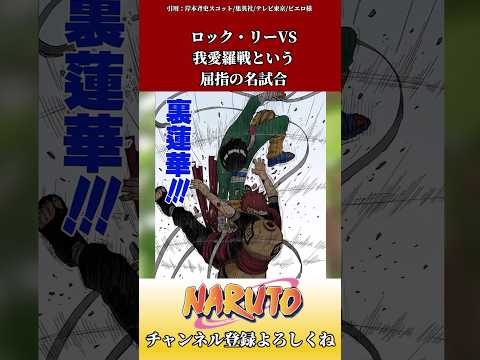
▶ Watch the original YouTube video
The Rock Lee vs. Gaara match from Naruto, which aired in 2006, continues to captivate anime audiences worldwide. This deep analysis explores why this single battle scene transcends typical fight choreography to deliver a profound message about effort, loneliness, and the true meaning of victory.
What Happened
In one of Naruto’s most pivotal tournament matches, the underdog Rock Lee—a ninja with no natural talent for jutsu—faces Gaara, a prodigy blessed with absolute defensive power through sand manipulation. Despite his limitations, Lee opens the Eight Inner Gates, unleashing years of rigorous physical training in a desperate bid to overcome his opponent. Though Lee ultimately loses, the battle becomes a turning point for both characters, particularly for Gaara, whose isolation begins to crack when confronted by Lee’s unwavering determination.
Why It Matters
This fight scene transcends typical anime battle choreography by exploring themes that resonate far beyond entertainment. It challenges the conventional narrative that victory defines success, instead presenting a story where defeat carries profound meaning. The match has influenced how anime portrays struggle, character development, and the relationship between effort and outcome. For over 15 years, it has remained a reference point in discussions about what makes a truly exceptional animated sequence, inspiring countless creators and touching multiple generations of viewers.
Background
Rock Lee is a character defined by his singular weakness: he cannot perform jutsu, the fundamental skill all ninjas rely upon. Rather than accept this limitation, Lee commits himself to mastering taijutsu (hand-to-hand combat) through relentless training. Gaara, conversely, is a child prodigy whose sand-based abilities make him nearly invincible, yet his overwhelming power has isolated him completely from human connection. When these two fighters meet in the tournament, their clash becomes more than a physical competition—it becomes a collision between two fundamentally different approaches to existence.
Key Points
- Crystallization of Effort: Lee’s years of training materialize in the Eight Inner Gates technique, allowing him to briefly overwhelm Gaara despite lacking natural talent
- Character Contrast: The match juxtaposes Lee’s hard-won bonds and sense of purpose against Gaara’s isolation and emotional detachment
- Technical Excellence: The animation synchronizes background movement, musical score, and voice acting to create a seamless emotional experience
- Narrative Significance: This battle serves as the catalyst for Gaara’s character transformation throughout the series
- Universal Message: The scene conveys that the value of effort cannot be measured by victory alone, resonating across cultures and generations
- Emotional Complexity: Viewers experience conflicting emotions—supporting Lee while witnessing his defeat—creating a sophisticated emotional response
Timeline
- 2006: The Rock Lee vs. Gaara match airs during Naruto’s tournament arc, immediately becoming memorable among viewers
- 2006-2010: The scene becomes a reference point in anime communities, discussed repeatedly across forums and early social media
- 2010-2015: Anime industry evolves with new fight choreography styles, many influenced by this match’s approach to character-driven battles
- 2015-Present: New generations of anime fans discover the scene, continuing its legacy and demonstrating its timeless appeal
Perspectives
From a technical standpoint, the match represents a watershed moment in anime production. The deliberate shift in animation speed when Lee opens the Eight Inner Gates signals his power awakening without requiring exposition. The sound design—breathing, sand movement, musical cues—operates as a narrative layer equal to the visuals.
From a storytelling perspective, the match succeeds because it subverts expectations. In typical anime, the protagonist or fan-favorite character wins through superior effort or willpower. Here, Lee’s effort is genuine and moving, yet insufficient. This refusal to reward effort with victory paradoxically makes the scene more emotionally resonant, as viewers grapple with the reality that determination alone cannot overcome all obstacles.
From a character analysis perspective, Gaara’s behavior during the match hints at his internal transformation. Rather than crushing Lee immediately with overwhelming force, Gaara appears to hold back, suggesting that Lee’s full-hearted commitment awakens something dormant in the isolated prodigy. This subtle psychological dimension elevates the match beyond physical combat.
Fan communities consistently emphasize that the scene’s power lies not in Lee’s defeat, but in what that defeat represents. Online discussions reveal that viewers experience catharsis not from victory, but from witnessing sincere effort and recognizing its intrinsic value regardless of outcome.
Comparative Analysis
When examined alongside other memorable anime fights, the Rock Lee vs. Gaara match stands apart in its integration of multiple narrative elements:
Dragon Ball’s Goku vs. Tien: Emphasizes pure power collision and speed, but lacks deep character psychological exploration.
Attack on Titan’s Eren vs. Armored Titan: Conveys desperation and impossible odds, but provides less character backstory context.
My Hero Academia’s Deku’s progression: Shows effort leading to power acquisition, but the power itself is externally granted rather than self-cultivated.
The Rock Lee vs. Gaara match uniquely combines visceral action, psychological depth, character history, thematic resonance, and narrative consequence into a single sequence. This integration explains its sustained impact across the anime industry.
The Evolution of Weakness as Character Strength
The match’s treatment of Lee’s fundamental limitation—his inability to use jutsu—pioneered a narrative approach now common in modern anime. Characters like Deku from My Hero Academia (initially powerless) and Tanjiro from Demon Slayer (an ordinary charcoal seller) follow a template where weakness becomes the foundation for compelling character arcs.
This shift reflects a broader change in how storytellers approach character development. Rather than beginning with inherent strength, contemporary narratives often begin with limitation and explore how characters transcend or accept those boundaries. The Rock Lee vs. Gaara match demonstrated that this approach could generate profound emotional responses, influencing an entire generation of creators.
The Message That Transcends Entertainment
Beyond anime appreciation, the scene communicates a philosophy about human effort and meaning. In a world that often measures success through victory and achievement, the match argues for an alternative valuation: that the act of striving itself holds intrinsic worth. Lee does not defeat Gaara, yet his effort transforms both characters and moves millions of viewers.
This message explains the scene’s longevity. It addresses a fundamental human concern—whether effort matters when success remains uncertain—and suggests an affirmative answer. For viewers navigating their own struggles, the scene provides emotional validation that persistence carries meaning independent of outcome.
Fan Reception and Cultural Impact
YouTube comments consistently feature viewers stating “I cried at this scene” and “I watch this every few years and still feel the same emotions.” The recurring theme across platforms is surprise at emotional depth: “Lee lost, but why am I so moved?”
Twitter discussions regularly crown the match as anime’s greatest fight sequence, with new viewers discovering it and expressing astonishment at its quality. Reddit and 4chan anime communities cite it as the standard against which other battles are measured. The consistency of this response across platforms and time periods demonstrates genuine cultural resonance rather than temporary trend.
Notably, the match generates both emotional and analytical responses. While many viewers report tears and inspiration, others engage in technical discussion about animation choices, narrative structure, and character psychology. This dual appeal—emotional and intellectual—contributes to its sustained relevance.
Insights
The Rock Lee vs. Gaara match endures because it operates simultaneously on multiple levels. As spectacle, it delivers impressive animation and choreography. As narrative, it serves as a crucial turning point for character development. As philosophy, it questions fundamental assumptions about success and meaning. As craft, it demonstrates technical mastery of the medium.
The scene’s influence on anime production cannot be overstated. It established that fight sequences could prioritize character psychology and thematic depth alongside action choreography. This approach has become increasingly standard, suggesting the match’s lasting impact on industry practices.
Perhaps most significantly, the match validates a truth that extends beyond entertainment: that human dignity and worth are not contingent on victory. In an era of competitive pressure and achievement-focused culture, this message resonates deeply. The scene suggests that showing up, committing fully, and facing overwhelming odds with integrity constitutes a form of success that transcends winning.
Fifteen years after its broadcast, the Rock Lee vs. Gaara match remains a masterclass in how animation, sound design, character development, and thematic clarity can converge to create something genuinely moving. It proves that anime, often dismissed as mere entertainment, can communicate profound truths about human experience. That is why, in an industry that produces hundreds of fight scenes annually, this single match continues to captivate new audiences and inspire creators worldwide.