▶ Watch the original YouTube video
Why Gundam SEED Keeps Repeating the Same Story: Fan Criticism and the Pattern Problem
A viral video highlighting Gundam SEED FREEDOM’s narrative repetition has sparked widespread debate among fans, with critics arguing that protagonist Kira Yamato’s storyline follows an identical pattern across three decades of films. The controversy raises fundamental questions about creative stagnation in long-running anime franchises and the industry’s reliance on proven commercial formulas.
What Happened
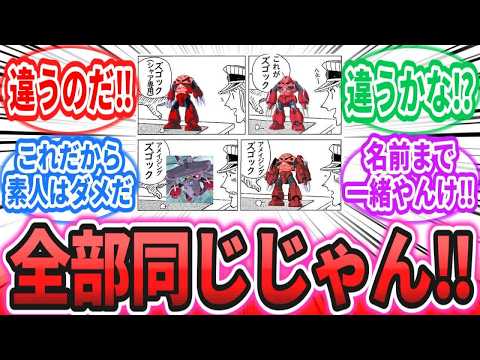
A YouTube video featuring commentary from the anime Build Fighters has ignited online discussion about narrative patterns in Gundam SEED FREEDOM. The video references a memorable line from Build Fighters character Meijin Kawaguchi: “Isn’t it all the same?” This phrase has resonated with viewers who perceive striking similarities between Kira Yamato’s actions across SEED, SEED DESTINY, and FREEDOM. The criticism centers on the claim that despite spanning multiple films and series, the protagonist faces nearly identical scenarios and resolves them through identical methods.
Why It Matters
This debate extends beyond casual fan complaints. It reflects broader concerns about creative innovation in the anime industry, particularly regarding long-running franchises. The pattern recognition highlighted by viewers suggests that production teams may be prioritizing commercial safety over narrative originality. For a franchise as influential as Gundam, which has shaped mecha anime for decades, questions about creative exhaustion carry significant weight. The discussion also reveals a generational divide within the fanbase—between longtime supporters who value consistency and newer viewers seeking fresh storytelling approaches.
Background
Gundam SEED debuted in 2002 and achieved massive commercial success through a combination of accessible storytelling, high-quality animation, and romantic subplots. This success established a proven formula that subsequent productions have largely maintained. SEED DESTINY (2004-2005) introduced new protagonist Shin Asuka but ultimately shifted focus back to Kira Yamato, a decision that disappointed many viewers seeking character development beyond the original lead. FREEDOM, released in 2024, continues this pattern by centering on Kira’s overwhelming combat prowess and his role as the series’ ultimate problem-solver.
The reference to Zgoock—a mobile suit from the original Mobile Suit Gundam—in FREEDOM exemplifies another criticism: the franchise’s increasing reliance on nostalgia rather than original mechanical design. This shift suggests production teams may struggle to generate genuinely new concepts within the established universe.
Key Points
- Kira Yamato’s narrative arc repeats across SEED, SEED DESTINY, and FREEDOM, with identical decision-making patterns and conflict resolution methods
- The introduction of Shin Asuka as a potential new protagonist in SEED DESTINY was ultimately abandoned in favor of returning to Kira’s dominance
- Online communities are sharply divided, with longtime fans appreciating consistency while newer viewers criticize lack of innovation
- The franchise increasingly incorporates elements from earlier Gundam series rather than developing original concepts
- Industry trends toward reusing established intellectual property may be constraining creative risk-taking
- Build Fighters’ meta-commentary on repetitive storytelling suggests possible self-awareness within the production team
Timeline
- 2002: Mobile Suit Gundam SEED premieres and becomes a commercial success
- 2004-2005: SEED DESTINY introduces Shin Asuka as protagonist but ultimately returns focus to Kira Yamato
- 2009: Gundam fans begin systematic analysis of narrative patterns in the franchise
- 2010s: Build Fighters airs, including the now-famous “Isn’t it all the same?” line that becomes emblematic of the repetition debate
- 2024: Gundam SEED FREEDOM releases in theaters, reigniting criticism about narrative stagnation
Perspectives
Critical View: Detractors argue that SEED FREEDOM represents creative bankruptcy. They point to identical narrative structures, repeated character arcs, and Kira’s consistent ability to overcome any obstacle through superior piloting skill. This perspective emphasizes that the franchise has failed to develop supporting characters meaningfully and abandoned opportunities to introduce genuinely new protagonists. Critics also note that the industry’s shift toward franchise sequels and remakes over original properties has pressured Gundam producers to rely on proven formulas rather than risk innovation.
Supportive View: Long-term fans counter that consistency provides value. They argue that Kira’s unwavering commitment to stopping war and protecting comrades, while expressed through similar scenarios, carries emotional weight precisely because of its consistency. Supporters contend that subtle psychological differences exist between Kira’s motivations across the three films—stopping war in SEED, protecting allies in SEED DESTINY, and confronting new threats in FREEDOM—and that appreciating these nuances requires deeper engagement with character psychology rather than surface-level plot comparison.
Industry Perspective: From a production standpoint, the reliance on established patterns reflects rational business decisions. SEED’s initial success created a proven commercial formula. Introducing new protagonists or radically altering narrative structures carries financial risk in an industry increasingly focused on maximizing returns from existing intellectual property. The prevalence of sequels, spin-offs, and remakes across anime production suggests that creative risk-aversion is industry-wide rather than unique to Gundam.
Insights
The Gundam SEED repetition debate illuminates a fundamental tension in modern anime production: the conflict between commercial safety and creative innovation. While the franchise’s reliance on proven formulas has ensured consistent viewership among established fans, it may simultaneously limit appeal to audiences seeking original storytelling. The fact that production teams appear aware of these patterns—evidenced by Build Fighters’ self-referential commentary—suggests the issue is not oversight but deliberate choice.
The broader implication extends beyond Gundam. As anime production increasingly concentrates on established franchises rather than original properties, the industry faces a sustainability question: can long-running series maintain audience engagement through repetition, or will creative stagnation eventually alienate both new viewers and longtime fans seeking evolution? The passionate debate surrounding SEED FREEDOM suggests that for significant portions of the fanbase, the answer is becoming clear.
The franchise’s future likely depends on whether producers will embrace the risk of introducing genuinely new protagonists and narrative structures, or continue optimizing the Kira Yamato formula. Current industry trends suggest the latter path remains more probable, potentially deepening the divide within the fanbase between those who value consistency and those demanding innovation.