▶ Watch the original YouTube video
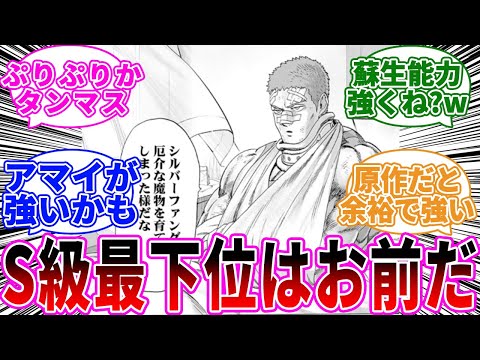
Is Tank-Top Master Really the Weakest S-Class Hero in One Punch Man? Fan Reactions Analyzed
A heated debate within the One Punch Man community questions whether Tank-Top Master is truly the weakest S-Class hero. By examining fan reactions and comparing multiple evaluation frameworks, we explore what this discussion reveals about how audiences define strength and character value in modern anime.
What Happened
A video analyzing the long-standing fan theory that Tank-Top Master ranks as the weakest among One Punch Man’s S-Class heroes has sparked widespread discussion across the anime community. The debate centers on how “strength” should be measured—whether through raw combat power, special abilities, track record, adaptability, or mental fortitude. Tank-Top Master, a hero who relies purely on physical training and experience without superhuman abilities, has become a focal point for this broader conversation about what makes a character truly powerful.
Why It Matters
This debate transcends simple character ranking. It reveals fundamental differences in how anime fans evaluate power scaling and character worth. The discussion highlights a critical gap between relative strength (position within a group) and absolute strength (overall capability). Understanding this distinction is essential for appreciating One Punch Man’s thematic exploration of what it means to be strong. Additionally, the varying opinions demonstrate how different media formats—anime versus web comic—can shape audience perception of the same character.
Background
One Punch Man, created by ONE and illustrated by Yusuke Murata, presents a unique approach to power scaling through its monster classification system. Monsters are ranked from Wolf (weakest) through Tiger, Demon, Dragon, to God (strongest) levels. S-Class heroes are the elite tier of humanity’s defense force, yet even within this exclusive group, significant power disparities exist. Tank-Top Master, identifiable by his signature muscular physique and tank-top costume, stands out as a hero who has never developed special abilities, instead relying on rigorous physical training and combat experience to defeat monsters consistently ranked at the Tiger level and below.
Key Points
- The Weakness Debate: Many fans consider Tank-Top Master the weakest S-Class hero, primarily due to his lack of special abilities compared to peers with superhuman powers.
- Definition of Strength: “Strength” can be measured across five dimensions: pure combat power, special abilities, track record, adaptability, and mental fortitude. Tank-Top Master scores highly on some axes but lower on others.
- Proven Track Record: Tank-Top Master has consistently defeated multiple Tiger-level monsters, demonstrating legitimate combat effectiveness that shouldn’t be dismissed.
- Relative vs. Absolute Strength: While potentially weakest within S-Class, Tank-Top Master remains extraordinarily powerful compared to ordinary humans—a critical distinction often overlooked in fan discussions.
- Media Format Differences: Anime viewers and web comic readers have significantly different perceptions of Tank-Top Master due to varying amounts of screen time and character development across formats.
- Creator Intent: The character’s design—emphasizing musculature and relying on pure physical training—suggests deliberate authorial intent to explore the value of effort and discipline without supernatural shortcuts.
Timeline
- 2015: One Punch Man anime adaptation airs, introducing Tank-Top Master to mainstream audiences.
- Post-2015: Web comic readers gain deeper exposure to Tank-Top Master’s character development and leadership of the Tank-Top Army.
- 2018-2020: Community debate intensifies as more powerful S-Class heroes are introduced, making Tank-Top Master’s relative position increasingly apparent.
- Present: The “weakest S-Class hero” discussion remains active, with no definitive resolution in the ongoing narrative.
Perspectives
The Relative Strength Perspective: Supporters of this view argue that within the S-Class hierarchy, Tank-Top Master objectively ranks lower than heroes with special abilities like psychic powers, genetic mutations, or superhuman enhancements. By this metric, he is indeed the weakest.
The Absolute Strength Perspective: Proponents of this framework emphasize that Tank-Top Master’s ability to single-handedly defeat Tiger-level monsters places him in an extraordinarily elite category compared to humanity as a whole. His “weakness” is only apparent when measured against other S-Class heroes, not against realistic standards.
The Character Value Perspective: Some fans prioritize character design, narrative role, and thematic significance over pure power metrics. From this angle, Tank-Top Master’s refusal to rely on special abilities makes him narratively valuable as a representation of human potential through dedication and training.
The Media Format Perspective: Anime-only viewers often perceive Tank-Top Master as weaker than web comic readers do, since the anime adaptation omits significant portions of his character development, leadership moments, and combat achievements.
Comparative Analysis: One Punch Man vs. Other Anime
The “weakest in a strong group” trope appears across multiple anime franchises, each handling it differently. In Fate/stay night, Saber’s relative weakness as a Servant is compensated by her Master’s power. In JoJo’s Bizarre Adventure, Joseph Joestar’s weaker Stand ability is offset by intelligence and experience. In My Hero Academia, Deku’s initial lack of a Quirk is resolved through Quirk acquisition. One Punch Man’s approach is distinctive: Tank-Top Master never receives compensatory power-ups. He continues fighting with only his body and experience, suggesting the creators intentionally explore whether special abilities are necessary for heroic value.
Fan Community Reactions
Supportive Comments: Many fans praise Tank-Top Master’s perseverance despite his relative weakness, viewing his character as embodying the value of effort over innate talent. Others note that anime adaptations underrepresent his accomplishments compared to the web comic source material, arguing that fuller exposure would change audience perception.
Critical Comments: Some fans maintain that the power gap within S-Class is too significant to ignore, making Tank-Top Master objectively the weakest by any reasonable metric. Others observe that modern anime trends increasingly favor characters with special abilities, making Tank-Top Master’s traditional approach feel outdated.
Underlying Pattern: The diversity of opinions reflects genuine differences in evaluation criteria rather than disagreement about facts. This multiplicity of perspectives itself demonstrates One Punch Man’s narrative depth.
Insights
The Tank-Top Master debate illuminates a fundamental tension in how audiences consume and evaluate superhero narratives. The discussion reveals that “strength” is not a singular, objective quality but rather a multidimensional concept that different viewers weight differently. One Punch Man deliberately exploits this ambiguity, using Tank-Top Master as a vehicle to question whether special abilities are truly necessary for heroic significance.
The character embodies a philosophical position: that human potential achieved through discipline, experience, and consistent effort has intrinsic value even when measured against superhuman alternatives. By refusing to grant Tank-Top Master compensatory powers despite his relative weakness, the creators maintain this thematic integrity.
Furthermore, the gap between anime and web comic fan perceptions demonstrates how medium shapes interpretation. The anime’s condensed format necessarily omits character development, inadvertently reinforcing the “weakest” perception. The web comic’s fuller treatment suggests a more nuanced character whose weakness is contextual rather than absolute.
Ultimately, the persistence of this debate—now years into the series—indicates that One Punch Man succeeds in its apparent goal: to make audiences genuinely reconsider what strength means and whether traditional power hierarchies capture the full spectrum of character value. Tank-Top Master, whether weakest or not, forces this recalibration.