▶ Watch the original YouTube video
Why the Chiikawa Movie Is Not for Children: A Deep Analysis of the Anime’s Unexpected Dark Turn
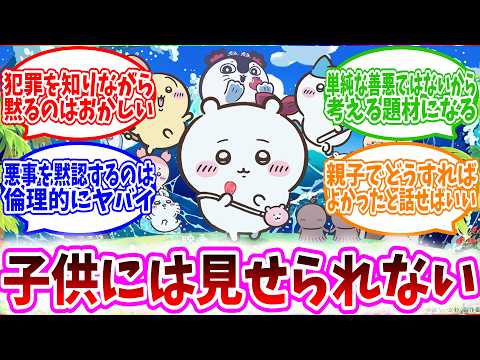
The theatrical release of “Chiikawa: The Secret of Mermaid Island” has sparked widespread debate online, with parents and viewers expressing shock at its unexpectedly dark and philosophical content. Despite its cute character design and lighthearted TV series origins, the film takes a dramatic tonal shift toward moral complexity and existential themes, leading many to question whether it was appropriately marketed as family-friendly entertainment.
What Happened
The theatrical film “Chiikawa: The Secret of Mermaid Island” has generated significant controversy following its release, with audiences divided over its appropriateness for children. The film, based on the popular cute daily-life anime series, takes an unexpected narrative turn toward darker, more philosophically complex territory. Parents who brought their children expecting lighthearted entertainment reported being caught off guard by the film’s serious themes involving life-or-death choices, moral ambiguity, and existential uncertainty. Online reactions across Twitter, YouTube, and forums have been sharply divided, with some praising the film’s depth while others criticize the disconnect between its marketing and actual content.
Why It Matters
This controversy highlights a growing trend in anime production where creators deliberately embed adult-oriented themes within deceptively cute or family-friendly aesthetics. The disconnect between audience expectations and actual content raises important questions about marketing transparency, creative intent, and the responsibilities of studios in clearly communicating target demographics. The Chiikawa film case demonstrates how the anime industry’s increasing sophistication in blending genres and tones can leave viewers—particularly parents—unprepared for what they encounter. This pattern also reflects broader shifts in how modern entertainment balances commercial appeal with artistic ambition, often at the expense of clear audience guidance.
Background
Chiikawa is a popular anime series known for its adorable character designs and seemingly innocent daily-life storytelling. The TV series presents a world where cute creatures navigate simple problems with an underlying sense of optimism and resilience. The theatrical film adaptation, however, shifts the narrative to “Mermaid Island,” a mysterious setting that becomes increasingly portrayed as dangerous, unpredictable, and morally complex. The film’s central theme revolves around “secrets”—the idea that discovering hidden truths forces characters to confront difficult choices between personal safety and the welfare of others. This thematic shift represents a fundamental departure from the TV series’ tone and raises questions about whether the film was intentionally designed to subvert audience expectations or whether marketing simply failed to communicate the film’s actual content.
Key Points
- Extreme visual-content disparity: The film’s cute character design and marketing materials contrast sharply with its dark, philosophical narrative exploring moral complexity and existential themes.
- Unexpected tonal shift: The film begins with lighthearted daily-life storytelling but rapidly escalates into scenes involving life-or-death decisions and psychological weight.
- Mermaid Island as a symbol: The setting functions as a representation of unpredictability and danger—a space where characters’ efforts cannot guarantee safety or resolution.
- Character moral dilemmas: Unlike the TV series, characters face choices that pit personal survival against helping others, with no clear “correct” answer.
- Divided online reception: Parents report shock and disappointment, while adult viewers praise the film’s depth and appreciate its subversion of expectations.
- Ambiguous target demographic: The film’s positioning remains unclear—it is neither explicitly child-oriented nor transparently adult-oriented, creating confusion among audiences.
Timeline
- Spring 2024: Initial promotional materials for “Chiikawa: The Secret of Mermaid Island” are released, presenting the film as a continuation of the beloved TV series.
- Theatrical release: The film opens in cinemas, with audiences experiencing the unexpected tonal and thematic shift.
- Immediate aftermath: Online discussions emerge across Twitter, YouTube, and forums, with divided reactions from viewers.
- Ongoing debate: Conversations continue regarding the film’s appropriateness for children and the studio’s marketing strategy.
Perspectives
Parents and concerned viewers express frustration at the disconnect between the TV series and the film. Having watched the cute, optimistic daily-life content, they expected similar material and brought their children accordingly. They report that the film’s sudden shift to darker themes—including scenes depicting danger and moral uncertainty—was distressing for younger audiences and felt misleading given the marketing approach.
Adult fans and appreciative viewers argue that the film represents the “true” nature of Chiikawa, suggesting that the TV series’ cuteness masked an underlying instability and darkness. This group views the film as a sophisticated artistic choice that rewards viewers willing to engage with deeper themes. They appreciate the film’s willingness to explore complexity and moral ambiguity, seeing it as a strength rather than a flaw.
Industry analysts observe that this trend reflects a broader pattern in contemporary anime production, where creators intentionally embed adult-oriented messages within visually appealing, seemingly innocent packages. This approach serves dual purposes: attracting broader audiences through cute aesthetics while simultaneously engaging adult viewers seeking intellectual depth. However, this strategy creates marketing challenges and audience expectation management issues.
Comparative Analysis
The Chiikawa film’s approach shares structural similarities with other anime that employ significant visual-content disparity. “Puella Magi Madoka Magica” similarly presents cute magical-girl aesthetics while exploring despair and salvation. However, Madoka’s darkness emerges gradually, whereas Chiikawa’s shift is more abrupt. “CLANNAD: After Story” follows a comparable pattern, beginning as a romance drama before escalating into themes of loss and human impermanence. The key distinction is that these earlier works carried implicit signals of their serious nature, whereas Chiikawa’s TV series provides little warning of the film’s darker direction.
Production Intent Analysis
Based on the film’s thematic content and stylistic choices, the production team likely intended to create an adult-oriented work while maintaining surface-level appeal to younger audiences. Evidence supporting this interpretation includes: the film’s central themes of “choice” and “sacrifice,” which are fundamentally adult concerns; the sophisticated visual language employing refined color palettes, camera work, and sound design distinct from the TV series; and the emphasis on “secrets” as a metaphor for the transition to adulthood and moral complexity. The marketing strategy—emphasizing cute characters and family-friendly positioning—suggests the studio deliberately created this dual-layer structure. This raises questions about whether the disparity represents artistic intention or marketing miscalculation.
Insights
The Chiikawa film controversy reveals a fundamental tension in modern anime production: the desire to create sophisticated, adult-oriented art while maximizing commercial reach through appealing aesthetics. The film’s success in generating divided reactions suggests that the strategy partially works—it attracts both family audiences and adult viewers—but at the cost of audience satisfaction and trust. The “secret” that the film emphasizes is not merely narrative content but the hidden complexity beneath seemingly simple surfaces, mirroring the film’s own structure.
This case demonstrates that contemporary anime audiences increasingly expect clear communication about target demographics and content warnings. The film’s ambiguous positioning—neither explicitly child-oriented nor transparently adult-oriented—created confusion that undermined the viewing experience for many. Future anime productions may need to choose between clearly signaling their intended audience or accepting that visual-content disparity will generate controversy and negative word-of-mouth.
The broader implication is that the anime industry’s increasing sophistication in blending tones and themes, while artistically valuable, requires corresponding sophistication in marketing and audience communication. The Chiikawa film serves as a case study in how creative ambition can conflict with audience expectations when transparency is compromised.