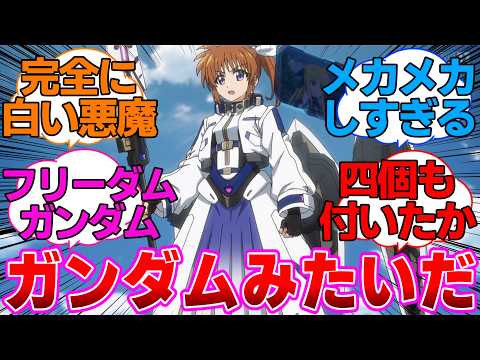
▶ Watch the original YouTube video
Why Nanoha Became a Gundam: A 15-Year Fan’s Analysis of Magical Girl Evolution
Over the past two decades, Nanoha Takamachi from Magical Girl Lyrical Nanoha has undergone a dramatic transformation from a simple magical girl into a complex, heavily-equipped warrior resembling a mobile suit from Mobile Suit Gundam. This evolution reflects both intentional creative direction and the character’s psychological growth, raising questions about how franchises balance nostalgia with innovation.
What Happened
The Magical Girl Lyrical Nanoha franchise has gradually transformed its titular protagonist from a straightforward magical girl wielding a simple staff into a heavily mechanized warrior equipped with multiple combat forms, defensive systems, and floating units reminiscent of mobile suit technology. This shift became particularly pronounced in recent installments, including collaborations with the game Alice Gear Aegis, where Nanoha’s equipment reached levels of complexity comparable to giant robot anime.
The transformation began subtly in the 2005 sequel A’s with enhanced binding magic and new techniques, escalated significantly during StrikerS (2007) with the introduction of multiple combat forms including Fortress Formula, and reached its current state in recent works featuring the Accelerator form and floating support units. Each evolution corresponded with Nanoha’s character development and changing role within the narrative.
Why It Matters
This evolution represents a fascinating case study in how long-running anime franchises balance character consistency with creative growth. The transformation challenges fundamental genre conventions—a magical girl protagonist increasingly resembles a super robot rather than a traditional magical girl character. Understanding this shift reveals how production teams respond to evolving audience demographics, merchandise opportunities, and character development arcs.
For fans and industry observers, Nanoha’s “mechanization” demonstrates how equipment design can serve as visual metaphor for psychological and narrative development. The character’s journey from pure magical girl to complex warrior reflects her transition from a young fighter to a military commander responsible for protecting others, making the equipment evolution narratively justified rather than arbitrary.
Background
Magical Girl Lyrical Nanoha debuted in 2004 as a relatively conventional magical girl anime. The original series featured Nanoha as a straightforward character: pink-haired, wearing a long skirt and ribbon, armed with a staff called Raising Heart that channeled shooting magic. The appeal lay in the contrast between her cute appearance and combat capability.
The franchise expanded through multiple sequels and films, each introducing new narrative layers. In StrikerS, Nanoha became a military commander, a role shift that justified equipment expansion. The 2018 film Detonation depicted her sustaining severe injuries while continuing to fight, further cementing her transition from magical girl to combat specialist. Recent collaborations with gaming properties have accelerated visual mechanization, with Nanoha’s design becoming increasingly complex.
This evolution occurred alongside changing audience demographics. While early viewers were primarily female anime fans, the franchise gradually attracted broader otaku audiences, including giant robot anime enthusiasts. Production teams appear to have deliberately expanded Nanoha’s equipment to appeal to these expanding demographics.
Key Points
- Nanoha’s equipment has progressively become more mechanized, evolving from a simple staff to multiple combat forms including Fortress Formula, Accelerator, and floating support units resembling mobile suit funnels
- This transformation correlates directly with Nanoha’s narrative role change from independent fighter to military commander responsible for protecting subordinates
- Recent Alice Gear Aegis collaboration implementations showcase the character’s “mechanization” at unprecedented levels of visual complexity
- Fan reactions remain mixed: some appreciate the evolution and new possibilities, while others express concern about losing the character’s original “magical girl” aesthetic
- Other main characters like Fate and Hayate have followed different evolutionary paths, with Fate emphasizing internal magical growth rather than equipment expansion
- The evolution reflects intentional production strategy targeting multiple audience segments and merchandise opportunities rather than random design choices
Timeline
- 2004: Magical Girl Lyrical Nanoha original series debuts with simple magical girl design and straightforward combat style
- 2005: A’s introduces enhanced binding magic and Divine Buster technique, marking first signs of equipment complexity
- 2007: StrikerS introduces multiple combat forms including defensive-focused Fortress Formula, coinciding with Nanoha’s promotion to military commander
- 2018: Detonation film depicts Nanoha sustaining severe injuries while maintaining combat capability, emphasizing her role as combat specialist
- 2020s: Recent works introduce Accelerator form and floating support units, reaching super robot anime levels of complexity
- Recent: Alice Gear Aegis collaboration showcases unprecedented mechanization of Nanoha’s design
Perspectives
Production Intent: The evidence suggests deliberate creative strategy rather than arbitrary design choices. Production teams appear to have systematically expanded Nanoha’s equipment to serve multiple purposes: reflecting her psychological growth, appealing to broader audience demographics, creating merchandise opportunities, and differentiating her from other main characters like Fate and Hayate.
Character Development Interpretation: The equipment evolution functions as visual metaphor for Nanoha’s transformation. Her shift toward defensive-focused Fortress Formula corresponds with her assumption of protective responsibility for subordinates. Her willingness to sustain injuries while continuing combat reflects her commitment to her role. The equipment doesn’t contradict character development—it expresses it.
Fan Community Response: Fan reactions demonstrate nuanced engagement rather than simple approval or rejection. Many fans simultaneously acknowledge the “mechanization” phenomenon while embracing the character’s evolution. Comments reveal detailed analysis of combat style changes, equipment functionality, and comparative character development across the franchise. Fans appear to value both nostalgic connection to original designs and excitement about new possibilities.
Genre Comparison: Unlike Mobile Suit Gundam, which emphasizes pilot skill within realistic robot constraints, Nanoha’s evolution aligns more closely with super robot anime like Mazinger Z, where the machine itself and its special techniques drive narrative. This distinction matters: Nanoha’s equipment expansion reflects the character’s inherent magical power amplification rather than external technological advancement.
Comparative Analysis
Examining Nanoha against other magical girl and combat anime reveals distinctive evolutionary patterns. Madoka Magica deconstructs magical girl concepts through psychological horror, while Nanoha maintains the genre framework while progressively distancing from traditional magical girl aesthetics. Girls und Panzer embraces the contradiction between cute girls and military hardware as comedic contrast, whereas Nanoha treats equipment evolution as serious character development.
The comparison highlights different creative philosophies. Madoka Magica questions the magical girl genre itself. Girls und Panzer celebrates the juxtaposition. Nanoha accepts the evolution as natural character progression, treating mechanization as legitimate development rather than contradiction or comedy.
Insights
Nanoha’s transformation from magical girl to mechanized warrior represents a sophisticated approach to long-term character development. Rather than maintaining static designs for consistency, the production team used visual equipment evolution as narrative language expressing psychological growth, role changes, and increasing responsibility.
The franchise demonstrates how production teams balance multiple stakeholder interests: maintaining fan loyalty to original designs while attracting new audiences, creating merchandise opportunities through mechanized designs, and supporting cross-media collaborations like game implementations. These aren’t contradictory goals—they align when equipment evolution serves genuine narrative purposes.
The fan community’s nuanced response suggests audiences appreciate sophisticated character development even when it challenges genre conventions. Fans don’t simply accept or reject Nanoha’s mechanization—they analyze it, compare it across characters, and engage with both nostalgic and innovative elements simultaneously.
Looking forward, the franchise’s success depends on maintaining this balance. Nanoha’s core appeal—her combination of strength, kindness, and forward-thinking optimism—must persist regardless of equipment complexity. The mechanization serves character development only if it remains grounded in psychological authenticity rather than becoming purely aesthetic.
The broader implication extends beyond this single franchise: long-running properties can evolve significantly while maintaining core character identity if evolution serves narrative purposes and respects audience investment in character development. Nanoha’s journey from magical girl to mechanized warrior works because it reflects her story, not despite it.