▶ Watch the original YouTube video
Detective Conan’s Haibara’s Backpack Size Sparks Massive Fan Debate: A 15-Year Fan’s Deep Analysis
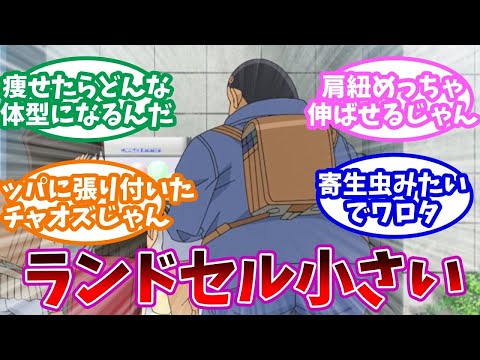
A long-standing inconsistency in the anime adaptation of Detective Conan has suddenly gone viral on social media: the protagonist’s friend Haibara’s school backpack appears disproportionately small compared to his body size. This observation has sparked widespread discussion among fans, revealing deeper insights into anime production, fan culture, and how modern viewers engage with beloved long-running series.
What Happened
Fans of the long-running anime Detective Conan have identified a recurring visual inconsistency: the character Haibara’s school backpack (randoseru) appears unusually small relative to his body size. Despite Haibara being depicted as significantly larger than his peers—with a notably athletic build—his backpack remains proportionally undersized. This observation, which has likely existed since the character’s introduction, has recently exploded across social media platforms including Twitter and YouTube, generating thousands of comments and sparking detailed fan analysis.
The discussion centers on whether this is a production oversight, an intentional artistic choice for comedic effect, or a result of inconsistent animation standards across the series’ 27-year history. Some fans have noted that the backpack’s shoulder straps appear unusually long, suggesting the backpack itself may be deliberately scaled down rather than simply animated inconsistently.
Why It Matters
This seemingly minor visual detail has become significant for several reasons. First, it demonstrates how modern anime audiences engage with content at a granular level, analyzing minute details that previous generations of viewers might have overlooked. Second, it reflects the maturation of anime fandom—viewers are no longer passive consumers but active critics who examine production choices and their implications. Third, the phenomenon reveals how social media amplifies niche observations into widespread cultural moments, transforming what might have been a casual observation into a legitimate topic of fan discourse.
The debate also raises important questions about animation consistency in long-running series, the challenges faced by production teams managing multiple animators across decades, and how intentional design choices can be misinterpreted as production errors.
Background
Detective Conan began serialization in 1996 and received its anime adaptation in 1997, making it one of the longest-running anime franchises in history. The series follows Shinichi Kudo, a high school detective who is transformed into a child and must hide his true identity while solving crimes. Haibara is one of the main characters—a member of the Junior Detective League and known for his larger-than-average build, which serves as a recurring comedic element in the series.
Over 27 years of production, Detective Conan has involved more than 50 different animation directors and countless production staff members. This scale of production naturally creates variations in character design consistency, though the Haibara backpack issue appears more systematic than typical animation fluctuations.
The discussion gained particular momentum in recent years, likely due to the rise of social media platforms that enable rapid dissemination of observations and the increased accessibility of high-quality anime streaming, which allows fans to examine episodes frame-by-frame with unprecedented clarity.
Key Points
- Visual Inconsistency: Haibara’s backpack is consistently depicted as disproportionately small compared to his body, despite his character being significantly larger than other students
- Shoulder Strap Analysis: Fan observations suggest the shoulder straps are unusually long, implying the backpack itself may be intentionally undersized rather than simply poorly animated
- Character Design Context: Haibara’s oversized physique is an established comedic element of his character, raising the question of whether the backpack disproportion is an intentional exaggeration
- Production Complexity: The series’ 27-year history and involvement of 50+ animation directors creates inherent consistency challenges that may explain the phenomenon
- Fan Humor: Online reactions employ creative metaphors—comparing the backpack to a “parachute” or “parasite”—indicating fans are enjoying the absurdity rather than simply criticizing it
- Comparative Analysis: Similar anime like My Hero Academia and Attack on Titan maintain greater consistency in scaling equipment to character size, making Conan’s approach distinctive
Timeline
- 1996: Detective Conan manga serialization begins
- 1997: Anime adaptation launches; Haibara character introduced in early episodes
- 2009: Anime continues with established character designs and animation standards
- Recent Years: Social media platforms enable rapid sharing of detailed visual observations; discussion of Haibara’s backpack size accelerates
- Present: The backpack debate reaches mainstream fan consciousness, generating widespread discussion and analysis
Perspectives
The Production Error Interpretation: Some fans view the backpack disproportion as an unintended consequence of animation inconsistency. With multiple animators working across decades, maintaining perfect character proportion consistency is practically difficult. This perspective treats the phenomenon as a technical oversight rather than a deliberate choice.
The Intentional Design Choice: Other analysts, including long-term fans with extensive anime experience, argue that the backpack sizing is deliberate. This interpretation suggests the production team intentionally exaggerates the disproportion to emphasize Haibara’s oversized physique for comedic effect—a technique also employed in series like Gintama. This perspective aligns with the character’s established role as a source of physical humor.
The Comparative Animation Standard: When compared to other anime handling character size differences, Detective Conan’s approach appears distinctive. Series like Attack on Titan adjust background elements, My Hero Academia scales all equipment proportionally, and JoJo’s Bizarre Adventure employs multiple simultaneous scaling techniques. Conan’s selective scaling of only the backpack suggests either inconsistency or a specific artistic choice.
The Fan Appreciation Perspective: Many long-term fans view the backpack debate positively, seeing it as evidence of the series’ enduring appeal and the depth of fan engagement. Rather than viewing the disproportion as a flaw, they appreciate how it generates community discussion and demonstrates the sophistication of modern anime fandom.
Insights
The Haibara backpack phenomenon reveals several important truths about contemporary anime culture. First, it demonstrates that modern fandom has evolved beyond passive consumption into active critical analysis. Viewers no longer simply watch anime—they examine, document, and debate production choices with the rigor of film critics.
Second, the debate illustrates how social media has democratized media criticism. Observations that might have remained isolated thoughts in individual viewers’ minds now circulate globally within hours, transforming minor details into cultural moments. This represents both the strength and potential fragmentation of fan communities.
Third, the overwhelmingly humorous tone of the discussion—with fans comparing the backpack to parachutes and parasites—indicates that fandom has matured beyond demanding perfection. Instead, fans appreciate the “imperfections” and “quirks” in beloved series, recognizing that maintaining absolute consistency across 27 years and 50+ animators is unrealistic. This acceptance paradoxically deepens appreciation for the work.
Finally, the phenomenon highlights the challenge faced by long-running anime productions. Maintaining character design consistency across decades requires either extraordinary coordination or accepting minor variations. Detective Conan’s approach—whether intentional or not—has become part of the series’ identity, discussed and appreciated by fans as evidence of the show’s authentic, evolving nature rather than as a flaw to be corrected.
For viewers new to Detective Conan, the lesson is to engage with the series’ core strengths: its mystery narratives and character development. For established fans, the backpack debate exemplifies how deeper engagement with beloved works can uncover new layers of appreciation, transforming apparent inconsistencies into opportunities for community discussion and shared enjoyment.