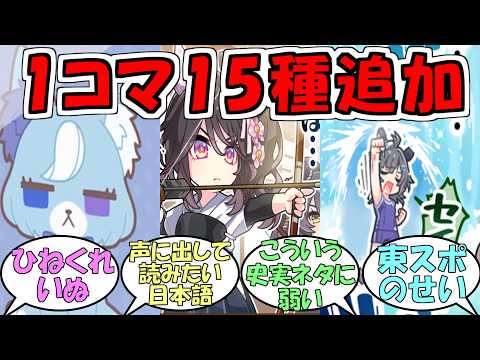
▶ Watch the original YouTube video
Uma Musume 5.5 Anniversary Adds 15 New 4-Panel Comics: Fan Community Erupts Over Character Interactions
The mobile game Uma Musume Pretty Derby released 15 new 4-panel comics during its 5.5 anniversary celebration, sparking widespread enthusiasm across the fan community. The update introduces previously unseen character interactions and deeper backstories, triggering a wave of fan creativity and speculation about future story developments.
What Happened
Uma Musume Pretty Derby released a significant content update featuring 15 new 4-panel comics showcasing character interactions and personal stories. The featured characters include Parnassus, Narita Brian, Effusea, Epiphaneia, Daring Tact, Albireo, Doberman, Caesario, Light Halo, Mejiro Mcqueen, Pizarro, Lulush, Title Holder, Sky Grazer, and Casino Drive. These comics reveal new facets of character personalities, family relationships, and previously unexplored pairings between characters.
Why It Matters
In the competitive mobile gaming landscape, character development and community engagement are critical to player retention. Uma Musume’s approach of gradually revealing character relationships through visual storytelling demonstrates sophisticated understanding of fan psychology. The update exemplifies how strategic content releases can catalyze organic fan-created content, including fan art, fan fiction, and community discussion—extending the game’s cultural reach far beyond the game itself.
Background
Uma Musume Pretty Derby is a mobile game centered on anthropomorphic horse-girl characters competing in races while developing relationships and skills. The game has built a dedicated community through consistent character development and narrative depth. Similar to successful franchises like Fate and Idol Master, Uma Musume leverages character interactions as a primary engagement mechanism. The 4-panel comic format has become a staple for delivering bite-sized narrative content that fans eagerly anticipate and analyze.
Key Points
- 15 new 4-panel comics introduced—Featuring diverse character pairings and previously unexplored scenarios, including training scenes and family relationships
- New character combinations spark fan creativity—Unseen character pairings generate fan theories, artwork, and fiction exploring potential relationships
- Deeper character backstories revealed—Comics explore family dynamics (Doberman’s father relationship), shared interests (waterfall-related characters), and personality nuances
- “Waterfall culture” emerges as fan phenomenon—Three characters (Daring Tact, Arrest, Elimo) connected through waterfall themes generate fan terminology and community bonding
- Official character interpretations validated—Public confirmation of fan theories (such as Albireo’s “contrarian dog” personality) provides creative security while maintaining interpretive freedom
- Speculation about future story content—Community widely predicts these comics will become formal training scenarios in future updates
Notable Character Interactions
Parnassus and Narita Brian Training Scene
One highlighted interaction shows Parnassus and Narita Brian practicing “the way” (traditional etiquette training) together. Official commentary indicates this is standard training for most horse-girl characters, establishing a cultural framework within the game’s world. This detail provides narrative depth by suggesting characters undergo formal cultural education alongside athletic training.
The Waterfall Connection
Three characters—Daring Tact, Arrest, and Elimo—share waterfall-related storylines, creating an organic thematic cluster. Fan comments generated creative terminology like “waterfall faction” and “waterfall culture,” demonstrating how official content sparks community-driven interpretation and bonding.
Doberman’s Family Dynamic
The Doberman comic reveals her father calling her “Belchan,” humanizing the character through family affection. This domestic detail transcends the game’s competitive premise, creating emotional resonance that drives fan engagement and creative interpretation.
Perspectives
From a game design perspective, the 15-comic release represents calculated strategy rather than arbitrary content addition. The specific number balances providing substantial new material while avoiding content saturation—maintaining player motivation to continue engagement. From the fan community perspective, these comics function as narrative breadcrumbs, with players analyzing visual details and speculating about future story developments. The comics validate existing fan theories while opening new interpretive possibilities, creating a feedback loop between official content and fan creativity.
Community Response Analysis
Fan reactions across social media platforms reveal several patterns: visual design appreciation (“Parnassus looks perfect”), creative terminology generation (waterfall-related neologisms), character personality validation (“Albireo’s contrarian nature confirmed”), and future content speculation (“These will become training scenarios”). These responses indicate fans view 4-panel comics not merely as illustrations but as narrative previews and character development confirmations.
Strategic Content Design Elements
The “15” Factor
The specific number of comics released appears strategically chosen. Industry trends show that regular, moderate-sized content updates maintain higher player satisfaction than sporadic massive releases. Fifteen comics provide sufficient novelty to satisfy expectations while preserving discovery potential—players continue engaging to experience all new content.
Character Combination Strategy
Introducing previously unseen character pairings directly stimulates fan creativity. When new character combinations appear, fans generate interpretive content exploring potential relationships, motivations, and backstories. This mechanism transforms official content into a catalyst for community-generated content, exponentially extending engagement beyond the base game.
Official Interpretation Framework
By publicly confirming character traits (such as Albireo’s personality type), the developers provide creative security—fans know their interpretations align with official vision. Simultaneously, this framework maintains creative freedom by leaving specific behavioral expressions and relationship dynamics open to fan interpretation.
Insights
Uma Musume’s success demonstrates that modern mobile games thrive through sophisticated community psychology rather than raw content volume. The 4-panel comic update exemplifies this principle: modest in scale but strategically designed to maximize fan engagement and creative output. By revealing character relationships gradually and introducing new character combinations, the developers maintain perpetual discovery potential. The community’s enthusiastic response—generating terminology, fan art, and speculation—indicates the update successfully triggered the intended engagement cascade. The widespread prediction that these comics will become formal story content suggests fans recognize the developmental pattern, further validating the strategic approach. This model proves particularly effective because it respects player agency: fans feel they discover relationships rather than being told them, creating stronger emotional investment. The waterfall phenomenon exemplifies this—fans independently recognized thematic connections and created community identity around them, with official content merely providing the foundation. Looking forward, the success of this update likely influences future content strategy, with developers potentially expanding character interaction opportunities as a primary engagement mechanism.