▶ Watch the original YouTube video
Gundam SEED FREEDOM Phase 1.5: How a New Protagonist Signals the Franchise’s Evolution
Gundam SEED FREEDOM’s Phase 1.5 introduces Mars, a new protagonist who replaces Kira Yamato as the central character, marking a significant shift in the long-running mecha franchise. The sequence featuring a devastating shuttle explosion serves as a psychological turning point that redefines how the series approaches its narrative themes. This development represents not just a character change, but a deliberate restructuring of the Gundam series toward a more grounded, humanistic perspective.
What Happened
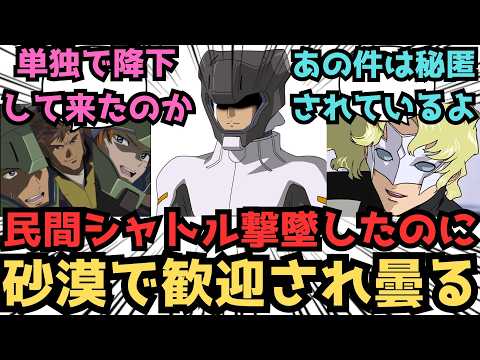
Gundam SEED FREEDOM’s Phase 1.5 introduces Mars, a new protagonist who operates as an Earth Forces pilot, fundamentally shifting the narrative focus away from Kira Yamato. The sequence centers on a catastrophic shuttle explosion carrying civilians—an event Mars witnesses but cannot prevent, creating a defining psychological trauma. The reappearance of Cruze, a antagonist from the original SEED series, suggests that the franchise’s core themes of fate manipulation will continue into this new chapter. Mars subsequently joins Gibraltar Base, establishing himself within the military hierarchy while carrying the burden of classified knowledge about the shuttle incident.
Why It Matters
This narrative shift represents a deliberate democratization of the Gundam franchise. Rather than centering on an exceptional pilot like Kira—a Coordinator with extraordinary abilities—the series now follows an ordinary soldier whose capabilities are limited and whose origins remain obscured. This aligns with broader trends in contemporary anime, where flawed, powerless protagonists have replaced the archetype of the perfect hero. For a franchise that has defined itself through the lens of exceptional individuals, this represents a fundamental philosophical change about how stories of war and responsibility should be told. The introduction of Mars also signals that the SEED timeline continues to evolve beyond its original narrative conclusion, suggesting the franchise remains committed to long-form storytelling and character development.
Background
The Gundam SEED franchise, which began in 2002, established Kira Yamato as its central protagonist across two major series: Gundam SEED and Gundam SEED DESTINY. Kira’s character embodied the archetype of the exceptional pilot—a Coordinator with natural talent, moral conviction, and the burden of being sought after by multiple factions. The original SEED series explored themes of genetic discrimination, the morality of warfare, and the weight of individual responsibility. Cruze, a major antagonist in the original series, represented the concept of fate manipulation and the idea that human destiny could be controlled by those with sufficient power and knowledge. The introduction of Mars in FREEDOM suggests a deliberate narrative choice to examine these same themes through the perspective of an ordinary soldier rather than an exceptional individual.
Key Points
- New Protagonist Mars: An Earth Forces pilot who replaces Kira Yamato as the central character, representing a shift toward ordinary soldiers rather than exceptional pilots
- The Shuttle Explosion: A pivotal scene in which Mars witnesses the destruction of a civilian shuttle but cannot prevent it, creating lasting psychological trauma and establishing his character’s foundational conflict
- Cruze’s Return: The reappearance of the original series’ antagonist suggests the continuation of fate-manipulation themes and indicates Mars will face similar pressures as previous protagonists
- Classification and Secrecy: The shuttle incident is classified by the National Defense Committee, meaning Mars carries hidden knowledge that positions him as a political tool within the military structure
- Relationship with Kira: Mars demonstrates respect toward Kira, suggesting a generational transition rather than replacement, with implications for how the two characters will interact in future episodes
- Standard Equipment: Mars operates standard-issue mobile suits (Zouart, Jinn, etc.) rather than specialized equipment, emphasizing his status as an ordinary soldier rather than an exceptional pilot
Narrative Analysis: What Mars Represents
Mars embodies a fundamental departure from the Gundam protagonist archetype. His characterization emphasizes helplessness rather than capability—his fingers slip from the controls during the shuttle explosion, conveying psychological destabilization rather than heroic action. This mirrors the psychological state experienced by characters in earlier Gundam series like Judau Ashta from Gundam ZZ, but with a crucial difference: Mars possesses the genetic designation of a Coordinator born on Earth, suggesting latent potential that remains underdeveloped or suppressed. This creates a character caught between two states—neither fully ordinary nor genuinely exceptional.
The shuttle explosion scene functions as more than a combat sequence; it represents the beginning of Mars’s loss of innocence and humanity. The presence of civilians in the destroyed shuttle transforms the event from a military engagement into an act of inadvertent killing. This psychological burden mirrors the experience depicted in Gundam 0080: War in the Pocket, where characters confront the reality that warfare involves unintentional casualties and moral compromises that cannot be undone.
Cruze’s evident enjoyment of Mars’s suffering suggests a thematic continuation: the manipulation of human destiny by those who view such manipulation as entertainment. Cruze’s reappearance indicates that the FREEDOM narrative will explore how individual agency becomes subsumed within larger political structures. Mars, unaware of the forces manipulating him, already functions as a political instrument—his actions are being utilized by the National Defense Committee to advance institutional goals while his knowledge of the shuttle incident is suppressed.
Broader Implications for the Gundam Franchise
The introduction of Mars reflects contemporary trends in anime storytelling, where imperfect protagonists have replaced idealized heroes. Series like Attack on Titan, Jujutsu Kaisen, and Chainsaw Man have demonstrated audience receptivity to protagonists defined by vulnerability and limitation rather than exceptional ability. Mars represents the Gundam franchise’s adaptation to this evolving narrative landscape.
This shift also suggests a philosophical reorientation within the franchise. Previous Gundam series, particularly SEED and SEED DESTINY, centered on how exceptional individuals navigate moral dilemmas created by their own exceptional status. FREEDOM appears to ask a different question: how do ordinary people function within systems designed to exploit them? How do soldiers without exceptional abilities maintain their humanity when forced to commit acts they cannot prevent or control?
The relationship between Mars and Kira carries particular significance. Rather than a simple replacement, the narrative suggests a generational transition. Kira’s era—defined by exceptional ability and moral clarity—gives way to Mars’s era, characterized by uncertainty and limited agency. This mirrors the historical transition between Amuro Ray and Kira Yamato across different Gundam timelines, suggesting the franchise understands protagonist succession as inherently involving conflict and philosophical disagreement.
Community Reception and Interpretation
Online responses to Phase 1.5 have demonstrated the Gundam fanbase’s receptivity to narrative experimentation. Twitter discussions emphasized appreciation for the introduction of new perspectives alongside established characters. Analytical communities noted that Cruze’s return signals the continuation of the SEED series’ thematic preoccupations with fate and manipulation. YouTube comments frequently highlighted the psychological realism of Mars’s emotional response to the shuttle explosion, suggesting that the production team’s intention to present an “ordinary perspective” has successfully resonated with viewers.
Critical responses acknowledged the shock value of the shuttle explosion sequence while contextualizing it within the franchise’s historical commitment to depicting warfare’s tragic consequences. This suggests the Gundam fanbase maintains sophisticated expectations regarding how the series should handle moral complexity and civilian casualties.
Insights and Future Considerations
Gundam SEED FREEDOM represents a deliberate evolution rather than a departure from franchise principles. The introduction of Mars signals that the series remains committed to exploring how individuals navigate systems of power, warfare, and moral compromise—but from a fundamentally different perspective than previous narratives.
Three potential narrative trajectories emerge from Phase 1.5’s setup: Mars could discover the truth about the shuttle incident and direct his anger toward Cruze; he could collaborate with Kira to confront larger conspiracies; or he could experience an identity crisis upon learning the truth about his origins as a Coordinator born on Earth. Each scenario would explore different dimensions of the franchise’s core themes.
The significance of FREEDOM extends beyond character introduction. It demonstrates that the Gundam franchise remains capable of structural innovation while maintaining thematic continuity. Mars’s emergence as a protagonist suggests that the series understands its own evolution—that new eras require new perspectives, and that the most compelling stories emerge when ordinary individuals confront extraordinary circumstances without the safety net of exceptional ability.
For viewers approaching FREEDOM, understanding Mars requires familiarity with Kira Yamato’s journey. The contrast between an exceptional pilot and an ordinary soldier provides the narrative framework through which Mars’s struggles gain meaning. The shuttle explosion scene deserves particular attention, as it establishes the psychological foundation for all subsequent character development. Cruze’s dialogue and demeanor warrant careful analysis, as they typically foreshadow structural elements of the broader narrative.