▶ Watch the original YouTube video
Why the Jim Command Squad Leader Is Overpowered: Gundam Side Story Fan Reactions Analyzed
After 15 years of studying the Gundam franchise, a character emerges that defies conventional narrative logic: the Jim Command Squad Leader, a mass-produced mobile suit pilot who achieves ace-level combat performance through experience and tactical skill alone. Fan reactions to this character reveal a fascinating shift in how audiences perceive power within the Gundam universe.
What Happened
The Jim Command Squad Leader, originally a protagonist from the game Gundam War Records, has gained significant attention through manga adaptations and fan discussions. Videos analyzing this character have sparked extensive commentary about his combat capabilities, with fans expressing both amazement and analytical appreciation for how a standard-issue mobile suit pilot achieves extraordinary battlefield results. The character’s strength lies not in special abilities or advanced technology, but in combat experience, tactical judgment, and unconventional weapon usage.
Why It Matters
The Jim Command Squad Leader represents a potential paradigm shift in the Gundam franchise. Since the original Mobile Suit Gundam series, the narrative has centered on “Newtype” pilots and exceptional individuals with superhuman abilities. This character challenges that convention by demonstrating that a non-Newtype, standard-issue mobile suit pilot can achieve equivalent threat levels through pure skill and experience. This challenges the franchise’s long-standing “Newtype supremacy” narrative and suggests that human effort and tactical expertise can rival innate superhuman ability.
Background
The Jim Command Squad Leader originates from Gundam War Records, a video game where he serves as the player character. When adapted into manga form as part of Gundam side stories, the developers faced a creative challenge: how to translate “game-like impossibilities”—where a single player defeats multiple enemy units—into narratively convincing storytelling. The solution was to establish him as a veteran soldier who has survived since the early stages of the One Year War, accumulating combat experience and technical mastery rather than relying on superhuman abilities.
The character’s primary weapon innovation involves using his shield—made of Luna Titanium, a material capable of withstanding direct beam rifle fire—as an offensive tool. Rather than treating the shield purely as defensive equipment, he wields it as a cutting weapon, capable of severing enemy mobile suit pilots in close combat. This represents a fundamental reinterpretation of standard military equipment.
Key Points
- The Jim Command Squad Leader uses his Luna Titanium shield as an offensive weapon, capable of lethal strikes against enemy pilots
- In game form, he has records of destroying multiple mobile armors and ace-piloted units within short timeframes
- He survives intense combat zones where entire units are eliminated, demonstrating exceptional individual combat capability
- His strength derives from experience and technical skill rather than Newtype abilities or superior mobile suit technology
- Fan reactions emphasize narrative coherence—audiences find his strength believable rather than contrived
- His victories come with a human cost: the loss of subordinates, creating psychological complexity alongside combat prowess
The Innovation of “Shield as Weapon”
The most striking aspect of the Jim Command Squad Leader’s combat approach is his weaponization of defensive equipment. Across over 300 mecha anime titles, shield usage as an offensive tool remains exceptionally rare. While characters like Kira Yamato from Gundam SEED employed shields for pushing back enemy units, none achieved the lethal precision of using a shield to sever an opponent’s neck.
This innovation works because of established Gundam canon: Luna Titanium can withstand direct beam rifle strikes. The Jim Command Squad Leader’s insight is recognizing that if a shield can survive beam weapons, it can function as a cutting implement. The critical distinction is translating technical knowledge into practical battlefield application—a cognitive leap most Gundam pilots never make.
Fan comments reveal appreciation for this tactical creativity. Rather than dismissing his strength as contrived, audiences recognize the logical consistency: the shield’s material properties genuinely support its use as a weapon. This explains why fan reactions lean toward “that makes sense” rather than “that’s ridiculous.”
Game-to-Narrative Translation
The most insightful fan observation addresses the core creative challenge: “When you adapt a game protagonist into manga, they become monsters.” Video games inherently require protagonists to possess superhuman capabilities—players must simultaneously engage multiple enemies, survive overwhelming odds, and achieve objectives that would be tactically impossible for realistic soldiers.
The Jim Command Squad Leader’s manga adaptation successfully converts these “game impossibilities” into narrative plausibility through a single mechanism: compressed timeline and accumulated experience. Rather than explaining away his victories through supernatural ability, the narrative establishes that he experienced multiple major battles in rapid succession, allowing his combat skills to develop at an accelerated but believable pace.
This approach differs fundamentally from other Gundam side stories. Bernard Wiseman in Gundam 0080 relied on guerrilla tactics and ambush strategies. Cima Garahau in Gundam 0083 depended on superior mobile suit performance. The Jim Command Squad Leader achieves comparable results through direct confrontation with standard equipment, making his accomplishments narratively more impressive.
Comparative Analysis: Gundam Ace Pilots
Jim Command Squad Leader (Gundam War Records/Manga): Mass-produced Jim Command mobile suit, strength derived from experience and tactical judgment, psychological vulnerability tied to subordinate losses.
Bernard Wiseman (Gundam 0080): Zaku II pilot, relies on guerrilla warfare and ambush tactics, limited in direct combat capability.
Cima Garahau (Gundam 0083): Jim II and Gelgoog pilot, depends on mobile suit performance and tactical coordination, lacks Newtype abilities.
Amuro Ray (Mobile Suit Gundam): Gundam and Nu Gundam pilot, possesses Newtype abilities and superior mobile suit technology, demonstrates psychological fragility.
The Jim Command Squad Leader achieves the most impressive results under the most restrictive conditions: standard mobile suit, no superhuman abilities, direct confrontation. This positions him as the most constrained yet most effective combatant in Gundam side story canon.
Fan Community Response Analysis
Video comments reveal three distinct response categories, each indicating different aspects of the character’s appeal.
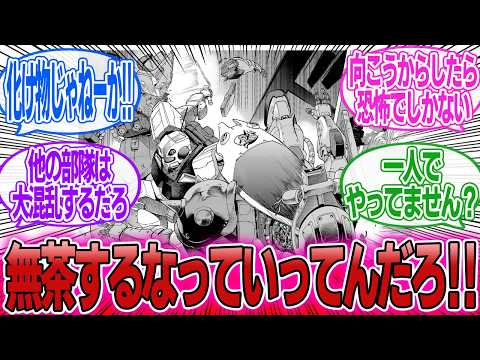
Amazement responses focus on pure shock value: “The shield is too strong,” “He’s a monster,” “Genuinely powerful.” Notably, these reactions are positive rather than dismissive. Audiences accept his strength as legitimate rather than contrived.
Analytical responses
Emotional responses
The simultaneous presence of all three response types indicates that audiences perceive the Jim Command Squad Leader as a fully realized character rather than a power fantasy. His strength generates intellectual engagement, tactical discussion, and emotional investment—the hallmarks of effective character writing.
Broader Implications for the Gundam Franchise
The Jim Command Squad Leader represents a potential turning point in Gundam narrative philosophy. Since the original 1979 series, the franchise has centered on Newtype superiority—the concept that superhuman psychic ability determines combat outcomes. This character demonstrates that experience, technical mastery, and tactical intelligence can achieve equivalent results.
This shift carries thematic weight: the narrative suggests that sustained effort and accumulated knowledge matter more than innate talent. For a franchise that has explored Newtype mysticism extensively, introducing a non-Newtype ace pilot who achieves comparable feats offers fresh narrative possibilities.
However, questions remain. Some fan observations note potential inconsistencies in how his victories are explained—whether certain defeats of advanced mobile armors fully align with established power scaling. The manga adaptation successfully converts game mechanics into narrative logic, but the conversion may not be entirely seamless.
Insights
The Jim Command Squad Leader’s popularity reveals audience appetite for character strength grounded in realism rather than supernatural ability. Fans respond positively to power that can be explained through experience, tactical skill, and equipment mastery—elements that feel achievable within human parameters.
The character also demonstrates that the most compelling narratives don’t necessarily feature the most powerful abilities. Instead, they feature characters whose strength emerges from understandable sources and carries believable costs. The Jim Command Squad Leader’s victories come at the price of subordinate casualties, creating psychological complexity that elevates him beyond simple power fantasy.
For the Gundam franchise specifically, this character suggests a potential evolution: moving from “Newtype supremacy” narratives toward stories where human effort, experience, and tactical excellence can rival superhuman ability. This shift could broaden the franchise’s thematic range and appeal to audiences seeking character development grounded in realistic skill progression rather than mystical power systems.
The Jim Command Squad Leader ultimately represents not just a strong character, but a philosophical challenge to long-standing franchise conventions—one that audiences have embraced because it feels earned rather than arbitrary.