▶ Watch the original YouTube video
How Internet Culture Reimagined Gundam’s Lalah Sun as a Rage-Quitting Gamer
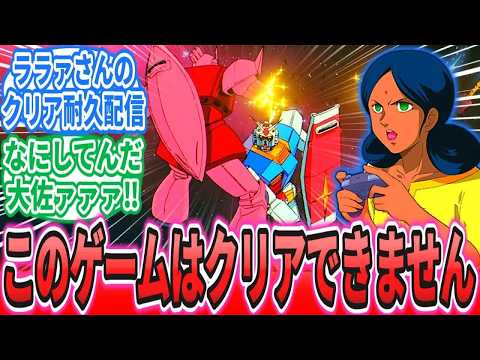
A viral internet meme comparing Mobile Suit Gundam’s most powerful Newtype, Lalah Sun, to a frustrated gamer throwing a controller has sparked deeper conversations about character interpretation and fandom creativity. The joke reveals how modern anime fans recontextualize classic characters through contemporary cultural frameworks, transforming a tragic figure into a relatable symbol of powerlessness.
What Happened
Internet communities, particularly on Twitter, YouTube, and 5channel, have been circulating a humorous comparison describing Lalah Sun—a pivotal character from the original 1979 Mobile Suit Gundam series—as someone who would rage-quit while gaming and throw a controller. The meme has gained traction as fans creatively expand the concept, imagining scenarios like Lalah streaming games or other characters witnessing her gaming frustration. This lighthearted observation has evolved into a broader discussion about Lalah’s character, her relationship with protagonist Amuro Ray and antagonist Char Aznable, and what her overwhelming Newtype abilities actually represent.
Why It Matters
This internet phenomenon illustrates how fandom interprets and reinterprets classic works across generational and cultural boundaries. Rather than dismissing the meme as mere comedy, the discourse reveals that modern anime audiences—many of whom are also gamers—naturally understand character psychology through gaming metaphors. The comparison between Lalah’s uncontrollable Newtype powers and a player’s frustration when unable to control a game character speaks to fundamental human experiences of powerlessness and lack of agency. This recontextualization demonstrates how timeless storytelling can generate fresh meaning when filtered through contemporary cultural lenses, keeping decades-old narratives relevant to new audiences.
Background
Lalah Sun is one of the most enigmatic and powerful characters in the Gundam franchise. As a Newtype—a human capable of extrasensory perception and psychic abilities—Lalah possesses overwhelming power that unconsciously influences those around her, particularly Char and Amuro. Unlike other major characters who pursue clear objectives (Char seeks revenge, Amuro pursues growth), Lalah lacks agency over her own abilities and circumstances. She is consistently portrayed as a tragic figure whose immense power operates beyond her conscious control, making her a vessel for forces larger than herself rather than an active agent of her own destiny. This fundamental characteristic of her character—possessing great power while lacking the ability to direct it—forms the conceptual foundation for the “controller-throwing” comparison.
Key Points
- Internet users have humorously compared Lalah Sun to a gamer who would rage-quit and throw a controller, based on her uncontrollable Newtype abilities
- The meme represents Lalah’s core character trait: possessing overwhelming power while lacking agency or control over how that power manifests
- Modern fandom reinterprets classic characters through gaming frameworks, reflecting the shared cultural background of contemporary anime audiences
- The comparison highlights Lalah’s tragic position in the narrative—she cannot choose her own path, unlike Char or Amuro
- Fan communities have creatively expanded the concept with detailed scenarios and character comparisons across multiple platforms
- This phenomenon demonstrates how timeless works generate new meaning when recontextualized through contemporary cultural references
The Psychology Behind the Comparison
The “controller-throwing” image works because it captures a specific emotional state: frustration arising from powerlessness. When gamers throw controllers, it typically occurs when their will is not reflected in the game’s outcome—when they cannot control the character or influence events despite their efforts. Lalah exists in precisely this psychological state. Her Newtype abilities act upon the world and affect others’ emotions and decisions, yet she cannot control these abilities or their consequences. She is, metaphorically, a player whose character moves against their will.
This interpretation parallels other powerful but constrained characters across anime. Rei Ayanami from Neon Genesis Evangelion similarly possesses extraordinary abilities while lacking human agency and choice. Zero Two from Darling in the Franxx is driven by instinctual impulses beyond her conscious control. What these characters share is the fundamental contradiction of power without autonomy—a condition that gaming culture has developed a precise vocabulary to describe.
Fan Community Responses
Twitter users expanded the meme with creative scenarios: “If Lalah streamed games, she’d definitely rage,” “Char and Amuro would have their hearts broken watching Lalah’s gaming streams.” YouTube commenters noted that viewing Lalah’s tragedy through a gamer’s lens actually deepens appreciation for her character’s pathos. On 5channel’s Gundam forums, fans engaged in detailed speculation about character-specific gaming habits: “Lalah would max out controller sensitivity,” “Char would disable gyro controls.”
These responses reveal that fans are not merely joking but engaging in creative character analysis. By translating Lalah’s psychological state into gaming terminology, they make her internal experience legible to a generation for whom gaming is a primary mode of understanding interaction, control, and consequence.
Generational Context
The prevalence of this interpretation reflects a significant shift in fandom culture. Early 2010s character analysis typically grounded itself in original source material and creator intent. Since 2015, particularly with the rise of Twitter and YouTube comment culture, fans increasingly reinterpret characters through contemporary frameworks. For audiences who grew up with gaming as a primary medium, understanding characters through gaming psychology is natural and intuitive.
This represents not a departure from serious analysis but an evolution of it. Modern fans use gaming metaphors not to diminish characters but to make their psychological experiences comprehensible within their own cultural vocabulary. The fact that Gundam, a 1979 work, can generate such contemporary reinterpretations demonstrates the depth and universality of its character writing.
The Tension Between Interpretation and Canon
An important caveat exists: the “rage-quitting gamer” interpretation contrasts with Lalah’s canonical portrayal. Director Yoshiyuki Tomino depicted Lalah as contemplative and serene, often shown in meditation or quiet reflection. She is not emotionally volatile or impulsive. The meme presents her as frustrated and reactive—a significant departure from her source characterization.
This gap between fan interpretation and original intent is not a flaw but rather evidence of the work’s enduring power. Great art generates new meanings across time and cultural contexts. The fact that Lalah’s character can support both her canonical serenity and the fan-generated “frustrated gamer” reading suggests the depth of her characterization. She contains enough complexity to accommodate multiple, even contradictory, interpretations.
Broader Implications
This phenomenon suggests that “gamer-fication” of anime character interpretation will continue expanding. As gaming becomes increasingly central to how younger audiences understand interaction, agency, and consequence, it will naturally become the primary lens through which they analyze narrative characters. This is not superficial but reflects genuine psychological insight: gaming mechanics and character psychology both deal with fundamental questions of control, choice, and outcome.
The Lalah Sun meme exemplifies how classic works remain vital not by remaining static but by remaining open to reinterpretation. Mobile Suit Gundam’s continued relevance across four decades stems partly from its willingness to be understood anew by each generation. The original creators could not have anticipated a gaming-literate fandom, yet the work’s foundational character psychology proves compatible with this framework.
Conclusion
The “Lalah throws controllers” meme represents more than internet humor. It demonstrates how contemporary fandom engages in sophisticated character analysis by translating internal psychological states into culturally legible metaphors. By understanding Lalah through gaming terminology, fans articulate something true about her character: she possesses immense power yet lacks the agency to direct it, creating a fundamental frustration that resonates across media and generations. This creative reinterpretation keeps a 40-year-old character relevant, meaningful, and newly understood by audiences who might never have connected with her through traditional analysis alone.