▶ Watch the original YouTube video
Why Manipulation-Type Abilities in Hunter x Hunter Remain Undetected: A Deep Analysis of the Series’ Ability System
A viral video examining Feitan’s logical objection to Shalnark’s manipulation abilities has reignited debate about Hunter x Hunter’s intricate Nen system. The analysis reveals why manipulation-type powers evade detection, even among fellow ability users, through a combination of hidden mechanics, information asymmetry, and deliberate narrative ambiguity that defines the series’ design philosophy.
- What Happened
- Why It Matters
- Background
- Key Points
- The Three-Layer Structure of Nen Knowledge
- Four Factors Preventing Manipulation Ability Detection
- Comparative Analysis: Manipulation Abilities Across Anime
- The Role of Narrative Mystery in Series Design
- Feitan’s Objection: A Window Into Information Asymmetry
- Practical Insights for Deeper Engagement
- Community Reception and Ongoing Debate
- Insights: Mystery as Artistic Choice
What Happened
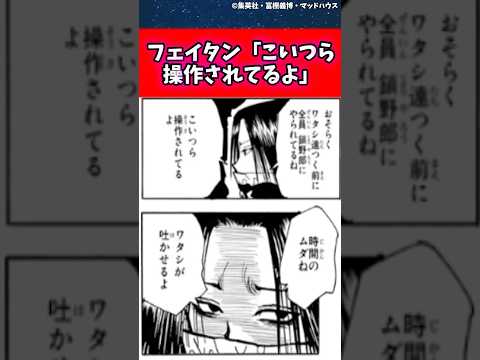
A YouTube video has gained significant traction by highlighting a seemingly logical flaw in Hunter x Hunter’s narrative: Feitan questions why Shalnark doesn’t simply verify whether his manipulation ability is actually working by testing it directly. The video explores why Shalnark doesn’t pursue this verification, uncovering deeper mechanics within the series’ Nen ability system that explain why manipulation-type powers remain hidden even from other ability users.
Why It Matters
Hunter x Hunter is celebrated for one of anime’s most meticulously designed ability systems. Understanding why manipulation abilities evade detection reveals the intentional architectural choices creator Yoshihiro Togashi made to balance power dynamics, maintain narrative tension, and create lasting mysteries that sustain reader engagement. This analysis demonstrates how carefully constructed rule systems can enhance storytelling by leaving strategic gaps in explanation.
Background
The Nen system in Hunter x Hunter divides abilities into six categories: Enhancement, Transformation, Emission, Materialization, Manipulation, and Specialization. Manipulation-type users, such as Shalnark with his computer-controlled Nen beasts and Neferpitou with her ability to control soldiers, possess powers that appear formidable yet seem surprisingly vulnerable to detection in combat scenarios. This apparent contradiction has puzzled fans for over 15 years since the anime’s 2008 debut.
The Chimera Ant arc, which introduced Neferpitou’s manipulation abilities, first crystallized this question: why don’t the auras of manipulated objects become visible, and why don’t other ability users simply verify whether they’re being controlled?
Key Points
- Feitan’s Objection Is Logically Sound: Feitan’s suggestion that Shalnark could verify his ability’s effectiveness by testing it directly represents a rational approach that highlights a potential narrative inconsistency.
- Manipulation Secrets Are Hidden Even From Allies: Manipulation-type users conceal the true mechanics of their abilities even from fellow ability users, preventing easy verification or counter-strategies.
- Auras Become Invisible on Controlled Objects: A core characteristic of manipulation abilities is that controlled objects don’t display visible auras, making detection significantly more difficult than with other ability types.
- Experience-Based Detection Remains Rare: While Benjamin’s facility soldiers could eventually recognize controlled beings through repeated exposure, such experience is exceptional rather than standard in combat situations.
- Combat Priorities Override Verification: Feitan’s preference to eliminate threats rather than verify them reflects realistic combat psychology where incomplete information forces immediate action.
- Information Asymmetry Creates Strategic Advantage: The gap between what manipulation users know and what opponents understand provides a fundamental tactical edge that sustains the ability’s effectiveness.
The Three-Layer Structure of Nen Knowledge
Layer One: General Ability Mechanics — Information that combat opponents might deduce through observation. For example, Uvogin’s Enhancement ability’s defensive properties become apparent through visual inspection.
Layer Two: Detailed Ability Specifications — Information unknown even to same-category ability users. The precise operational accuracy of Shalnark’s computer Nen beast exemplifies this hidden knowledge.
Layer Three: Fundamental Ability Principles — Information known only to the ability creator. Why manipulation abilities render auras invisible remains in this category, accessible only to the user themselves.
Four Factors Preventing Manipulation Ability Detection
Factor One: Invisible Auras on Controlled Objects — Unlike Stand abilities in JoJo’s Bizarre Adventure, which remain visible to Stand users, manipulation-type Nen abilities deliberately obscure the auras of controlled targets, providing a fundamental detection advantage.
Factor Two: Concealed Mechanics Among Practitioners — Manipulation users deliberately withhold the true mechanisms of their abilities from other ability users. Shalnark may not pursue verification precisely because he himself doesn’t fully understand the fundamental principles underlying his own power.
Factor Three: Exceptional Rather Than Standard Detection — Benjamin’s soldiers represent an extreme outlier—individuals who developed detection capabilities through extensive repeated exposure. Standard combat scenarios rarely provide such opportunities for experiential learning.
Factor Four: Rational Combat Decision-Making — Feitan’s choice to prioritize elimination over verification reflects sound tactical reasoning. In actual combat, complete ability understanding proves impossible; fighters must act on incomplete information.
Comparative Analysis: Manipulation Abilities Across Anime
JoJo’s Bizarre Adventure: Stand abilities remain visible to Stand users, creating a fundamental difference from Hunter x Hunter’s invisible manipulation mechanics. This visibility increases detection difficulty for opponents.
Attack on Titan: Titan transformation abilities are visually apparent and their mechanisms are partially explained. Manipulation abilities in Hunter x Hunter maintain deliberate mystery around their core principles.
Jujutsu Kaisen: Cursed techniques are observable and their functions receive explanation. Hunter x Hunter’s manipulation system preserves intentional ambiguity about underlying mechanisms.
The Role of Narrative Mystery in Series Design
Togashi employs mystery as a deliberate design tool rather than narrative oversight. By withholding complete explanations of manipulation mechanics—similar to how Neon Genesis Evangelion leaves AT Fields undefined—the series maintains depth and encourages sustained audience analysis. This strategy mirrors contemporary anime trends toward increasingly complex ability systems seen in Attack on Titan, Jujutsu Kaisen, and My Hero Academia.
The manipulation ability mystery exemplifies how incomplete information can enhance rather than diminish storytelling. Readers remain engaged precisely because questions persist without definitive answers.
Feitan’s Objection: A Window Into Information Asymmetry
Feitan’s System Knowledge Gap: As a Emission-type user, Feitan lacks detailed understanding of manipulation mechanics, leading him to propose straightforward verification strategies that manipulation specialists would never pursue.
Combat Psychology: Feitan’s preference for immediate action over investigation reflects realistic combat decision-making where perfect information remains unattainable and delay creates vulnerability.
Strategic Information Disparity: Shalnark understands manipulation principles that Feitan cannot access, creating the psychological dynamic where Feitan’s logical suggestion appears sound to him but remains impractical to Shalnark.
Practical Insights for Deeper Engagement
Master the Nen System Foundation: Understanding the six ability categories and their inherent characteristics provides essential context for appreciating manipulation abilities’ unique properties.
Rewatch the Chimera Ant Arc: Multiple viewings reveal layered details about manipulation mechanics. Initial confusion often transforms into comprehension upon repeated exposure, mirroring how characters themselves learn through experience.
Analyze Manipulation Combat Scenes: Observing how Shalnark and Neferpitou employ their abilities reveals hidden information about aura visibility, control precision, and operational range.
Compare With Successor Series: Examining Jujutsu Kaisen’s Domain Expansion system as an evolution of Hunter x Hunter’s ability framework illuminates how the original series influenced contemporary anime design.
Community Reception and Ongoing Debate
Online communities have responded with substantial engagement to this video’s analysis. Twitter users widely acknowledge that Feitan’s objection holds logical merit, with many expressing confusion about Shalnark’s decision to avoid verification. Simultaneously, alternative interpretations suggesting that manipulation secrets remain hidden even among practitioners have gained traction, supporting the video’s central thesis.
Reddit and 4chan discussion threads have generated numerous hypotheses: some propose that aura invisibility stems from Nen application rather than fundamental principle, others suggest manipulation abilities transcend standard Nen categories entirely. YouTube comments predominantly indicate that viewers found the video’s explanation clarifying, though dissenting opinions maintain that Feitan’s objection remains valid regardless of the proposed mechanisms.
This diversity of interpretation itself validates Hunter x Hunter’s design philosophy—the series generates sustained analytical engagement precisely because definitive answers remain elusive.
Insights: Mystery as Artistic Choice
The manipulation ability mystery represents intentional artistic design rather than narrative inconsistency. Togashi constructs his ability system to reward careful observation while preserving strategic ambiguity. Feitan’s objection, though logically sound, exists within a narrative framework where information asymmetry, combat psychology, and deliberate concealment create a coherent system despite surface-level contradictions.
The unanswered question of whether Togashi has fully defined manipulation mechanics in his personal notes remains secondary to the series’ actual achievement: creating a system complex enough to sustain 15+ years of analytical discussion. Whether the mystery stems from intentional design or incomplete development matters less than its effect—deepening reader investment through engagement with unresolved questions.
The Dark Continent arc may eventually clarify manipulation ability principles, but the series’ enduring appeal depends less on eventual revelation than on the intellectual and emotional engagement the mystery currently generates. This approach distinguishes Hunter x Hunter as a work of ability system artistry, where strategic incompleteness enhances rather than diminishes narrative value.