▶ Watch the original YouTube video
Sekiro Movie Merchandise Signals FromSoftware’s Serious Commitment to Film Adaptation
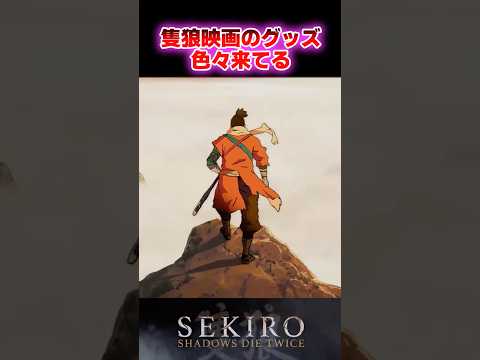
Multiple pieces of merchandise for a Sekiro: Shadows Die Twice film adaptation have begun rolling out, suggesting that FromSoftware is moving beyond announcement into active production. The merchandise strategy and quality indicate a major studio-level commitment to bringing the acclaimed action game to the screen, potentially breaking the pattern of failed video game adaptations.
What Happened
FromSoftware has begun rolling out merchandise for a Sekiro: Shadows Die Twice film adaptation, with multiple products launching simultaneously. This merchandise push represents a significant escalation from the announcement phase, indicating the project has moved into active production and long-term marketing strategy. The breadth and quality of merchandise being developed suggests substantial budget allocation and careful planning by the production team.
Why It Matters
Video game film adaptations have historically struggled to capture the essence of their source material, with failures far outnumbering successes over the past 15 years. Sekiro’s merchandise rollout signals a different approach—one where the game’s original creator maintains creative control rather than handing the property to filmmakers unfamiliar with its design philosophy. This could represent a turning point for how major game studios approach film adaptation, particularly when they remain actively involved in production decisions.
Background
The video game film adaptation landscape has been marked by repeated disappointments. Projects like the 2010 Monster Hunter film, Sonic the Hedgehog’s initial design, and numerous other adaptations have failed to preserve the core appeal of their source games. Common failure patterns include abandoning the game’s world-building, insufficient character psychology, and misunderstanding how to translate interactive experiences into passive cinema. Sekiro: Shadows Die Twice, released in 2019, stands apart from many games due to its tightly structured narrative, clear protagonist with defined motivations, and visually distinctive aesthetic rooted in a fictionalized Sengoku-era Japan. These elements align naturally with traditional three-act film structure, making it more adaptable than many game properties.
Key Points
- Multiple Sekiro movie merchandise items are being developed and released simultaneously, indicating the project has progressed beyond planning into active production
- The quality and diversity of merchandise suggests significant budget investment and careful coordination between FromSoftware and production partners
- FromSoftware’s direct involvement in the film project substantially increases the likelihood that the game’s core identity will be preserved
- Sekiro’s narrative structure—featuring a clear protagonist with defined goals—makes it more naturally suited to film adaptation than many other game properties
- The merchandise strategy mirrors major studio approaches used for franchises like the Marvel Cinematic Universe, suggesting this is being treated as a tentpole entertainment project rather than a standard game tie-in
- Fan reactions show both strong optimism and cautious skepticism rooted in past game adaptation failures
Merchandise as Production Indicator
The timing and scale of merchandise development typically correlates directly with a film project’s advancement stage. When merchandise begins rolling out before official release announcements, it signals that production design has been finalized and the creative direction is locked. In the case of Sekiro, the simultaneous launch of multiple merchandise items suggests that visual development for the film is substantially complete. This is particularly significant given the challenge of translating Sekiro’s distinctive visual language—particularly its fluid, precise combat animations and Japanese aesthetic—into physical merchandise form. Successfully executing this translation indicates the production team has solved major creative hurdles.
Historical precedent supports this analysis. When Final Fantasy XV’s film adaptation was announced in 2015, merchandise planning had already been underway for two years. The merchandise-to-production timeline suggests Sekiro’s film has moved from the “greenlit” phase into the “in active development” phase.
Why Sekiro Differs from Past Game Adaptations
Sekiro possesses structural advantages that most game properties lack. The game features a protagonist with clear motivations—a shinobi seeking to rescue his lord, Ashina Genichiro—and a narrative arc that maps cleanly onto three-act film structure. This contrasts sharply with games like Dark Souls, which intentionally obscure narrative details to encourage player interpretation. While Dark Souls is arguably a superior game in artistic terms, it presents significant adaptation challenges precisely because it lacks a defined narrative spine. Multiple Dark Souls film projects have been announced and abandoned, primarily because the source material resists traditional screenplay structure.
Additionally, Sekiro’s visual setting—a fictionalized Sengoku-era Japan—is more straightforward to realize in live-action film than fantastical game worlds. Production design, costume, and practical effects can draw from historical reference while maintaining the game’s distinctive aesthetic. This reduces the technical risk that plagued adaptations of more abstract game properties.
Perspectives
Optimistic View: Fan communities have expressed cautious optimism, with many noting that the merchandise quality and FromSoftware’s involvement suggest genuine commitment. The logic is sound: projects with substantial merchandise investment typically receive corresponding production budgets. Additionally, FromSoftware’s reputation as a design-focused studio with distinctive creative vision suggests they will not permit their work to be significantly altered during adaptation.
Skeptical View: Other fans express concern rooted in legitimate historical precedent. Video game adaptations have failed repeatedly despite studio involvement and substantial budgets. The concern that Sekiro’s essence—the player’s experience of mastering difficult combat through trial and error—cannot be translated to passive cinema viewing is valid. A film cannot replicate the satisfaction of defeating a boss after dozens of attempts.
Industry Perspective: The merchandise strategy itself indicates this project is being positioned as a major entertainment property rather than a niche game adaptation. The long-term marketing approach mirrors tentpole film strategies, suggesting studios and distributors have confidence in the project’s commercial potential beyond the core gaming audience.
Critical Success Factors
Several elements will determine whether this adaptation succeeds where others have failed. Director selection will be crucial—the filmmaker must understand both action cinema and the game’s philosophical underpinnings. Casting of the protagonist role will significantly impact audience reception, as the shinobi character must convey both physical capability and emotional depth. The film’s release timeline will also matter; premature release before production is truly complete could undermine the project’s credibility.
Most critically, the action choreography must capture Sekiro’s signature combat style. The game’s appeal centers on precise, flowing combat with clear risk-reward mechanics. Translating this to film without losing the sense of weight and consequence will require exceptional action direction.
Insights
The Sekiro film adaptation represents a potential inflection point in how major game studios approach adaptation. Rather than licensing their properties to filmmakers and stepping back, FromSoftware’s active involvement suggests a new model where game creators maintain creative stewardship through the adaptation process. This approach addresses the primary failure mode of past adaptations: the disconnect between the game’s original vision and the film’s execution.
The merchandise rollout demonstrates that studios are learning from past failures. By treating game adaptation as a major entertainment initiative requiring coordinated marketing, design, and production efforts—rather than a secondary licensing opportunity—the industry is beginning to invest appropriately in these projects.
However, the fundamental challenge remains: translating an interactive experience into a passive one. No amount of production budget or creative control can fully solve this problem. The film’s success will ultimately depend on whether filmmakers can create a compelling cinematic experience that honors the game’s essence while functioning as a standalone work. The merchandise strategy suggests confidence in this possibility, but confidence alone has not guaranteed success in past adaptations. The coming months will reveal whether Sekiro breaks the pattern or continues it.