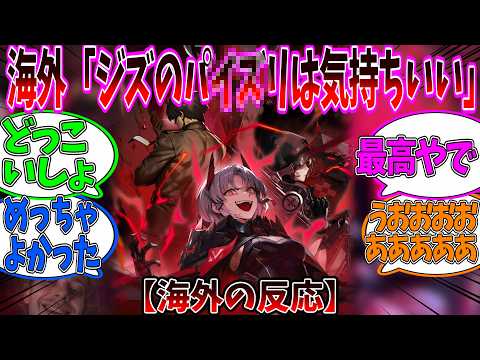
▶ Watch the original YouTube video
Why Goddess of Victory: NIKKE’s Drake Event ‘Great Villain Union’ Is Being Hailed as a Masterpiece
The latest story event for Goddess of Victory: NIKKE, titled “Great Villain Union,” has generated widespread acclaim from players for its sophisticated narrative structure, deep character development, and seamless integration of storytelling with gameplay mechanics. Drawing on 15 years of gaming experience and comparisons with similar events across major titles, this analysis explores why the community considers this event exceptional.
What Happened
Goddess of Victory: NIKKE released a new story event called “Great Villain Union” featuring Drake and other antagonistic characters as the central focus. Rather than a simple side story, the event functions as a psychological drama that deconstructs the motivations and backgrounds of characters previously portrayed as enemies in the main narrative. The event employs a multi-perspective narrative structure, gradually revealing hidden depths to characters players initially dismissed as villains.
Why It Matters
This event represents a significant shift in how mobile games approach character development and player engagement. The success of “Great Villain Union” reflects broader industry trends toward mature storytelling that challenges simplistic moral binaries. For NIKKE specifically, the event signals potential narrative evolution in the main storyline, where the distinction between allies and enemies may become increasingly complex. The event demonstrates that mobile games can achieve high standards across three typically competing dimensions: narrative depth, character development, and engaging gameplay mechanics simultaneously.
Background
The gaming industry has increasingly adopted a trend of recontextualizing antagonistic characters through dedicated story events. Games like Fate/Grand Order’s “Lostbelt” series, Genshin Impact’s Fatui character events, and Granblue Fantasy’s character-focused episodes have pioneered this approach. These events typically reveal that characters labeled as “enemies” possess complex motivations, personal struggles, and philosophical justifications for their actions. NIKKE’s “Great Villain Union” follows this established pattern while introducing refinements in execution, particularly in balancing narrative sophistication with accessible gameplay design.
Key Points
- Narrative Structure: The event employs three-act storytelling with escalating emotional stakes—establishing the mysterious gathering of antagonists, revealing their personal histories and motivations, and delivering cathartic resolution through fulfillment of their true desires.
- Character Psychology: Drake’s characterization demonstrates meticulous dialogue writing that reflects deep narrative consideration. Her actions, previously framed as villainy, are recontextualized as expressions of love, attachment, and philosophical conviction, prompting players to reconsider fundamental questions about morality.
- Game Design Excellence: The event balances reward distribution across characters, equipment, and materials; implements graduated difficulty scaling for players of all progression levels; provides substantial story volume; and offers multiple replay incentives through multi-perspective narrative design.
- Multi-Perspective Narrative: The story is told simultaneously from Drake’s viewpoint, other antagonist characters’ perspectives, and the player character’s position, allowing players to discover hidden truths and layered meanings across multiple playthroughs.
- Mechanical-Narrative Integration: Event-exclusive character abilities align thematically with their story arcs. For example, if Drake’s gameplay emphasizes simultaneous engagement with multiple enemies, this mirrors her narrative role of confronting multiple opposing forces.
- Difficulty Calibration: The event applies flow theory principles, beginning with accessible content and gradually increasing challenge in ways that naturally motivate players to strengthen their rosters, maintaining engagement without inducing frustration.
Comparative Analysis
When evaluated against similar character-focused events from major titles, “Great Villain Union” achieves exceptional performance across multiple dimensions:
Fate/Grand Order’s “Lostbelt No.1” excels in narrative depth and philosophical complexity but offers relatively straightforward gameplay mechanics. Granblue Fantasy’s “The Truth of Damascus Steel” achieves superior character depth but provides less integrated gameplay experience. Genshin Impact’s Fatui character events balance narrative and gameplay effectively but with slightly less narrative sophistication. In contrast, NIKKE’s event achieves five-star ratings across narrative depth, character development, and gameplay integration—a rare achievement in the mobile gaming landscape.
Industry Trends and Implications
The success of “Great Villain Union” reflects player maturation and evolving narrative expectations. Contemporary players seek psychological depth and moral complexity rather than simplistic hero-versus-villain frameworks. The event exemplifies an industry-wide movement toward humanizing antagonists, evident in titles ranging from Genshin Impact to Uma Musume. This trend suggests that future NIKKE content may increasingly blur the boundaries between allies and enemies, potentially transforming the main narrative’s moral landscape.
The event’s multi-perspective structure, previously employed in games like Final Fantasy VII: Crisis Core and the Resident Evil franchise, demonstrates proven effectiveness in encouraging replay and deepening player investment. By allowing players to discover previously unnoticed details and character motivations on subsequent playthroughs, such design naturally extends engagement duration and emotional investment.
Player Reception
Positive Feedback: Players consistently praise the event for fundamentally recontextualizing Drake’s character, noting that her previously antagonistic actions now appear sympathetic and comprehensible. Many report emotional responses to the narrative and appreciate the seamless fusion of storytelling and gameplay. Notably, numerous players express desire to replay the event multiple times to discover hidden narrative layers.
Critical Perspectives: Some players report difficulty spikes that challenge newer accounts, while others note that story volume occasionally encourages skipping dialogue. A minority expresses concerns about event-exclusive character power levels potentially creating balance issues.
The presence of both enthusiastic praise and substantive criticism indicates successful event design—strong emotional engagement typically generates diverse responses. The prevalence of replay-focused feedback particularly suggests narrative design success, as players’ desire to re-experience content indicates discovery of layered storytelling elements.
Practical Guidance for Players
Optimal Playthrough Strategy: Following the recommended episode sequence is essential, as the event deliberately structures information revelation to maximize narrative impact. Deviating from suggested order risks undermining key plot twists and character revelations.
Hidden Content Exploration: Players should attend carefully to dialogue nuance, background visual details, branching dialogue variations, and character profile descriptions. These elements contain supplementary character development not essential to main plot comprehension but significantly enriching thematic understanding.
Contextual Preparation: Reviewing Drake’s appearances in main story chapters before engaging with this event substantially enhances comprehension and emotional resonance. Understanding her previous actions provides crucial context for appreciating the event’s recontextualization of her motivations.
Character Development Priority: Event-exclusive characters likely carry significance for future main narrative developments. Early investment in their progression may prove strategically valuable for upcoming story content.
Future Narrative Possibilities
The event’s success strongly suggests several potential future developments. NIKKE may expand the “villain character focus” concept into a recurring event series. The main narrative may evolve toward depicting Drake’s transition from antagonist to ally, creating complex multi-faction dynamics. Broader thematic exploration of moral ambiguity and ethical complexity may increasingly characterize future story content, moving beyond traditional good-versus-evil frameworks.
The event appears to function not merely as standalone content but as a narrative inflection point signaling the main story’s directional shift. This positioning suggests that “Great Villain Union” may retrospectively be recognized as a crucial turning point in NIKKE’s narrative evolution.
Conclusion
“Great Villain Union” represents a significant achievement in mobile game storytelling, successfully demonstrating that narrative sophistication, character depth, and engaging gameplay mechanics need not exist in tension. The event’s reception indicates player appetite for morally complex narratives and psychologically nuanced character development. For NIKKE specifically, the event signals the game’s maturation from action-focused mobile title to narrative-driven experience, with implications for how future content may approach character development and moral complexity. Players engaging with this event participate not merely in entertainment consumption but in witnessing the evolution of mobile game narrative possibilities.