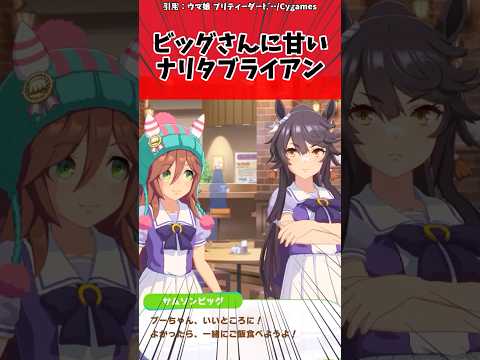
▶ Watch the original YouTube video
How Uma Musume’s Narita Brian Reveals Psychological Game Design Through Trainer Dependency
A detailed analysis of how the character Narita Brian in Uma Musume: Pretty Derby exhibits unusual emotional dependency on the player character, and how this reflects sophisticated psychological manipulation tactics embedded in modern gacha game design.
What Happened
Players of Uma Musume: Pretty Derby have noticed that the character Narita Brian displays notably dependent behavior toward the trainer (player character), referred to as “Big San” in the game community. Unlike other characters who maintain relative independence, Narita Brian consistently seeks approval and shows heightened emotional attachment to the trainer’s actions and decisions. This behavioral pattern has sparked widespread discussion across gaming communities, with players expressing complex reactions ranging from satisfaction to concern about the underlying design mechanics.
Why It Matters
This phenomenon reveals how modern gacha games employ sophisticated psychological design principles to maximize player engagement and spending. The character’s dependency mechanics exemplify how game developers intentionally craft emotional hooks that tap into fundamental human needs—such as the desire to be needed and the satisfaction of providing care. Understanding these design patterns is crucial for players to recognize potential emotional manipulation and make informed decisions about their gaming habits. Additionally, this case study demonstrates broader industry trends in character-driven monetization strategies.
Background
Uma Musume: Pretty Derby is a horse-racing simulation game developed by Cygames that combines competitive gameplay with deep character development. The game launched in 2021 and has gained significant popularity, particularly in Japan, through its blend of strategic gameplay and emotional character narratives. Narita Brian is portrayed as a responsible, serious character on the surface, yet exhibits contradictory behavior patterns that suggest deeper emotional dependency on player approval. This disconnect between character archetype and actual behavior has become a focal point for community analysis.
Key Points
- Narita Brian demonstrates significantly higher emotional dependency on the trainer compared to other Uma Musume characters, seeking constant approval and validation
- The character’s behavior contradicts her established personality archetype of being independent and responsible, creating a notable gap between design intention and character presentation
- Player reactions are complex and multifaceted, ranging from satisfaction with exclusive character devotion to criticism of artificial psychological manipulation
- The dependency mechanics mirror established psychological design patterns found in dating simulation games and other character-driven titles, suggesting intentional psychological engineering
- Community discussion reveals awareness among players that these design choices deliberately stimulate fulfillment of human psychological needs such as recognition and rescue fantasies
- The phenomenon raises concerns about potential negative psychological impacts, including game dependency and emotional exhaustion among dedicated players
Analysis of Character Dependency Mechanics
Narita Brian’s dependency manifests most clearly in two specific contexts. First, during pre-race preparation sequences, she consistently monitors the trainer’s reactions and adjusts her behavior accordingly, contrasting sharply with other characters who maintain independent decision-making. Second, following race failures, her emotional responses emphasize guilt toward disappointing the trainer rather than personal disappointment, suggesting her self-worth is externally dependent on trainer approval.
This psychological pattern closely resembles design mechanics popularized in dating simulation games from the mid-2010s, where character dependency on the player serves as a primary engagement mechanism. The strategy functions by stimulating the player’s fundamental need to feel necessary and valued, creating a feedback loop that encourages continued investment and spending.
Comparison With Other Game Properties
Similar dependency mechanics appear across multiple gaming franchises, though typically with important distinctions. Characters in Granblue Fantasy demonstrate loyalty but maintain independent agency. Idols in The Idolmaster series show gratitude and respect while pursuing independent career goals. Servants in Fate/stay night exhibit contractual dependency rather than emotional attachment. Narita Brian stands apart by combining emotional dependency with minimal independent goal-setting, representing an extreme point on the dependency spectrum.
Psychological Design Mechanisms
Rescue Fantasy Stimulation: The character’s dependency triggers the player’s psychological need to feel essential and capable of providing meaningful support. This satisfies deep-seated human desires for recognition and purpose.
Responsibility Transfer: By attributing both success and failure to trainer decisions, the game transfers emotional responsibility to the player, simultaneously amplifying achievement satisfaction while increasing pressure to continue engagement.
Emotional Investment Deepening: Dependency-type characters naturally encourage deeper emotional investment than independent characters, as players feel their choices directly impact the character’s wellbeing and happiness.
Community Response Patterns
Player reactions fall into three primary categories. First, some players interpret Narita Brian’s dependency as desirable exclusivity, experiencing satisfaction from having a character devoted solely to them. Second, other players recognize the contradiction between her established personality and actual behavior, expressing analytical skepticism. Third, a smaller segment explicitly identifies the dependency mechanics as intentional psychological manipulation, critiquing the design approach itself.
Notably, many individual players simultaneously experience multiple response patterns, enjoying the emotional satisfaction while maintaining critical awareness of the underlying design strategy. This duality suggests the design’s sophistication in appealing to both emotional and rational player faculties.
Industry Strategy Implications
Uma Musume employs three primary strategic approaches. First, character dependency increases gradually throughout gameplay, deepening emotional investment over time. Second, story pacing deliberately alternates between success and failure to maximize emotional fluctuation. Third, the game design specifically optimizes for Japanese fan culture, where character “support” (oshi-katsudou) represents a significant cultural practice and spending category.
Broader Concerns
While the psychological design demonstrates remarkable sophistication, it raises legitimate concerns about player wellbeing. The dependency mechanics can encourage unhealthy gaming patterns and emotional attachment that extends beyond entertainment into psychological dependency. Players report experiencing stress and emotional exhaustion from intensive engagement with dependency-type characters, suggesting potential negative mental health impacts from prolonged exposure to these design patterns.
Insights
Narita Brian’s character design represents a sophisticated application of psychological principles to maximize player engagement and monetization. The intentional gap between her established personality and actual dependency behavior reveals how modern gacha games engineer emotional responses with precision. Rather than relying on gameplay challenge or narrative quality alone, contemporary game design increasingly leverages understanding of human psychology to create compelling emotional hooks.
This case demonstrates that players are increasingly aware of these mechanisms, with community discussion reflecting both appreciation for design sophistication and concern about ethical implications. The future of game design likely depends on whether the industry can maintain engagement through psychological design while addressing legitimate concerns about player wellbeing and the ethics of intentional emotional manipulation.
For players, recognizing these design patterns enables more conscious engagement with games, allowing enjoyment of character narratives while maintaining psychological boundaries and making informed decisions about spending and time investment.