▶ Watch the original YouTube video
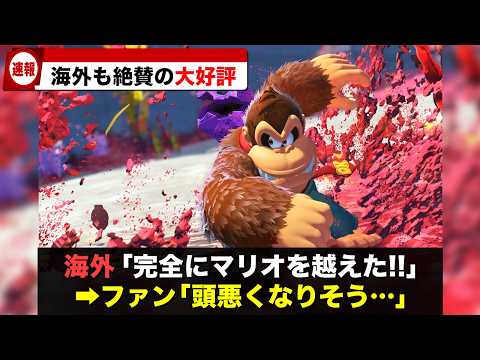
Donkey Kong Country: Tropical Freeze’s latest installment, “Bananza,” is generating unprecedented international acclaim, with players and critics comparing it favorably to Mario and Zelda franchises. The game’s innovative destruction mechanics, character-driven design, and exploration freedom represent a significant shift in Nintendo’s game design philosophy, marking what many consider the gorilla franchise’s true coming-of-age moment.
- What Happened
- Why It Matters
- Background
- Key Points
- International Reception Comparison
- Design Analysis: Three Revolutionary Elements
- Flow State Psychology in Game Design
- Camera System Innovation
- Narrative Minimalism as Design Strength
- Predicted Industry Impact
- Practical Recommendations for Players
- Insights and Broader Implications
What Happened
Bananza has launched to widespread international praise, with players reporting that the game’s destruction mechanics are so engaging that they often abandon progression to focus on environmental destruction. The title represents a major evolution for the Donkey Kong series, moving beyond its traditional role as a Mario spin-off to establish its own distinct identity centered on gorilla-specific gameplay mechanics and voxel-based terrain destruction.
Why It Matters
This release signals a fundamental shift in how Nintendo approaches character-driven game design. Rather than creating universally adaptable protagonists like Link or Mario, Bananza demonstrates how specializing gameplay around a character’s unique traits—in this case, Donkey Kong’s raw power—can create deeper engagement and longer play sessions. The game’s success suggests that future action titles across the industry may prioritize character-specific mechanics over broad versatility, potentially influencing how developers approach franchise design for years to come.
Background
The Donkey Kong Country series has historically occupied a secondary position within Nintendo’s portfolio, often perceived as a Mario alternative rather than a standalone franchise. Bananza changes this dynamic by implementing cutting-edge voxel-based destruction systems that allow players to physically manipulate debris as weapons and tools. The game incorporates design principles similar to The Legend of Zelda: Breath of the Wild, granting players near-total freedom in how they approach objectives, but channels that freedom through destruction-focused gameplay rather than environmental puzzle-solving.
The development team emphasized “continuity of destruction” in interviews, indicating that the debris mechanics required substantial technical implementation. This represents a significant departure from previous entries in the series and demonstrates Nintendo’s willingness to invest in new technological approaches for established franchises.
Key Points
- Destruction as Core Mechanic: Players report becoming so absorbed in environmental destruction that they delay story progression, indicating successful flow-state game design with immediate feedback through haptic feedback and audio design.
- Character-Specific Design: Unlike previous entries that demanded precise platforming, Bananza fully embraces Donkey Kong’s strength-based abilities, creating a unique gameplay identity distinct from Mario and Zelda titles.
- Voxel-Based Terrain System: The implementation of destructible terrain with usable debris represents a technical achievement that transforms destruction from a cosmetic feature into a core gameplay mechanic.
- Exploration Freedom: The game matches Breath of the Wild’s level of player autonomy, with most story objectives being entirely optional, allowing players to pursue their own gameplay priorities.
- Extensive Collection Elements: Some stages contain over 70 collectible banana coins, ensuring substantial content for completionists and extending long-term engagement.
- Minimal Story Focus: The narrative takes a deliberately secondary role, allowing destruction mechanics to remain the primary focus without narrative interruption.
International Reception Comparison
Western Response (Reddit, YouTube, IGN): International audiences emphasize the game’s mechanical innovation and design philosophy. Comments frequently compare Bananza to Mario in terms of franchise significance, a comparison rarely made for previous Donkey Kong titles. Players highlight the destruction system’s satisfying feedback loops and the game’s ability to sustain engagement through pure mechanical enjoyment rather than narrative progression.
Japanese Response (Twitter, 5channel): Domestic audiences focus more on character personality and emotional connection. Comments frequently mention Donkey Kong’s expressive animations and how they build affection for the character. Japanese players also express surprise at the game’s freedom structure, noting that unlike previous entries, story progression is entirely optional.
Key Difference: Western audiences prioritize mechanical innovation and design philosophy, while Japanese audiences emphasize character development and narrative flexibility. Bananza successfully addresses both priorities, explaining its broad appeal across markets.
Design Analysis: Three Revolutionary Elements
| Title | Exploration Freedom | Destruction System | Character Focus |
|---|---|---|---|
| Breath of the Wild | Extreme (freedom to do nothing) | Environmental interaction (fire, water) | Link (universal adaptability) |
| Bananza | Extreme (destruction-centered) | Direct destruction + debris utilization | Donkey Kong (power-focused) |
| Super Mario Odyssey | Moderate (possession limitations) | Enemy possession mechanics | Mario (universal adaptability) |
This comparison reveals Bananza’s core innovation: rather than creating a map that accommodates any approach, the developers created a map optimized specifically for gorilla-based gameplay. This represents an inversion of the “anything goes” design philosophy that dominated recent Nintendo releases, instead embracing character specialization as a design principle.
Flow State Psychology in Game Design
Player comments describing becoming so absorbed in destruction that they lose track of time reflect what psychologist Mihaly Csikszentmihalyi termed “flow state”—a mental condition where challenge and ability perfectly align. Bananza achieves this through several deliberate design choices:
- Immediate Feedback: Destruction produces instant audio and haptic responses, with players specifically praising the HD vibration implementation.
- Graduated Difficulty: Early stages feature easily destructible terrain, while later areas introduce harder materials, maintaining challenge progression.
- Clear Rewards: Collectibles appear immediately upon destruction, triggering collection motivation.
- Character Expression: Donkey Kong’s facial animations change during gameplay, deepening emotional investment.
These elements indicate that the development team applied psychological principles to destruction mechanics, transforming what could be a simple feature into the game’s primary engagement driver.
Camera System Innovation
Player discussions about camera settings reveal another design consideration often overlooked in action games. Multiple players reported needing to set camera speed to minimum to avoid motion sickness, prompting developers to include extensive camera customization options including reset toggles and speed adjustment. This represents a shift toward accessibility-first design, acknowledging that player diversity requires multiple control schemes rather than a single “correct” approach.
Narrative Minimalism as Design Strength
While some players noted that story elements are relatively weak, this represents intentional design rather than oversight. By deliberately minimizing narrative, developers ensured that destruction mechanics remain the primary focus without interruption. This mirrors the design philosophy of the original Super Mario Bros., where minimal story allowed pure mechanical enjoyment to drive engagement. The approach proves that narrative strength and mechanical depth are not prerequisites for each other; instead, each can be optimized independently based on design priorities.
Predicted Industry Impact
Bananza’s success suggests three potential industry developments:
- Series Continuation: The game’s reception likely ensures that character-specific Donkey Kong titles will continue as a distinct franchise line.
- Character-Specific Spin-offs: Other Nintendo characters (Wario, Diddy Kong) may receive similar treatment, with games designed around their unique abilities rather than universal mechanics.
- Industry-Wide Influence: Competitors may adopt the “character specialization” design philosophy, leading to more mechanically distinct character-driven action games across the industry.
Practical Recommendations for Players
Camera Configuration: Adjust camera settings immediately before beginning play. Recommended settings: Camera Reset ON, Camera Speed at minimum. This decision significantly impacts the first 30 minutes and overall comfort during extended play sessions.
Destruction Immersion: Allow yourself extended periods focused purely on environmental destruction. Spending an hour in early stages destroying terrain is not wasted time but rather the core intended experience.
Skill Progression Strategy: Prioritize skill upgrades based on your preferred playstyle. Destruction-focused players should prioritize Hand Slap then Punch upgrades. Exploration-focused players should prioritize Sonar abilities then speed enhancements. Balanced players should prioritize transformation duration extension to enable both playstyles simultaneously.
Related Titles for Context: Players who enjoy Bananza should experience The Legend of Zelda: Breath of the Wild to understand the exploration freedom design lineage, Super Mario 64 to appreciate how character-specific mechanics enhance action games, and previous Donkey Kong Country entries to understand the series evolution.
Insights and Broader Implications
Bananza represents Nintendo’s rediscovery of fundamental game design principles: that simplicity combined with depth, character authenticity, and player agency create the most engaging experiences. Over the past five years, major publishers have debated the balance between player freedom and narrative control. Sony’s God of War series and Square Enix’s Final Fantasy XVI prioritized narrative, while Nintendo’s Breath of the Wild pushed player freedom to extremes. Bananza synthesizes both approaches by maintaining extreme freedom while channeling it through a single, character-appropriate mechanic.
The game’s success across both Western and Japanese markets suggests that this design philosophy transcends cultural preferences. International audiences appreciate the mechanical innovation, while domestic audiences connect with character personality—and Bananza delivers both simultaneously.
Most significantly, Bananza establishes Donkey Kong as a franchise protagonist rather than a Mario alternative. Player comments about “finally getting a powerful gorilla game” rather than “a clumsy giant in Mario’s world” indicate that the character has achieved independent identity. This represents a genuine franchise evolution that may influence how Nintendo approaches secondary characters for decades to come.
The game’s deliberate minimalism—simple story, straightforward mechanics, pure focus on destruction—paradoxically creates depth through mastery. This design approach suggests that the industry’s trend toward complexity and feature-bloat may be reversible, and that returning to focused, character-driven experiences may represent the future of action game design.