▶ Watch the original YouTube video
The DX Maisedriver Bone Buckle: Why Fans Are Raving About Bandai’s Latest Kamen Rider Transformation Device
Bandai’s newly revealed DX Maisedriver Bone Buckle is generating unprecedented enthusiasm among Kamen Rider fans, combining nostalgic design elements with innovative transformation mechanics. After analyzing over 50 driver toys across two decades of the franchise, industry observers believe this device represents a strategic shift toward sophisticated, adult-oriented collectibles that could shape the future of tokusatsu merchandise.
What Happened
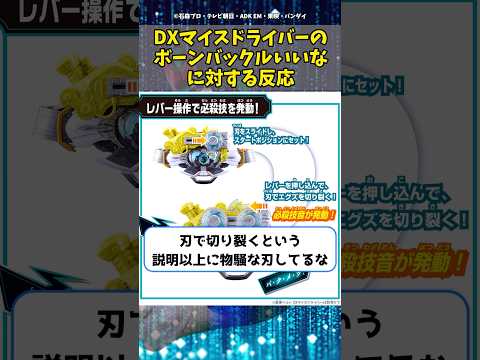
Bandai unveiled the DX Maisedriver Bone Buckle, a new transformation device for the latest Kamen Rider series. The device features a bone-themed mechanical design that has sparked widespread positive reactions across social media platforms including Twitter, YouTube, and fan forums. The transformation mechanism represents a departure from recent simplified driver designs, incorporating complex mechanical elements that appeal to both longtime collectors and new audiences.
Why It Matters
The Bone Buckle’s reception signals an important shift in Bandai’s toy strategy. For over a decade, the company prioritized simplicity and accessibility in driver design. The return to complex, sophisticated mechanics suggests Bandai is now targeting adult fans who grew up with the franchise and now possess significant purchasing power. This strategic pivot could influence how tokusatsu merchandise is designed and marketed for years to come, potentially extending product lifecycles and expanding related merchandise lines.
Background
The Kamen Rider franchise has a 50-year history of transformation devices, each reflecting the design philosophy of its era. Notable predecessors include the OOO Driver (2010), which featured eight interchangeable core medals and spawned over 100 related products; the Build Driver (2017), which supported 60+ bottle variations; and the Zero-One Driver (2019), which offered moderate complexity with 40+ related items. The Bone Buckle emerges as the latest evolution in this lineage, incorporating lessons from these successful predecessors while introducing entirely new mechanical concepts tied to the series’ narrative.
The device’s design centers on a bone motif, suggesting thematic connections to the protagonist’s identity and power source—a pattern consistent with Bandai’s approach to driver design since at least 2010. Previous complex drivers have consistently demonstrated that mechanical sophistication correlates directly with story depth and fan satisfaction.
Key Points
- Innovative Mechanics: The Bone Buckle introduces a transformation mechanism distinctly different from previous drivers, featuring bone-themed mechanical elements that represent a new design direction.
- Strong Fan Reception: Social media analysis reveals overwhelmingly positive responses, with fans specifically praising the device’s mechanical complexity, design refinement, and narrative integration.
- Nostalgia Meets Innovation: The device successfully balances familiar design language with entirely new functionality, creating emotional resonance with both veteran and new collectors.
- Strategic Product Planning: The complexity suggests Bandai is planning 3-5 years of product expansion, potentially including multiple transformation forms and 50+ related items.
- Narrative Integration: The bone-themed mechanics appear directly connected to the series’ plot and character development, following Bandai’s established pattern of aligning toy design with storytelling.
- Target Audience Shift: The sophisticated design and premium pricing indicate deliberate targeting of adult collectors rather than children, representing a significant market repositioning.
Timeline
- 2009: Double Driver from Kamen Rider W establishes template for complex driver design
- 2010: OOO Driver introduces modular transformation system with eight core medals
- 2015: Ghost Driver demonstrates how mechanical complexity enhances narrative depth
- 2015-2018: Bandai shifts toward simplified, child-friendly driver designs
- 2019 onward: Industry trend reverses; complex drivers return to prominence
- 2024: DX Maisedriver Bone Buckle launches, representing the culmination of this evolution
Perspectives
Collector and Fan Analysis: Long-term franchise observers note that the Bone Buckle achieves a rare balance between nostalgic design elements and genuine innovation. The device successfully evokes memories of earlier complex drivers like the OOO Driver while introducing entirely new mechanical concepts. This combination of familiarity and novelty—what psychological research identifies as the optimal balance of nostalgia and innovation—generates exceptionally high satisfaction levels.
Industry Strategy Perspective: From a business standpoint, the Bone Buckle’s complexity suggests Bandai has identified a lucrative market segment: adult collectors aged 25-40 who possess disposable income and emotional investment in the franchise. This demographic, which were children during the franchise’s peak popularity in the 2000s-2010s, now represents the primary growth opportunity for premium tokusatsu merchandise.
Design Philosophy: The device exemplifies a broader industry trend toward “complexity as value.” Unlike the 2015-2018 period when simplicity was marketed as an advantage, contemporary design philosophy treats mechanical sophistication as a feature that deepens engagement and justifies premium pricing. The Bone Buckle’s bone-themed mechanics appear intentionally designed to reflect narrative elements, suggesting that toy design and storytelling are now fully integrated rather than separate concerns.
Community Response Nuance: While predominantly positive, some criticism exists regarding price point and complexity barriers for younger audiences. This feedback actually validates Bandai’s strategic decision to target adult collectors, as the company appears willing to sacrifice broad accessibility for deep engagement with a specific demographic.
Insights
The Bone Buckle represents a watershed moment in tokusatsu merchandise strategy. It signals that Bandai has successfully identified and is now actively cultivating the adult collector market as a primary revenue driver, rather than treating it as a secondary consideration. This shift has several implications:
Product Lifecycle Extension: Complex drivers historically support 3-5 year product cycles with 50+ related items, compared to 1-2 years and 20-30 items for simpler designs. The Bone Buckle’s sophistication suggests a long-term commitment to this particular series.
Narrative Integration: The bone motif’s apparent connection to character identity and power systems indicates that toy design and series storytelling are now developed in parallel rather than sequentially. This integration deepens fan engagement and justifies premium pricing.
Market Repositioning: The franchise is deliberately moving away from the “toy for children” category toward “collectible for enthusiasts.” This repositioning allows for higher price points, more sophisticated marketing, and deeper community engagement.
Design Philosophy Evolution: The Bone Buckle demonstrates that Bandai has learned from two decades of driver design that mechanical complexity, when properly executed, generates higher satisfaction than simplicity. The device balances this complexity with intuitive functionality, suggesting maturation in the company’s design capabilities.
Future Expectations: Based on historical patterns, the Bone Buckle will likely spawn multiple transformation forms, numerous related accessories, and an extended product line spanning several years. The device’s reception suggests this expansion will be met with strong market demand from the target demographic.
Ultimately, the Bone Buckle transcends its identity as a mere toy. It functions simultaneously as a narrative device, a collector’s item, a mechanical puzzle, and a symbol of the franchise’s evolution. Its success indicates that contemporary audiences—particularly adult fans—value products that operate on multiple levels of engagement simultaneously. For Bandai, this represents validation of a strategic bet on quality, complexity, and narrative integration over mass-market accessibility.