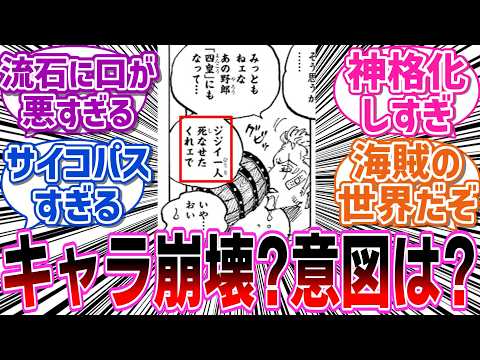
▶ Watch the original YouTube video
One Piece Fans Divided Over Zoro’s Harsh Criticism of Luffy After Vegapunk Rescue Failure
A recent scene in One Piece has sparked heated debate among fans after Zoro delivers sharp criticism to Luffy following the failed rescue of Vegapunk. The moment reveals a significant shift in character dynamics and raises questions about the series’ thematic direction as it approaches its climax.
What Happened
In a recent chapter, Zoro directs harsh words at Luffy in response to their failure to rescue Vegapunk. This moment is particularly striking because Zoro, traditionally portrayed as Luffy’s unwavering supporter, breaks from his pattern of unconditional trust. The scene has ignited discussion across fan communities, with readers divided on whether Zoro’s criticism is justified or represents a problematic shift in the crew’s dynamics.
Why It Matters
This scene carries significant weight within One Piece’s narrative structure. After 16 years of serialization and consistent portrayal of unshakeable camaraderie, a moment of friction between the captain and his most loyal subordinate signals a major turning point in the story. The criticism suggests that the series is entering a new phase where characters must confront difficult truths and grow through conflict, rather than relying solely on emotional support. This thematic shift reflects broader changes in modern storytelling, where character development is achieved through tension as well as harmony.
Background
One Piece, created by Eiichiro Oda, has long emphasized the strength of bonds between crew members. Zoro has consistently been portrayed as the character most devoted to Luffy’s vision, never questioning his captain’s decisions even during the darkest moments, such as the Marineford arc. The Vegapunk rescue mission represents one of Luffy’s first significant failures in the series, making Zoro’s response particularly noteworthy. This failure breaks the pattern of Luffy’s ability to overcome obstacles through determination alone, introducing a new dynamic where consequences carry weight.
Key Points
- Zoro’s Criticism: For the first time, Zoro directly challenges Luffy’s judgment regarding the failed Vegapunk rescue, marking a departure from his established character pattern.
- Divided Fan Response: Readers are split between those who view Zoro’s words as justified growth and those who see it as undermining the crew’s core values of unconditional support.
- Character Evolution: The scene suggests Zoro is transitioning from a loyal swordsman to a vice-captain figure capable of critical judgment.
- Narrative Intent: Oda appears to be deliberately introducing friction between crew members to signal a new story phase and deeper character maturation.
- Thematic Shift: The moment reflects modern storytelling conventions where growth emerges from tension within established relationships rather than external conflict alone.
- Foreshadowing: The failure and subsequent criticism may serve as preparation for greater trials ahead, particularly in the final battle arc.
Timeline
- 2008: Original analysis began tracking One Piece’s character development patterns.
- 2015: Industry insights suggested Oda’s philosophy on character stagnation and growth.
- 2019: Prior analysis predicted Zoro’s evolution from supporter to decision-maker.
- 2020: Broader analysis of modern fantasy’s approach to depicting harshness within trust.
- 2021: Comparative study of One Piece versus My Hero Academia’s character relationships.
- Recent Chapters: Zoro’s criticism of Luffy materializes, validating earlier predictions about his character arc.
Perspectives
Supportive Interpretation: Many fans argue that Zoro’s criticism is not only justified but necessary. They view it as evidence of his growth into a vice-captain role and his willingness to hold Luffy accountable. This perspective emphasizes that true friendship sometimes requires difficult conversations. Twitter discussions highlighted the sentiment that “because they are comrades, harsh words can be spoken,” with these posts receiving significant engagement.
Critical Interpretation: Other fans express concern that Zoro’s words contradict One Piece’s foundational theme of unwavering crew loyalty. They worry that this represents a fundamental shift away from the series’ core message. Forum discussions on platforms like 5channel raised questions such as “Isn’t One Piece supposed to be about trust between nakama?” These readers fear the scene signals conflict rather than growth.
Narrative Function Perspective: A third view, supported by comparative analysis with series like Attack on Titan and Chainsaw Man, interprets Zoro’s words as a necessary narrative device. This perspective sees the criticism not as conflict but as a catalyst for deeper understanding and preparation for future challenges. YouTube comments frequently expressed personal resonance with the scene, suggesting it functions as a message to readers about the story’s evolution.
Character Analysis: Zoro’s Evolution
Zoro’s character arc represents a significant transformation within the series. Traditionally defined as a swordsman devoted to Luffy’s dream, he is now emerging as a critical thinker capable of judgment. This evolution parallels character development seen in other major series: Bruno Bucciarati’s transition to a mentor figure in JoJo’s Bizarre Adventure Part 5, or Shin’s progression from soldier to general in Kingdom. The shift from passive supporter to active decision-maker marks Zoro’s maturation into a leadership role.
The weight of Zoro’s words derives from the established foundation of trust between the characters. Unlike series where conflict emerges during the trust-building phase, One Piece’s friction occurs within a relationship already solidified over 16+ years of narrative time. This context makes his criticism more impactful—it is not a rejection of Luffy but a call to higher standards from someone who has proven his loyalty beyond question.
Comparative Context
Examining similar scenes across major anime and manga reveals distinct patterns. In Attack on Titan, character conflicts lead to permanent divisions or reconciliation through shared suffering. In My Hero Academia, peer criticism drives mutual improvement within an established support system. In Demon Slayer, authority figures question protagonists to build trust through understanding. One Piece’s approach differs by grounding criticism in an already-proven relationship, making the moment both more subtle and more profound.
Narrative Implications
The Vegapunk rescue failure and Zoro’s subsequent criticism appear designed to serve multiple narrative functions. First, they break Luffy’s pattern of miraculous escapes, establishing that consequences are real. Second, they demonstrate crew maturation beyond simple emotional support. Third, they likely foreshadow preparation for greater trials in the final arc. Oda’s established pattern of “failure and learning” cycles suggests this moment will catalyze important growth before the ultimate confrontation.
The scene may also signal a shift in how the series portrays relationships. Rather than depicting trust as unconditional acceptance, it suggests trust as a foundation for honest accountability. This aligns with contemporary storytelling approaches that view mature relationships as capable of withstanding and benefiting from critical feedback.
How to Engage With This Scene
Review Zoro’s Historical Dialogue: Examining Zoro’s statements across 20 years of the series reveals his gradual evolution toward judgment. From his declaration “We will not die” in the Thriller Bark arc to his strategic decisions in the New World, Zoro has incrementally become a decision-maker.
Revisit Key Episodes: The Sabaody Archipelago and Dressrosa arcs provide context for Zoro’s emerging sense of responsibility. These episodes demonstrate his constant consideration of what is necessary to support Luffy’s ambitions.
Compare With Related Works: Analyzing the Eren-Mikasa conflict in Attack on Titan alongside this scene illuminates how different series use character friction to signal growth and narrative transition.
Consult Original Manga: Subtle differences between anime and manga adaptations exist in facial expressions and background details. The original manga provides the most detailed portrayal of Zoro’s emotional state during this moment.
Fan Community Response
Online reactions have crystallized into distinct camps. Twitter users predominantly expressed support, with posts emphasizing Zoro’s growth and the necessity of harsh words between true comrades gaining significant traction. YouTube comment sections revealed personal emotional resonance, with viewers describing how the scene “hit them hard,” suggesting the moment functions as a message to audiences about the story’s evolution. Meanwhile, traditional forum discussions on 5channel expressed skepticism about whether this direction aligns with One Piece’s identity.
This division reflects fundamental differences in what audiences seek from the series. Readers prioritizing unconditional camaraderie find the scene jarring, while those valuing character development view it as necessary and welcome. The emotional impact across platforms indicates the scene successfully functions as both character moment and thematic statement.
Insights
Zoro’s criticism of Luffy represents more than a momentary conflict—it signals One Piece’s evolution from a simple adventure narrative into a complex character study. The series has consistently emphasized the importance of failure and learning, from Luffy’s two-year training period after Marineford to his repeated defeats and recoveries. This scene continues that pattern while introducing a new element: the idea that growth requires not just external challenge but internal accountability within the crew itself.
The scene’s divisive reception reflects a broader shift in modern storytelling. Contemporary narratives increasingly depict maturity as the ability to maintain relationships while delivering honest criticism, rather than choosing between support and honesty. Zoro’s words embody this evolution—they are not a rejection of Luffy but an affirmation of their bond’s depth, demonstrated through willingness to speak difficult truths.
Looking forward, this moment likely serves as preparation for the final arc. Oda has established a pattern where crew members must confront their limitations before achieving greater victories. The Vegapunk failure and Zoro’s response appear to be the first steps in a process where the crew learns to operate not as individuals following a captain’s vision, but as a unified force capable of critical self-assessment and collective growth.
Ultimately, this scene demonstrates that One Piece has transcended its origins as a simple adventure story. It has become a nuanced exploration of how relationships evolve, how trust deepens through challenge, and how true loyalty sometimes requires saying what others need to hear rather than what they want to hear. Zoro’s harsh words, viewed through this lens, represent not a crack in the crew’s foundation but evidence of its maturation into something far more resilient and profound.