▶ Watch the original YouTube video
How Chiikawa’s Anime Adaptation Transformed a Mainstream Announcer Into an Analysis Expert
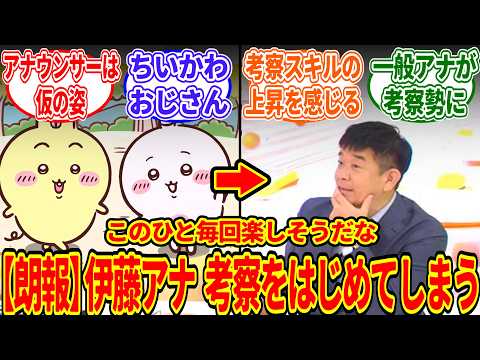
When announcer Itou Ana watched the anime adaptation of Chiikawa, her analytical skills underwent a dramatic evolution, earning praise from fans for her transition from mainstream media personality to “analysis craftsperson.” This phenomenon reveals how a seemingly cute slice-of-life series is democratizing anime analysis and reshaping how general audiences engage with complex storytelling.
- What Happened
- Why It Matters
- Background
- Key Points
- Timeline
- Perspectives
- Comparative Analysis: Chiikawa and Kaiji
- The High-Fever Dream Theory
- Strategic Anime Adaptation Decisions
- The Destruction of “Careful Living”
- Practical Guide: How to Engage Deeply with Chiikawa
- Fan Community Response and Meta-Analysis
- Insights: The Future of Anime as Analytical Medium
- Conclusion
What Happened
Announcer Itou Ana’s viewing of the Chiikawa anime’s parallel world arc sparked widespread discussion in fan communities. Rather than offering surface-level reactions, she demonstrated sophisticated analytical skills—identifying the parallel world structure, recognizing character design changes, and understanding the narrative’s psychological depth. This prompted fans to praise her evolution from mainstream personality to “analysis expert,” while simultaneously raising questions about whether her first-viewing authenticity was genuine.
Why It Matters
This phenomenon represents a significant shift in how mainstream audiences engage with anime. Over the past 15 years, anime consumption has gradually expanded beyond dedicated otaku communities into general society. However, what distinguishes Chiikawa is that it has triggered not just casual viewership, but active analytical engagement from non-specialist audiences. This democratization of analysis suggests that anime is evolving from pure entertainment into a medium that actively encourages critical thinking and structural interpretation. The broader implication is that content creators are increasingly designing works to reward deeper engagement, fundamentally changing how audiences interact with serialized media.
Background
Chiikawa, created by Nagano Jiman, initially presents itself as a gentle slice-of-life series featuring cute animal characters navigating modest daily existence. However, the parallel world arc—which the anime adaptation chose to air before other major story arcs—introduces a drastically different tone: characters lose memories, physical forms change, and the narrative adopts elements of psychological horror. This tonal shift was intentional. The original manga serialization featured the Climan arc first, but the anime reordered the content, placing the parallel world arc at the beginning. This strategic decision appears designed to shatter viewers’ preconceptions about the series immediately after the theatrical film release, which had reinforced the “cute and gentle” perception.
Creator Nagano Jiman’s background suggests deliberate thematic choices. His work frequently incorporates gambling motifs (particularly pachinko references) and demonstrates influence from Nobuyuki Fukumoto, creator of Kaiji, whose work specializes in depicting human psychology under extreme pressure. This lineage suggests that Chiikawa’s seemingly innocent exterior masks a sophisticated exploration of how characters adapt to absurd, threatening circumstances.
Key Points
- Itou Ana’s Analytical Evolution: Her identification of the parallel world concept, character design changes, and memory loss mechanics demonstrated structural analysis rather than surface-level observation, earning recognition as a transition from announcer to analysis practitioner.
- Authenticity Questions: Some fans speculated that Itou Ana had read the original manga, suggesting her first-viewing reactions may not be genuine—a debate that itself became part of fan discourse.
- Creator’s Intentional Disruption: Nagano Jiman appears to deliberately designed the parallel world arc to destroy the “careful, gentle living” aesthetic established in earlier chapters, mirroring techniques used by Hideaki Anno in Neon Genesis Evangelion.
- Strategic Anime Adaptation Choices: The decision to air the parallel world arc first represents a broader trend in modern anime production: prioritizing viewer psychological experience over faithful source material adaptation.
- Meta-Analysis Emergence: Fans began analyzing Itou Ana’s analysis itself, creating a meta-layer of discourse that indicates the content has reached a level of cultural maturity typically associated with major franchises like Attack on Titan and Demon Slayer.
- Analysis Democratization: The phenomenon demonstrates that analytical engagement is no longer exclusive to dedicated anime communities; mainstream audiences are developing sophisticated interpretive skills through exposure to complex narrative structures.
Timeline
- 2019: Demon Slayer media surge demonstrates mainstream audience engagement with anime, though analysis remains primarily emotional rather than structural.
- 2020: Attack on Titan final season airs; similar phenomenon of mainstream analysis emerges, though generally remains surface-level.
- 2024 (Theatrical Release): Chiikawa film releases, establishing “cute slice-of-life” perception in general audiences.
- 2024 (Anime Premiere): Anime adaptation airs parallel world arc first, immediately challenging viewer expectations and prompting deeper analysis.
- Post-Premiere: Itou Ana’s analytical video circulates; fan discourse expands to include meta-analysis of her analysis itself.
Perspectives
Fan Community Perspective: Many viewers celebrate Itou Ana’s analytical skills as evidence that anime is reaching mainstream intellectual credibility. Her ability to identify structural elements—parallel world designation, memory loss mechanics, character design alterations—demonstrates that sophisticated analysis is accessible to non-specialist audiences.
Skeptical Interpretation: Some fans question whether Itou Ana’s first-viewing authenticity is genuine, suggesting she may have read the original manga. This skepticism itself reveals how high analytical standards have become within fan communities—viewers now expect and scrutinize the depth of analysis offered by public figures.
Creator’s Intent Perspective: Nagano Jiman’s work suggests deliberate design to provoke analysis. The parallel world arc functions as a “baptism” for viewers, destroying comfortable assumptions and forcing engagement with psychological complexity. This aligns with broader trends in anime production where creators increasingly design works to reward critical engagement.
Media Evolution Perspective: The phenomenon represents anime’s transition from entertainment commodity to medium that actively encourages critical thinking. Similar to how literary fiction operates, anime increasingly incorporates structural complexity specifically to prompt viewer interpretation and discussion.
Comparative Analysis: Chiikawa and Kaiji
| Element | Kaiji (Nobuyuki Fukumoto) | Chiikawa (Nagano Jiman) |
|---|---|---|
| Protagonist Position | Constantly under pressure | Constantly facing crisis |
| World Logic | Irrational rules dominate | Irrational phenomena normalized |
| Psychological Focus | Human nature under extreme conditions | Adaptation to threatening circumstances |
| Gambling Elements | Explicitly depicted | Implicitly embedded |
This comparison reveals that Nagano Jiman has adopted Fukumoto’s psychological depth methodology but applied it to a deceptively gentle aesthetic. Where Kaiji makes psychological pressure explicit, Chiikawa embeds it within apparent innocence, creating cognitive dissonance that prompts analysis.
The High-Fever Dream Theory
One of Itou Ana’s most sophisticated observations involves the theory that the parallel world arc represents consciousness during high fever. This interpretation aligns with medical phenomena: elevated body temperature impairs memory formation, blurs reality-hallucination boundaries, and creates dissociative states. Nagano Jiman appears to have translated these physiological facts into narrative structure, making the parallel world not merely “another dimension” but a psychological state—specifically, altered consciousness during illness. This technique creates persistent uncertainty: viewers cannot definitively determine whether events are “real” within the story’s logic or manifestations of fever-induced delirium. This uncertainty generates the arc’s unsettling quality.
Strategic Anime Adaptation Decisions
The choice to air the parallel world arc before other major story arcs represents a broader trend in modern anime production. Rather than faithfully reproducing source material sequence, contemporary adaptations prioritize psychological impact on viewers. Similar examples include:
- Attack on Titan: Anime deliberately delayed key plot revelations to maintain suspense differently than the manga.
- Jujutsu Kaisen: Anime reordered source material chronology to maximize viewer engagement and narrative momentum.
- Chainsaw Man: Anime substantially restructured early narrative elements to create distinct viewing experience from manga.
This pattern indicates that anime producers now view adaptation as creative interpretation rather than mechanical reproduction. The goal is designing viewer experience, not preserving source material fidelity.
The Destruction of “Careful Living”
Early Chiikawa chapters establish a thematic focus on “careful, modest living”—characters create toys without expense, share meals mindfully, and find joy in simple companionship. The parallel world arc systematically destroys this aesthetic. Ramen suddenly appears (incongruous with the series’ established poverty), characters lose 80% of their memories, physical forms transform, and battle-anime-style electrical effects replace gentle visual language.
This destruction is intentional. Nagano Jiman appears to employ a technique pioneered by Hideaki Anno in Neon Genesis Evangelion: establishing viewer comfort within a familiar genre framework, then systematically dismantling that framework. Viewers develop security within “cute slice-of-life” expectations, then experience that security violated. This psychological manipulation—comfort followed by disruption—generates the unease that prompts analytical engagement.
Practical Guide: How to Engage Deeply with Chiikawa
Recommended Viewing Order:
- Read original manga chapters 1-50 to establish “careful living” aesthetic
- Develop familiarity with thematic focus on modest existence
- Watch anime adaptation
- Experience maximum impact of parallel world arc’s tonal disruption
Analysis Skill Development:
Itou Ana’s analytical approach demonstrates learnable technique:
- Watch content at normal speed
- Identify moments generating discomfort or confusion
- Distinguish between intentional narrative disruption and production inconsistency
- Hypothesize creator intent behind intentional disruptions
Specific Elements to Observe:
- Character design alterations (rabbit ears becoming scissors)
- Memory discontinuities (80% memory loss)
- Food incongruities (ramen with persimmon seeds)
- Visual style shifts (electrical battle-anime effects in slice-of-life context)
Related Works for Context:
- Kaiji series (Nobuyuki Fukumoto): Demonstrates psychological depth methodology
- Neon Genesis Evangelion (Hideaki Anno): Illustrates comfort-disruption technique
- Attack on Titan (Hajime Isayama): Shows complex world-building methodology
Fan Community Response and Meta-Analysis
Twitter and YouTube comment sections reveal three distinct response categories:
Positive Reception: “Witnessing analysis skill improvement” and “the analysis tax is hilarious” comments celebrate Itou Ana’s analytical development as genuine fan engagement.
Skeptical Response: “She must have read the original manga” and “she’s just pretending to watch for the first time” comments question authenticity, suggesting her analysis is too sophisticated for genuine first viewing.
Meta-Analysis Layer: Most significantly, fans began analyzing Itou Ana’s analysis itself—creating a meta-discourse layer that indicates content maturity. This phenomenon previously appeared with Attack on Titan and Demon Slayer, suggesting Chiikawa has achieved comparable cultural significance.
The emergence of meta-analysis represents a critical threshold: content has transcended simple entertainment to become subject of intellectual discourse. Itou Ana’s own acknowledgment of these discussions indicates she recognizes the phenomenon’s significance.
Insights: The Future of Anime as Analytical Medium
The Chiikawa phenomenon demonstrates that anime is transitioning from entertainment commodity to medium actively encouraging critical engagement. This evolution occurs through three reinforcing mechanisms:
- Social Media Visibility: Analysis has become publicly visible through platforms like Twitter and YouTube, making interpretive engagement socially rewarded.
- Audience Expectation Shift: General viewers increasingly expect and seek deeper understanding rather than passive consumption.
- Creator Response: Production teams respond by embedding increasingly complex structures designed to reward analytical engagement.
However, a significant risk exists: analysis may devolve into “correct answer seeking” rather than interpretive exploration. Nagano Jiman’s creative intent appears focused on encouraging thought within uncertainty, not resolving ambiguity. If fan communities prioritize definitive interpretation over exploratory engagement, the work’s psychological impact diminishes.
The ideal approach mirrors how audiences should engage with Kaiji: embrace uncertainty rather than seek resolution. Chiikawa functions most effectively when viewers maintain interpretive flexibility—accepting that parallel world mechanics may simultaneously represent fever dreams, alternate dimensions, or psychological states without requiring singular truth.
Itou Ana’s analytical approach models this ideal engagement: she identifies structural elements without claiming definitive interpretation, maintaining curiosity about creator intent while acknowledging ambiguity. This represents the mature analytical stance contemporary anime increasingly demands and rewards.
Conclusion
Itou Ana’s analytical evolution from mainstream announcer to recognized analysis practitioner reflects broader cultural shifts in how audiences engage with serialized media. Chiikawa’s strategic design—combining deceptive gentleness with psychological complexity—creates conditions where analytical engagement becomes natural rather than specialized. This phenomenon suggests anime’s future increasingly involves audiences developing sophisticated interpretive skills, creators designing works to reward such engagement, and communities forming around analytical discourse itself. The question facing audiences is not whether to engage analytically with complex works, but how to maintain interpretive flexibility and exploratory curiosity rather than collapsing into definitive answer-seeking. Chiikawa, through its deliberate disruption of comfortable assumptions, teaches this lesson implicitly—a lesson Itou Ana has begun to articulate explicitly.