▶ Watch the original YouTube video
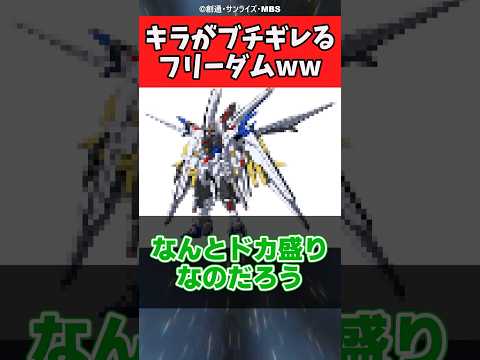
The theatrical release of Mobile Suit Gundam SEED FREEDOM has sparked widespread fan reactions centered on a shocking moment involving the Freedom Gundam—a machine symbolically tied to protagonist Kira Yamato. The unexpected manner of the Freedom’s appearance has led viewers to predict Kira’s furious response, revealing deeper psychological themes about character growth and narrative expectation subversion that have resonated across social media.
What Happened
In the theatrical film Mobile Suit Gundam SEED FREEDOM, the Freedom Gundam makes a significant appearance that defies viewer expectations. Rather than appearing in the context fans anticipated—with protagonist Kira Yamato piloting it—the machine emerges under different circumstances. This narrative choice has generated widespread online discussion, with fans expressing predictions that Kira would be furious at this turn of events. The phrase “Kira is about to lose it” became a trending topic across social media platforms, reflecting viewers’ understanding of the character’s psychological state and their anticipation of his emotional response.
Why It Matters
This moment carries significant weight because the Freedom Gundam represents far more than a mechanical asset in the SEED narrative. For over two decades, since the original Mobile Suit Gundam SEED aired in 2002, the Freedom has symbolized Kira’s growth, his power, and his identity as a protagonist. The unexpected handling of this iconic machine in the theatrical film serves as a deliberate narrative choice that challenges viewer expectations and forces both Kira and the audience to confront themes of identity, destiny, and the burden of being “chosen.” The fan reaction demonstrates how effectively the filmmakers have manipulated audience psychology through careful subversion of narrative conventions.
Background
Mobile Suit Gundam SEED premiered in 2002, introducing Kira Yamato, a protagonist who was neither a Newtype nor a Coordinator—categories that typically defined powerful Gundam pilots. Kira’s journey from piloting the Strike Gundam to obtaining the Freedom Gundam in episode 37 (“Wings of Light”) marked a pivotal moment in the series. This transition symbolized his growth and acceptance of his role as a warrior. Following the SEED DESTINY continuation and nearly two decades of fan anticipation, the theatrical film SEED FREEDOM promised to conclude the long-running narrative. The reappearance of the Freedom Gundam in the film thus carries immense symbolic weight, as it represents a direct callback to one of the franchise’s most iconic moments.
Key Points
- Unexpected Freedom Appearance: The Freedom Gundam emerges in the theatrical film under circumstances that contradict viewer expectations, creating immediate narrative tension.
- Character Psychology: Kira’s anticipated fury stems from a deeper psychological conflict—the Freedom represents his identity and autonomy, making its unexpected appearance a challenge to his sense of self.
- Deliberate Expectation Subversion: The filmmakers intentionally manipulated audience expectations by understanding that viewers anticipated Kira piloting the Freedom, then deliberately contradicting that assumption.
- Thematic Resonance: The scene encapsulates the SEED series’ central theme of “chosen destiny versus personal will,” forcing Kira to confront whether he defines himself through his machine or through his choices.
- Fan Engagement: The viral phrase “Kira is about to lose it” demonstrates how effectively the scene triggered emotional investment and psychological analysis among viewers.
- 20-Year Narrative Payoff: The moment condenses two decades of character development into a single scene, serving as both a callback and a turning point.
Timeline
- 2002: Mobile Suit Gundam SEED airs; Kira Yamato introduced as protagonist piloting the Strike Gundam.
- Episode 37 (2003): Kira obtains the Freedom Gundam in the episode “Wings of Light,” marking a major character milestone.
- 2004-2005: Mobile Suit Gundam SEED DESTINY continues the narrative, further developing Kira’s character and conflicts.
- 2024: Mobile Suit Gundam SEED FREEDOM theatrical film releases, reintroducing the Freedom Gundam under unexpected narrative circumstances.
- Post-Release: Social media erupts with fan reactions, with “Kira is about to lose it” becoming a trending phrase expressing predicted character fury.
Perspectives
Supportive Interpretation: Many fans view the Freedom’s unexpected appearance as a calculated directorial choice designed to deepen the narrative. This perspective sees the scene as a necessary catalyst for Kira’s character development, forcing him to confront the reality that he is not uniquely special or chosen. The subversion of expectations is interpreted as sophisticated storytelling that honors the 20-year legacy while introducing new thematic complexity.
Critical Interpretation: Other viewers express concern that Kira’s treatment in this scene undermines his character arc. This perspective argues that Kira, having waited two decades alongside fans, deserves to pilot the Freedom again. Critics view the unexpected handling as potentially disrespectful to both the character and the audience’s emotional investment.
Psychological Analysis: A third perspective emphasizes the deliberate manipulation of audience psychology. Viewers recognize that the filmmakers understood their expectations and intentionally subverted them—a technique comparable to directorial choices in works like “Neon Genesis Evangelion,” where creator Hideaki Anno similarly manipulated viewer expectations to create emotional impact.
Insights
The widespread fan reaction to the Freedom’s appearance reveals several important truths about narrative engagement and character investment. First, the phrase “Kira is about to lose it” demonstrates that audiences have internalized the protagonist’s psychology so thoroughly that they can accurately predict his emotional responses. This level of character understanding, accumulated over 22 years, represents a significant achievement in long-form storytelling.
Second, the scene exemplifies a broader trend in contemporary anime: the fusion of nostalgia with innovation. Rather than simply recreating past glories, SEED FREEDOM reconstructs familiar elements through modern animation and narrative sophistication, appealing simultaneously to longtime fans and new audiences.
Third, the moment addresses the central thematic tension of the entire SEED series: the conflict between destiny and personal agency. By placing the Freedom in an unexpected context, the filmmakers force Kira—and by extension, the audience—to confront whether identity is defined by circumstances or by choices. This psychological mechanism mirrors similar narrative structures in works like “Code Geass,” where protagonist expectations are deliberately subverted to create emotional resonance.
Finally, the fan reaction itself serves as evidence of the scene’s narrative success. The fact that viewers can articulate their predictions about Kira’s fury, and that these predictions coalesce into a shared cultural moment, demonstrates that the filmmakers have achieved their apparent goal: creating a moment that simultaneously honors the past while challenging the audience’s assumptions about how that past should be revisited.