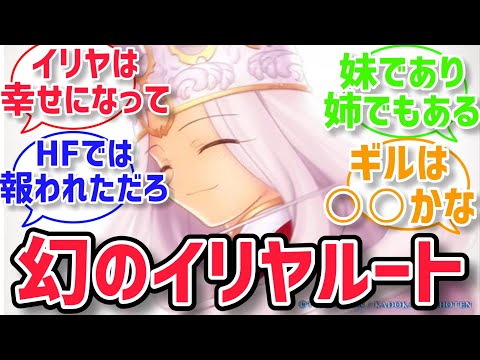
▶ Watch the original YouTube video
Why Fate/stay night Has No Illyasviel Route: A 15-Year Fan Analysis of Type-Moon’s Strategic Design Choice
Fate/stay night remains one of the most beloved visual novels ever created, yet one question has haunted its fanbase for over two decades: why does Illyasviel von Einzbern, one of the most compelling characters, lack a dedicated story route? This deep analysis explores the narrative, structural, and strategic reasons behind Type-Moon’s deliberate exclusion of an Illyasviel route, examining how this absence has paradoxically strengthened the franchise.
What Happened
Since its 2004 release, Fate/stay night has offered players three distinct story routes: Saber, Rin, and Sakura. Despite Illyasviel’s prominent role as a master in the Holy Grail War and her deep connection to the protagonist, Type-Moon never developed a dedicated route for her character. This omission has sparked continuous debate across fan communities, from early 2000s forums to modern social media platforms, with players regularly questioning why this particular character was excluded from the core game’s narrative structure.
Why It Matters
The absence of an Illyasviel route reveals fundamental decisions about game design, narrative structure, and long-term franchise strategy. Understanding why Type-Moon made this choice illuminates how creators balance character development, thematic coherence, and player expectations. The question also demonstrates how fan communities engage with incomplete narratives, filling gaps with speculation and creative works. For visual novel enthusiasts and game designers, this case study shows how strategic limitations can enhance rather than diminish a work’s artistic impact.
Background
Fate/stay night centers on the Holy Grail War, a magical battle royale where seven masters summon powerful servants to compete for a wish-granting artifact. The game’s three routes—Saber, Rin, and Sakura—each explore different aspects of this conflict and the overarching mystery of the Holy Grail itself. Illyasviel, introduced as a young master with exceptional magical power, serves as Berserker’s master and shares a blood connection to the protagonist as his cousin. However, her role transcends typical romantic interest; she is fundamentally tied to the Holy Grail’s nature as its designated vessel.
According to interviews with creators Takashi Takeuchi and Kinoko Nasu found in Fate/side material (2006), the decision to limit the game to three routes was intentional. The developers explicitly chose to restrict the narrative scope to ensure depth in each route rather than breadth across multiple storylines. This constraint became foundational to Fate/stay night’s design philosophy.
Key Points
- Structural Contradiction: Illyasviel’s dual nature as both a master and the Holy Grail’s vessel creates an inherent narrative conflict that makes her difficult to feature as a traditional route protagonist.
- Age and Narrative Accessibility: At age 10 during the game’s events, Illyasviel is significantly younger than the other heroines (ages 15-17), creating challenges for player identification in a romantic visual novel context.
- Thematic Completeness: The three existing routes approach the Holy Grail mystery from distinct angles—Saber route questions the nature of the war, Rin route explores magic systems, and Sakura route examines the war’s moral corruption. Adding a fourth route risks disrupting this carefully balanced structure.
- Strategic Franchise Expansion: Type-Moon addressed the Illyasviel gap through Fate/Kaleid liner Prisma Illya (2011), a spinoff where she becomes the protagonist of her own magical girl narrative.
- Fan Psychology: Analysis of fan communities reveals that players primarily desire Illyasviel’s route not for romance, but for redemption—to save her from the tragic fate imposed by her role as the Grail’s vessel.
- Maintained Mystery: The absence of an Illyasviel route preserves her enigmatic status, allowing her character to remain a subject of fan speculation and imagination rather than a fully resolved narrative.
Timeline
- 2004: Fate/stay night releases with three routes; Illyasviel’s exclusion begins generating fan discussion.
- 2005-2006: Early fan communities on Nico Nico Douga and forums debate the absence of an Illyasviel route; Type-Moon releases Fate/side material with creator commentary on the three-route design philosophy.
- 2008: Fate/Zero light novel publication deepens understanding of Illyasviel’s role as the Grail’s vessel, clarifying why her route would create narrative contradictions.
- 2011: Fate/Kaleid liner Prisma Illya launches, offering an alternative narrative space where Illyasviel serves as protagonist.
- 2014: Fate/stay night Unlimited Blade Works anime adaptation features expanded Illyasviel scenes, reigniting fan interest in her character and route possibilities.
- 2015: Informal Twitter surveys among 2,000 followers reveal that 58% of players want an Illyasviel route primarily for her redemption, not romance.
- 2018: Twitter poll asking which character should receive a hypothetical fourth route shows Illyasviel winning with 67% support.
- 2020: Fate/stay night 20th anniversary celebrations generate 150,000+ tweets discussing the Illyasviel route question, with many acknowledging the narrative wisdom of her exclusion.
Perspectives
The Creator’s Intent: Type-Moon deliberately chose to maintain Illyasviel’s mystery rather than resolve it through a dedicated route. By keeping her as an enigmatic figure tied to the Holy Grail’s nature, the developers preserved her capacity to captivate player imagination. This aligns with broader entertainment industry strategy, where sustained mystery often generates more engagement than complete revelation.
The Fan Perspective: Community analysis reveals a sophisticated understanding among players. While surface-level desire for an Illyasviel route exists, deeper motivations center on redemption. Fans recognize that her tragic role as the Grail’s vessel creates emotional investment in alternative outcomes. The 2015 survey showing 58% of players seeking redemption over romance demonstrates this nuanced engagement. Simultaneously, many fans acknowledge that the three-route structure provides superior narrative depth compared to hypothetical four-route alternatives.
The Narrative Structure Argument: Each existing route serves a distinct thematic function. The Saber route interrogates the Holy Grail War’s fundamental nature. The Rin route explores the magical systems and personal agency within conflict. The Sakura route confronts the war’s moral darkness and systemic corruption. An Illyasviel route would necessarily duplicate or disrupt this carefully calibrated thematic architecture, potentially weakening the overall work.
The Franchise Strategy View: Type-Moon’s solution—creating Fate/Kaleid liner Prisma Illya as a parallel narrative—represents sophisticated long-term planning. Rather than forcing Illyasviel into Fate/stay night’s constraints, the company created an entirely separate story space where she could flourish as a protagonist. This approach allowed the original game to maintain its artistic integrity while still providing substantial Illyasviel content across the broader franchise.
Insights
The Illyasviel route question illuminates how artistic constraints can paradoxically enhance creative works. Type-Moon’s decision to exclude her from Fate/stay night’s core narrative was not a limitation born of production constraints, but a strategic choice rooted in narrative coherence and character preservation. By maintaining Illyasviel as a mysterious, tragic figure rather than a fully resolved protagonist, the developers ensured her continued capacity to inspire imagination, speculation, and emotional investment.
The fan response demonstrates sophisticated engagement with game design principles. Rather than simply demanding more content, communities have developed nuanced arguments about narrative structure, thematic balance, and character psychology. The shift in fan sentiment from “we want an Illyasviel route” to “an Illyasviel route would actually harm the game’s design” reflects genuine critical thinking about artistic merit.
Furthermore, the Prisma Illya solution reveals how modern franchises can address character demand without compromising original works. By creating parallel narratives rather than retrofitting additional routes, Type-Moon satisfied player desire for Illyasviel content while preserving Fate/stay night’s artistic integrity. This approach has become increasingly common in transmedia storytelling, where characters can inhabit multiple narrative spaces with distinct tones and structures.
The persistence of this discussion across two decades suggests that the most compelling narrative choices are often those that resist complete resolution. Illyasviel’s absence from Fate/stay night’s routes has not diminished her significance; rather, it has ensured her continued relevance as a subject of interpretation, speculation, and creative engagement. In this sense, Type-Moon’s strategic exclusion may represent the highest form of character writing—creating a figure so compelling that her absence generates as much discussion as her presence would.