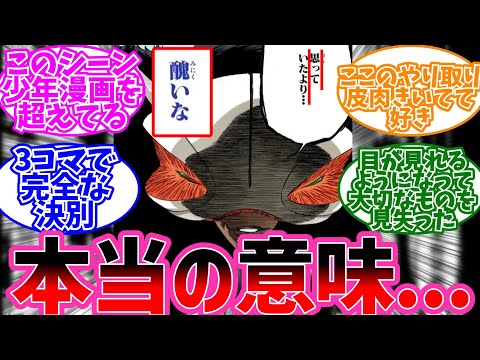
▶ Watch the original YouTube video
Tosen Kaname’s “More Hideous Than Expected” Line Sparks Major Fan Debate in BLEACH
A pivotal line spoken by BLEACH character Tosen Kaname—”It’s more hideous than I thought”—has generated significant discussion among fans about the character’s psychological transformation and inner conflict. The statement marks a critical turning point in his character arc and raises questions about the true meaning behind his words and the creative intent of the series.
What Happened
Tosen Kaname, a complex character in BLEACH, delivers the line “It’s more hideous than I thought” at a critical moment in the narrative. This statement represents a significant psychological shift for the character, who is typically portrayed as refined, intellectually composed, and devoted to beauty and music. The line has become a focal point for fan analysis and interpretation, sparking widespread discussion across social media platforms including Twitter, Reddit, and YouTube.
Why It Matters
This moment is significant because it reveals the internal contradictions and psychological turmoil that Tosen has been concealing throughout the series. The statement signals a fundamental shift in his value system and worldview. For viewers who have followed BLEACH for years, this line represents a rare moment of self-awareness and vulnerability from a character who has maintained a facade of elegance and rationality. The ambiguity of whether Tosen is genuinely confronting his own inner ugliness or weaponizing the concept against others adds layers of complexity to his characterization and invites deeper analysis of his motivations and psychological state.
Background
Tosen Kaname is one of BLEACH’s most psychologically complex characters. Introduced as a refined Soul Reaper who values beauty and music, his character arc reveals deep internal conflicts and contradictions. Throughout the series, viewers witness his gradual transformation as his obsession with beauty and idealism becomes increasingly distorted. The “hideous” line emerges as his psychological state reaches a critical juncture, representing either a moment of genuine self-recognition or a manifestation of his deteriorating mental condition. This moment occurs within the broader narrative context of BLEACH’s recurring themes exploring the nature of beauty, ugliness, justice, and the moral ambiguities that define the series’ central conflicts.
Key Points
- Tosen’s statement symbolizes his internal psychological transformation and the collapse of his value system centered on beauty and aesthetics
- The line functions as a critical turning point where the character confronts—or appears to confront—the contradictions between his ideals and his actions
- Fan interpretations vary widely, ranging from readings of genuine self-awareness to interpretations of aggressive projection onto others
- The scene demonstrates sophisticated character psychology through voice acting, visual composition, and musical accompaniment
- The statement reflects BLEACH’s central thematic exploration of beauty versus ugliness and the moral ambiguities within the series’ universe
- The ambiguity of the line’s meaning has generated sustained fan engagement and multiple competing interpretations
Character Analysis: The Essence of Tosen Kaname
Tosen Kaname represents one of BLEACH’s most intricate psychological studies. Outwardly, he appears as an intellectual, music-loving, and graceful Soul Reaper. However, beneath this refined exterior lies profound internal conflict and contradiction. His statement about ugliness captures the moment when these contradictions reach their breaking point. The line functions as an expression of his fractured psychological state—a state that has been building throughout his character arc as his pursuit of beauty and idealism becomes increasingly corrupted by his actions and choices.
The creative team’s approach to this scene reflects careful attention to psychological detail. Voice acting choices, background color palettes, and musical selections all work in concert to convey Tosen’s internal turmoil. This multi-layered approach to character expression elevates the scene beyond simple dialogue delivery, transforming it into a complex emotional and psychological statement.
Thematic Significance: Beauty and Ugliness in BLEACH
Throughout its fifteen-year run, BLEACH has consistently engaged with themes of beauty and ugliness, exploring fundamental questions about the nature of the worlds Soul Reapers protect and the values they uphold. Tosen Kaname stands as one of the series’ most emblematic expressions of these themes. He is depicted as a character who pursues beauty and refinement, yet whose obsession with these ideals becomes the very force that distorts and corrupts him. His statement about ugliness represents the culmination of this thematic arc—the moment when his pursuit of beauty has led him to embrace its opposite.
The complexity of Tosen’s psychological state invites comparison with other anime characters who undergo similar transformations. Like Lelouch from Code Geass, Tosen pursues an ideal so intensely that he loses himself in the process and confronts the ugliness of his own actions. However, unlike Lelouch’s remorseful recognition of his moral failings, Tosen’s statement carries an aggressive quality—he projects ugliness outward rather than internalizing it as personal guilt. This distinction marks a crucial difference in how the two characters psychologically process their moral compromises.
Fan Reactions and Interpretations
Online responses to this scene have been remarkably diverse and revealing. Twitter users frequently comment that the line represents the moment Tosen recognizes his own contradictions. Analytical viewers suggest that the statement reflects his profound internal conflict, while others interpret it as a moment of genuine psychological breakthrough where he finally acknowledges the gap between his ideals and his reality.
Discussion forums like Reddit and 5channel’s BLEACH threads feature comments emphasizing Tosen’s character complexity, with some viewers speculating that the line foreshadows his ultimate fate within the narrative. YouTube comments frequently express shock at the statement’s delivery and praise the quality of the character’s psychological portrayal. The diversity of interpretations—ranging from readings of self-awareness to accusations of mere projection—demonstrates how effectively the scene communicates psychological complexity while remaining open to multiple valid interpretations.
A notable minority of viewers express confusion about the line’s meaning, suggesting that its complexity occasionally obscures rather than clarifies its intent. This ambiguity, however, may be intentional, as it mirrors Tosen’s own psychological uncertainty about the nature of his self-awareness and motivations.
Psychological Evaluation Framework
When assessing character psychology in anime, five key criteria determine the quality and effectiveness of psychological portrayal:
- Consistency between action and psychology: Do the character’s behaviors align logically with their internal state?
- Narrative significance: Does the psychological development meaningfully contribute to the overall story arc?
- Human relatability: Can viewers connect with the character’s emotional experience despite their moral failings?
- Clarity within complexity: Is the character’s essential nature communicated clearly despite psychological sophistication?
- Consequential impact: Does the psychological moment influence the character’s trajectory and the broader narrative?
Tosen’s “hideous” statement satisfies all five criteria, demonstrating why it has resonated so strongly with viewers and generated sustained analytical engagement.
Insights and Broader Implications
Tosen Kaname’s line represents a watershed moment in BLEACH’s exploration of character psychology and moral complexity. The statement encapsulates the series’ central tension: the recognition that idealism, when pursued without moral grounding, can become its own form of ugliness. The ambiguity surrounding whether Tosen achieves genuine self-awareness or merely projects his inner corruption outward reflects the series’ sophisticated approach to moral ambiguity.
The scene demonstrates how contemporary anime increasingly prioritizes nuanced psychological portrayal over simplified moral categorization. Rather than presenting Tosen as a straightforward antagonist, BLEACH invites viewers to grapple with the psychological complexity underlying his choices. This approach reflects evolving audience expectations for mature storytelling that acknowledges the psychological reality of human (and Soul Reaper) motivation.
The sustained fan engagement with this single line of dialogue underscores BLEACH’s success in creating characters whose internal lives feel authentic and psychologically compelling. Whether Tosen’s statement represents genuine self-recognition or defensive projection remains deliberately unresolved, and this unresolution is precisely what gives the moment its enduring power and relevance within fan discourse.