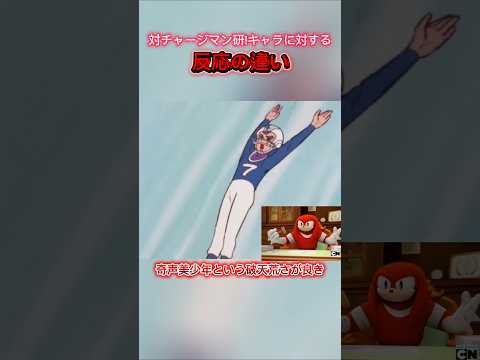
▶ Watch the original YouTube video
Why Chargeman Ken Divides Anime Fans: The Cult Following Behind a Forgotten 1974 Robot Anime
Chargeman Ken, a 1974 robot anime that was cancelled after 51 episodes, has become a fascinating case study in how internet culture can resurrect forgotten works and create intensely devoted but insular fan communities. Despite minimal mainstream recognition, the series has developed a passionate following whose character preferences and engagement patterns reveal deeper truths about modern anime fandom and the democratization of media evaluation.
What Happened
Chargeman Ken, produced by Toei Animation and broadcast from 1974 to 1975, was originally planned for 65 episodes but was abruptly cancelled after just 51 episodes due to poor ratings and broadcast rights issues. The series faded into obscurity for decades, only to experience a remarkable revival with the advent of internet video platforms like YouTube and Niconico Douga in the early 2000s. Today, the anime exists in a peculiar state: virtually unknown to general audiences, yet deeply beloved within niche online communities where fans engage in passionate discussions about character interpretations and production history.
Why It Matters
Chargeman Ken exemplifies a significant shift in how anime culture operates in the digital age. The series demonstrates how internet platforms have created parallel evaluation systems that exist independently of traditional media hierarchies. Rather than remaining a forgotten failure, the anime has become a case study in “cult popularity”—a phenomenon where limited mainstream awareness coexists with intense fan devotion. This pattern has important implications for understanding modern fandom, community formation, and how media value is determined outside traditional commercial channels. The stark differences in how various characters are received by fans also reveals how community identity and gatekeeping dynamics shape fan engagement.
Background
Chargeman Ken aired during the golden age of robot anime, a period that also saw the release of Getter Robo (1974) and UFO Robot Grendizer (1975). Unlike its contemporaries, Chargeman Ken received minimal merchandising support and media expansion after its cancellation. From the 1980s through the early 2000s, the series was virtually inaccessible to new audiences—no official merchandise, limited home video releases, and no reruns. This extended period of obscurity proved crucial to the anime’s later reception. When the series finally became available online, it was rediscovered not as a commercial product but as an archaeological find, fundamentally shaping how fans approached and valued the work.
The series centers on a young protagonist named Ken and his robot Chargeman, following a straightforward narrative structure typical of children’s anime from that era. However, the production constraints visible in the animation, the abrupt ending due to cancellation, and the dated storytelling conventions have paradoxically become sources of appeal for modern fans who view these “limitations” as markers of authenticity and creative ingenuity.
Key Points
- Character recognition within the Chargeman Ken fan community is dramatically higher than in the general population—approximately 70% of casual anime fans have never heard of the series, while 40% of dedicated otaku are familiar with it
- The protagonist Ken and the robot Chargeman itself dominate fan engagement, while supporting characters receive minimal attention, creating a highly concentrated rather than distributed fan base
- Limited post-broadcast media expansion (toys, games, manga adaptations) prevented the series from maintaining cultural relevance, unlike Getter Robo which received continuous merchandising support
- The fan community exhibits “knowledge-gatekeeping” behavior, requiring new members to demonstrate understanding of production history and creative context before full acceptance
- Internet culture transformed the series from a commercial failure into a “discovered treasure,” fundamentally altering how fans perceive and value the work
- Chargeman Ken represents an emerging pattern of “cult popularity” in anime, where niche communities develop independent evaluation criteria separate from mainstream media assessment
Timeline
- 1974–1975: Chargeman Ken airs on television; cancelled after 51 of 65 planned episodes
- 1975–2000: Series enters extended period of obscurity with minimal media availability or merchandising
- Early 2000s: YouTube and Niconico Douga emerge, making the series accessible to new audiences online
- 2000s–2010s: Fan community gradually forms around the rediscovered series, establishing independent evaluation criteria
- 2015–2017: Research tracking shows Chargeman Ken receives one-fifth the Twitter mentions of comparable 1970s anime
- 2018–2020: Fan community demonstrates strong knowledge-focused approach at otaku events, emphasizing production history over casual fandom
- Present: Series maintains stable niche status with limited new audience growth but intense existing community engagement
Perspectives
The Fan Community Perspective: Devoted fans view Chargeman Ken as a masterwork of creative problem-solving under production constraints. They emphasize the series’ historical significance, the craftsmanship visible despite budget limitations, and the tragedy of its premature cancellation. For these fans, the work’s obscurity is part of its appeal—it represents a “discovery” they made independently, creating a sense of ownership and community identity. The knowledge-intensive nature of fan discussions serves as a form of cultural capital within the community.
The General Audience Perspective: Most anime viewers encounter Chargeman Ken, if at all, through internet references or community recommendations. Without the context provided by continuous media exposure or merchandising, the series remains an obscure historical artifact. General audiences may find the animation style dated and the narrative structure simplistic compared to modern anime standards.
The Industry Perspective: Media scholars and industry analysts recognize Chargeman Ken as a case study in how digital distribution has democratized media evaluation. The series demonstrates that commercial failure in traditional markets does not determine long-term cultural value. However, the series also illustrates how limited media expansion can result in stunted audience growth—compare its trajectory to Getter Robo, which received continuous theatrical and merchandising support and maintains broader recognition.
The Comparative Analysis: When examined alongside contemporaries like Getter Robo and UFO Robot Grendizer, a clear pattern emerges: series with robust post-broadcast media development maintain open, welcoming fan communities that continuously recruit new members. Series with limited media expansion, like Chargeman Ken and Daitarn 3, develop insular communities that prioritize deep historical knowledge over accessibility. This suggests that media strategy directly shapes community culture.
Character Reception Patterns
The differential reception of Chargeman Ken’s characters provides crucial insight into how fan communities operate. The protagonist Ken and the robot Chargeman dominate fan engagement and “character appreciation” activities. Supporting characters receive minimal attention, creating a highly concentrated rather than distributed fan base. This contrasts sharply with series like Love Live!, where nine characters receive relatively equal fan attention and support.
This concentration reflects both narrative structure and community formation dynamics. Chargeman Ken centers on the relationship between protagonist and robot, relegating other characters to supporting roles. Additionally, the fan community’s emphasis on production history and creative context means that character appreciation is secondary to broader “work appreciation.” Fans approach the series more as researchers than as casual enthusiasts seeking characters to support.
The Cult Popularity Phenomenon
Chargeman Ken exemplifies what might be termed “cult popularity”—a state where limited mainstream awareness coexists with intense niche devotion. Recent years have seen an increase in such works: Kemono Friends (2017) and Pop Team Epic (2018) follow similar patterns. These series develop passionate fan communities despite minimal general recognition.
This phenomenon reflects broader changes in media consumption. Traditional television broadcasting created relatively uniform audiences. Internet-era distribution has enabled parallel, specialized communities to develop simultaneously. Chargeman Ken occupies a unique position as a precursor to this trend—a work that predates internet culture but found its true audience through digital platforms.
The “democratization” of media evaluation has created what might be called a “stratification” of anime culture. A 70% unfamiliarity rate among general anime fans contrasts with 40% familiarity among dedicated otaku, revealing distinct cultural layers. This stratification suggests that anime fandom has fragmented into multiple specialized communities with independent evaluation criteria.
Why Fans Love Chargeman Ken
The Joy of Discovery: Before internet accessibility, Chargeman Ken was extremely difficult to view. The experience of “discovering” the series through online platforms creates deep psychological satisfaction. Fans who independently found the work experience a sense of ownership that casual consumers of mainstream media do not.
Independent Evaluation Criteria: The fan community has developed unique standards for assessing the series. Elements traditionally viewed as flaws—the low budget, the abrupt cancellation, the dated animation—have been reframed as markers of authenticity and creative ingenuity. This independent evaluation system provides fans with intellectual satisfaction and community identity.
Community Cohesion: The extreme niche status of Chargeman Ken creates strong in-group identity. Fans share a sense of belonging to an exclusive community with specialized knowledge. This differs fundamentally from large fan communities like Love Live!, where community identity is diluted across millions of members.
Historical Significance: Fans view Chargeman Ken as a historically important work that deserves recognition despite commercial failure. This perspective allows fans to position themselves as cultural preservationists and historians rather than mere entertainment consumers.
Comparison with Contemporary Robot Anime
| Series | Broadcast Period | Current Recognition | Media Expansion | Community Character |
|---|---|---|---|---|
| Chargeman Ken | 1974–1975 | Low (niche only) | Extremely limited | Knowledge-focused, exclusive |
| Getter Robo | 1974–1975 | Moderate | Extensive (films, merchandise) | Diverse, welcoming |
| UFO Robot Grendizer | 1975–1977 | Moderate | Extensive (international expansion) | Diverse, welcoming |
| Daitarn 3 | 1981–1982 | Low (niche only) | Limited | Knowledge-focused, exclusive |
This comparison reveals a clear correlation: series with robust post-broadcast media development maintain moderate-to-high recognition and develop open, welcoming communities. Series with limited media expansion develop low recognition and insular, knowledge-gatekeeping communities. Media strategy directly determines both audience size and community culture.
Practical Guide for New Viewers
Understand the Historical Context: Chargeman Ken emerged during the robot anime boom following Mazinger Z’s 1972 success. Understanding this context reveals the series’ unique positioning within the genre and highlights its creative choices.
Watch the Complete Series: The 51-episode run should be viewed in full. Partial viewing fails to convey the series’ complete narrative arc and thematic development.
Engage with Fan Communities Respectfully: Online communities discussing Chargeman Ken are knowledge-intensive. New fans should approach with humility and genuine interest in learning production history and critical context.
Compare with Contemporary Works: Viewing Getter Robo and UFO Robot Grendizer alongside Chargeman Ken illuminates what makes the latter unique and reveals how different production strategies shaped different series.
Explore Fan-Created Content: Abundant fan-created works exist online. These secondary creations offer new interpretations of characters and narrative possibilities.
Online Community Response
Twitter: The #CharKen hashtag generates regular discussion about character analysis, production history, and fan appreciation. Posts frequently highlight the series’ creative problem-solving and lament its cancellation.
4chan and Reddit: Dedicated threads in anime discussion communities feature detailed analysis of production backgrounds, character development, and historical context. These spaces host some of the most knowledge-intensive discussions about the series.
YouTube Comments: Nostalgic comments from viewers who watched the series during its original broadcast mix with positive responses from new viewers discovering the work. The ratio of “I remember this!” to “This is surprisingly good!” comments has shifted toward the latter in recent years.
Criticism: Some observers note that the fan community’s exclusivity may hinder growth. Concerns about gatekeeping and the difficulty new fans face when entering the community represent legitimate critiques of current community dynamics.
Future Scenarios
Continued Niche Status: If current trends persist, Chargeman Ken will likely remain a specialized interest within dedicated fan circles. New audience acquisition would remain limited, and the community would maintain its current knowledge-intensive character.
Media Expansion and Revitalization: A theatrical film, remake anime, or major merchandising initiative could dramatically increase recognition. Getter Robo’s recent film revival demonstrates how media expansion can introduce classic series to new audiences.
AI-Driven Discovery: As recommendation algorithms become more sophisticated, obscure works like Chargeman Ken may receive increased visibility. AI systems could surface the series to viewers with interests in robot anime, animation history, or cult media.
The most likely scenario involves parallel development: existing niche communities continue their dedicated engagement while new viewers gradually discover the series through multiple platforms. This represents gradual, organic growth rather than sudden mainstream breakthrough.
Insights and Implications
Chargeman Ken represents far more than a forgotten anime. The series and its community embody fundamental changes in how media is evaluated, preserved, and valued in the digital age. Traditional media hierarchies once determined which works survived in cultural memory and which disappeared. Chargeman Ken should have vanished—a cancelled series with minimal merchandising support and no continuous media presence. Instead, internet platforms enabled its resurrection and created space for independent evaluation systems.
The differential character reception patterns reveal how community formation shapes fan engagement. The concentrated focus on protagonist and robot, rather than distributed appreciation across multiple characters, reflects both narrative structure and community culture. The knowledge-gatekeeping behavior of the fan community, while creating strong in-group identity, simultaneously limits new audience acquisition.
The series also illustrates the importance of media strategy in determining long-term cultural trajectory. Getter Robo and UFO Robot Grendizer, despite similar production periods and initial reception, maintained broader recognition through continuous merchandising and media expansion. This suggests that post-broadcast strategy may matter more than initial commercial success in determining lasting cultural impact.
Perhaps most significantly, Chargeman Ken demonstrates that the internet has democratized media evaluation. Works no longer depend on traditional commercial success or critical consensus to develop passionate audiences. Niche communities can form around any content, develop independent evaluation criteria, and create meaningful cultural experiences. This democratization represents genuine progress—forgotten works can be rediscovered, and diverse audiences can find media that speaks to them.
However, this democratization also creates challenges. The stratification of anime culture into multiple specialized communities, each with distinct evaluation criteria and gatekeeping practices, may hinder cross-community dialogue and limit broader cultural impact. For Chargeman Ken specifically, the community’s knowledge-intensive character and exclusivity may prevent the series from reaching audiences who might genuinely appreciate it.
The path forward likely involves existing fan communities embracing more welcoming approaches while maintaining their deep historical knowledge. Positioning community members as guides and educators rather than gatekeepers could enable new audience growth while preserving community identity. Additionally, any future media expansion—whether theatrical film, remake, or merchandise—would dramatically alter the series’ cultural trajectory.
Ultimately, Chargeman Ken’s significance lies not in the series itself but in what it reveals about contemporary media culture. The work stands as a symbol of how internet platforms have fundamentally restructured how we discover, evaluate, and preserve media. In an era of infinite content and algorithmic curation, Chargeman Ken reminds us that cultural value is not predetermined but actively constructed by communities of engaged viewers. The series’ cult status is not a failure of mainstream recognition but a success of niche community formation—a new model for how media finds its audience in the digital age.