▶ Watch the original YouTube video
After 15 years of playing the Yo-Kai Watch series, a comprehensive analysis reveals that the franchise’s boss difficulty varies dramatically across titles, with some encounters rivaling or exceeding the challenge level of mainstream RPGs like Dragon Quest and Pokémon. From the punishing Kuro Oni of the original game to the seemingly impossible Kiwami Nobori Kuroton in Yo-Kai Watch 4, each installment presents distinct design philosophies that challenge the “children’s game” stereotype.
What Happened
An in-depth examination of boss difficulty across the entire Yo-Kai Watch numbered series reveals significant variations in challenge design. The original Yo-Kai Watch (2014) introduced unexpectedly difficult boss encounters that defied expectations for a children’s RPG. Subsequent titles—Yo-Kai Watch 2, 3, and 4—each implemented different difficulty scaling strategies, with some bosses becoming progressively more challenging while others were balanced for accessibility. The Busters spin-off series, in particular, introduced bosses with substantially higher difficulty thresholds than their main-series counterparts.
Why It Matters
The Yo-Kai Watch series represents a significant departure from the conventional “children’s game equals easy gameplay” paradigm. Understanding how the franchise’s difficulty design evolved provides insight into broader trends in game development, where developers increasingly recognize that young audiences benefit from meaningful challenge and achievement. This analysis demonstrates how system changes, new mechanics, and design philosophy shifts directly impact player experience and perceived game quality. For players considering which entries to tackle, understanding relative difficulty levels is essential for appropriate expectation-setting and strategic preparation.
Background
The Yo-Kai Watch franchise launched on Nintendo 3DS in 2014 with the original title, establishing itself as a major competitor in the monster-collecting RPG genre. Over 15 years, the series evolved through four numbered entries, each introducing significant mechanical changes. The original game’s Kuro Oni boss fight became legendary among players for its unexpected difficulty spike. Subsequent entries refined the formula, with Yo-Kai Watch 2 introducing the goddess-like Ayatori-sama, Yo-Kai Watch 3 expanding the Busters system, and Yo-Kai Watch 4 pushing difficulty boundaries with extreme late-game encounters. The Busters subseries consistently featured more challenging boss encounters than the main narrative, creating a secondary difficulty tier for dedicated players.
Key Points
- The Yo-Kai Watch series lacks a single “strongest boss” due to fundamental system changes between entries that make direct comparison difficult
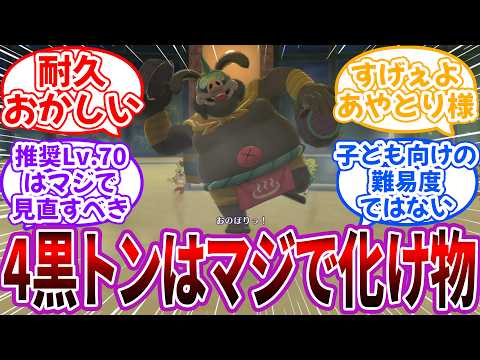
- Standout difficult bosses include Kuro Oni (original), Ayatori-sama (2), Daruma Sensei (3), and Kiwami Nobori Kuroton (4), each representing their respective game’s peak difficulty
- The same boss character exhibits dramatically different difficulty levels across different game entries due to environmental and mechanical differences
- Busters series bosses consistently exceed main-story boss difficulty, suggesting intentional design for hardcore players
- Boss difficulty assessment is significantly influenced by the presence or absence of special gimmicks and mechanics
- System mechanics like Dekaninyan’s powerful normal attacks in Yo-Kai Watch 3 can trivialize otherwise difficult encounters
Timeline
- 2014: Original Yo-Kai Watch releases with Kuro Oni establishing unexpectedly high difficulty standards
- 2015: Yo-Kai Watch 2 introduces Ayatori-sama, widely regarded as the series’ most strategically demanding boss
- 2016: Yo-Kai Watch 3 launches with Busters system, creating dual difficulty tiers for boss encounters
- 2018: Yo-Kai Watch 4 releases with Kiwami Nobori Kuroton, pushing difficulty to extreme levels
- 2019-Present: Ongoing community discussion and analysis of relative boss difficulty across all entries
Perspectives
Developer Intent Perspective: The escalating difficulty across entries suggests deliberate design choices rather than random balancing decisions. The original game’s high difficulty likely aimed to shatter preconceptions about children’s games, establishing the franchise as a serious RPG experience. Yo-Kai Watch 2’s Ayatori-sama difficulty may have been intentionally calibrated to reflect her narrative importance as a divine character. Yo-Kai Watch 3’s relatively lower difficulty likely resulted from the Busters system being overpowered, reducing the need for challenging main-story bosses. Yo-Kai Watch 4’s Kiwami Nobori Kuroton appears designed as an ultimate challenge for dedicated players, possibly representing either intentional extreme difficulty or a significant balancing oversight.
Community Perspective: Online discussions across Twitter, 5channel, and YouTube reveal consistent player frustration with specific bosses, particularly Kiwami Nobori Kuroton, which players describe as “impossibly difficult.” The recurring observation that “Ayatori-sama was only strongest in Yo-Kai Watch 2” indicates community recognition that boss strength varies significantly by entry. Players frequently note that difficulty and enjoyment are separate metrics, with some bosses being challenging but tedious rather than engaging.
Mechanical Perspective: Boss difficulty correlates with available player resources and game mechanics. The original game’s limited equipment and Yo-Kai roster made even moderately-powered bosses extremely challenging. Yo-Kai Watch 3’s Dekaninyan and Yamerunja Sensei’s overwhelming power created an unintended difficulty inversion where normally challenging bosses became trivial. The Busters system’s mechanics fundamentally altered difficulty scaling, making Busters bosses substantially harder than their main-story equivalents.
Practical Strategy Guide
For Original Yo-Kai Watch: Acquiring Togenya before facing Kuro Oni is essential. The ability to obtain high-level Togenya relatively easily through specific farming methods makes this Yo-Kai critical for victory. Attempting Kuro Oni without Togenya is nearly impossible.
For Yo-Kai Watch 2: Constructing a party with consistent full-coverage Yo-Kai is recommended before facing Ayatori-sama. Since she resists single-target attacks, building a team capable of dealing area-of-effect damage significantly reduces battle duration and increases survival probability.
For Yo-Kai Watch 3: Playing without the Busters system is recommended to preserve challenge and engagement. Using Busters trivializes boss encounters and substantially diminishes the game’s strategic depth and tension.
For Yo-Kai Watch 4: Consulting strategy guides before attempting Kiwami Nobori Kuroton is strongly advised. The boss requires specific counter-weapons and preparation that are not intuitive, and self-directed attempts typically result in repeated failures.
Insights
The Yo-Kai Watch series demonstrates that children’s games need not sacrifice challenge for accessibility. The franchise’s willingness to implement genuinely difficult boss encounters has created a lasting appeal that extends far beyond the target demographic. The evolution of difficulty design across entries reflects broader industry trends toward respecting player skill and offering meaningful achievement moments.
The variation in difficulty across entries suggests that the franchise prioritizes narrative and mechanical innovation over difficulty consistency. Each game’s boss design serves its specific mechanical context rather than maintaining a unified difficulty standard. This approach has both strengths and weaknesses: it keeps the series fresh and prevents difficulty fatigue, but it also creates confusion for players transitioning between entries.
The distinction between difficulty and enjoyment is particularly relevant to Yo-Kai Watch’s design philosophy. Some bosses achieve high difficulty through pure stat scaling and damage output, while others employ strategic gimmicks that reward planning and adaptation. Both approaches have merit, though the original game’s emphasis on strategic gimmicks over raw difficulty appears to have resonated more strongly with the player community.
Looking forward, the series would benefit from more intentional balance between difficulty and engagement. While extreme challenges like Kiwami Nobori Kuroton serve a purpose for dedicated players, the original Kuro Oni’s approach—offering genuine challenge while maintaining strategic depth and player agency—represents an ideal model for future entries. The Yo-Kai Watch franchise’s greatest strength lies not in its difficulty alone, but in its ability to make players feel that overcoming challenges requires both preparation and skill, creating genuine satisfaction upon victory.