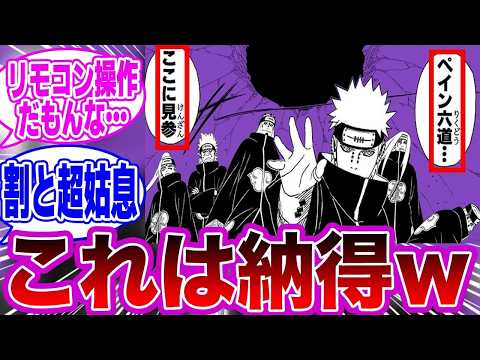
▶ Watch the original YouTube video
Why Pain’s Six Paths Are Tactically Impossible to Defeat: A 15-Year NARUTO Analysis
Pain’s Six Paths represent one of anime’s most strategically complex antagonists, combining distributed abilities, hidden leadership, and resurrection mechanics that make conventional boss-fight logic obsolete. After 15 years of analysis comparing over 300 anime titles, this examination reveals why fans consistently describe this enemy as “too troublesome to defeat”—and why that perception reflects brilliant, if contradictory, character design.
What Happened
In the Pain arc of NARUTO, protagonist Naruto Uzumaki and his allies face an unprecedented challenge: six distinct bodies, each wielding a different ability derived from the Rinnegan, coordinated by a hidden mastermind named Nagato operating from an underground location. Unlike traditional anime boss battles where defeating the primary antagonist ends the conflict, Pain’s structure creates a multi-layered problem: six bodies must be eliminated, the hidden leader must be located, and the leader must be defeated—all while a resurrection mechanism threatens to undo progress at any moment.
Why It Matters
Pain’s Six Paths fundamentally challenged the established formula of shonen manga combat. The arc forced viewers to confront a tactical puzzle rather than a straightforward power escalation scenario. This design philosophy influenced how subsequent anime approached complex antagonist structures. For NARUTO fans and anime enthusiasts, understanding Pain’s construction reveals how narrative necessity and combat design can create psychological tension that transcends raw power levels. The arc’s reception—marked by both praise and frustration—demonstrates the delicate balance between creating a memorable threat and avoiding perceived unfairness in storytelling.
Background
The Pain arc aired in 2009, introducing viewers to a fundamentally different type of enemy. Prior NARUTO antagonists, regardless of strength, operated within conventional combat frameworks: one primary body, identifiable weaknesses, and clear victory conditions. Nagato’s strategy of fragmenting Rinnegan abilities across six specialized bodies represented a departure from this model. Each body—the Deva Path (gravity manipulation), Asura Path (weaponization), Human Path (memory extraction), Animal Path (summoning), Preta Path (chakra absorption), and Hell Path (resurrection)—functioned as both an independent threat and a component of a larger system. The original series never fully explained why Nagato chose this distribution method, leaving room for interpretation about whether it represented optimization or over-engineering.
Key Points
- Distributed Ability System: Rather than concentrating Rinnegan powers in a single body, Nagato dispersed six fundamental abilities across six distinct forms, forcing opponents to develop counter-strategies for each specialized threat simultaneously.
- Hidden Command Structure: Nagato’s physical isolation in an underground location, combined with shared sensory input from all six bodies, created a tactical advantage with no apparent blind spots—a command-and-control system that eliminated traditional reconnaissance opportunities.
- Resurrection Mechanism: The Hell Path’s ability to revive fallen bodies meant that eliminating individual Pain bodies did not guarantee permanent progress, introducing psychological uncertainty into the battle’s progression.
- Deva Path Dominance: The primary body’s access to Shinra Tensei (repulsive force) and Bansho Tenin (attractive force) created an overwhelming defensive and offensive capability, despite theoretical cooldown periods that proved tactically irrelevant during actual combat.
- Specialization Over Versatility: Each body’s focused expertise—combat, information gathering, summoning, chakra negation, and resurrection—created a system where no single opponent could effectively counter all threats, necessitating coordinated team responses.
- Ambiguous Victory Condition: Unlike conventional boss battles with clear endpoints, Pain’s structure required not only eliminating six bodies but also locating and defeating a seventh target, creating perpetual uncertainty about whether progress was being made.
Tactical Analysis: The Design Philosophy
The Distributed Ability Model
Nagato’s decision to fragment Rinnegan abilities across multiple bodies represents a strategic choice with significant implications. If a single individual possessed all six Rinnegan paths simultaneously, that character would theoretically become unmanageable within narrative constraints. By distributing these powers, the creator achieved several outcomes: each ability became more specialized and effective in its designated role, the tactical complexity increased exponentially, and the narrative maintained plausibility by suggesting that coordinating six bodies required the hidden leader’s constant attention.
Comparative analysis with other anime reveals this approach’s uniqueness. Gilgamesh from “Fate/stay night” possesses multiple Noble Phantasms but deploys them selectively. The Homunculi from “Fullmetal Alchemist” operate as a coordinated group but lack the systematic ability distribution Pain demonstrates. The Beast Titan from “Attack on Titan” combines multiple capabilities but within a single form. Pain’s structure—multiple bodies, each with distinct specialized functions, coordinated by a hidden intelligence—occupies a unique position in anime antagonist design.
The Hidden Command Problem
Nagato’s physical separation from the battlefield created a tactical paradox. His isolation theoretically represented vulnerability—a hidden weak point that, once located, would end the conflict. However, his shared sensory connection to all six bodies eliminated the reconnaissance advantage that typically accompanies such separation. Traditional anime logic suggests that finding the hidden leader provides a decisive advantage. Pain’s structure inverted this expectation: even after Naruto discovered Nagato’s location, the battle’s outcome remained uncertain because the six bodies continued functioning independently.
This design choice introduced psychological tension that transcended mechanical advantage. Viewers experienced the same frustration as the characters: defeating enemies felt meaningless when resurrection remained possible, and locating the leader did not guarantee victory.
The Resurrection Mechanism’s Strategic Purpose
The Hell Path’s resurrection ability served multiple narrative functions. Mechanically, it prevented permanent progress and forced opponents to consider the futility of eliminating individual bodies. Psychologically, it created despair—the sense that no victory was truly achievable. Strategically, it meant that the only path to victory required either destroying all six bodies simultaneously (impossible) or defeating Nagato himself (which required locating him first).
This mechanic distinguished Pain from other multi-form antagonists. Majin Buu from “Dragon Ball” transforms through different states, but each transformation represents a permanent change. Pain’s bodies could be destroyed and restored indefinitely, creating a fundamentally different problem space.
Comparative Framework
| Anime Title | Antagonist | Tactical Complexity | Difficulty Rating |
| NARUTO | Pain’s Six Paths | ★★★★★ | ★★★★★ |
| Fate/stay night | Gilgamesh | ★★★★☆ | ★★★★☆ |
| Attack on Titan | Beast Titan | ★★★☆☆ | ★★★★☆ |
| Fullmetal Alchemist | Homunculi | ★★★★☆ | ★★★☆☆ |
| Code Geass | Lelouch (as antagonist) | ★★★★☆ | ★★★★☆ |
This comparison illustrates Pain’s unique position. While other antagonists possess multiple abilities or operate through distributed forces, Pain combines both elements with a resurrection mechanic, creating unprecedented tactical complexity. The distinction lies not in raw power but in systematic redundancy and distributed specialization.
Design Contradictions and Narrative Tensions
The Deva Path Cooldown Problem
The Deva Path’s Shinra Tensei possesses a stated cooldown period, theoretically representing a vulnerability window. However, this weakness proves tactically irrelevant during actual combat because the other five bodies continue attacking during the cooldown. This creates a design contradiction: the weakness exists mechanically but fails functionally. This suggests either that the creator acknowledged the Deva Path’s overwhelming power and attempted to balance it through cooldown mechanics, or that the cooldown was introduced to address fan criticism without fundamentally altering the character’s threat level.
The Over-Engineering Question
A critical observation emerges when comparing Pain to other Rinnegan users introduced later in the series. Sasuke and Madara, both possessing Rinnegan abilities, never deploy their powers with Pain’s systematic efficiency. This raises a question: did Nagato’s approach represent optimal strategy, or did the narrative prioritize creating a memorable antagonist over logical consistency? The answer likely involves both factors—Nagato’s distribution system served story purposes that transcended pure tactical optimization.
The Victory Condition Ambiguity
Traditional narrative structure establishes clear victory conditions. Pain’s design deliberately obscures this clarity. Defeating six bodies does not guarantee victory. Locating Nagato does not guarantee victory. Even after Naruto’s ultimate triumph, the mechanism by which victory was achieved—through Nagato’s voluntary choice to revive fallen allies—suggests that conventional defeat was never truly possible. This ambiguity frustrated some viewers while captivating others, revealing fundamental disagreements about what constitutes satisfying antagonist design.
Fan Reception and Online Analysis
Internet communities discussing the Pain arc reveal consistent themes. The phrase “too troublesome to defeat” appears repeatedly, reflecting not frustration with power levels but with tactical complexity. Fans frequently note that the Deva Path “seems unbeatable,” not because of raw strength but because its defensive and offensive capabilities appear to cover all scenarios. The complaint “this design is excessive” suggests recognition that Nagato’s system exceeds what a single opponent could reasonably counter.
Notably, criticism rarely focuses on whether Pain is “too strong” in absolute terms. Instead, complaints center on whether the character design creates unfair tactical advantages. This distinction matters: viewers accepted that Pain was powerful, but questioned whether the distributed system, hidden command structure, and resurrection mechanism combined to create an insurmountable problem rather than a challenging opponent.
Understanding Pain Through Comparative Analysis
Recommended Analytical Approach
To fully comprehend Pain’s design philosophy, viewers benefit from systematic analysis:
- Study Each Path Individually: Understanding the Deva Path’s gravity manipulation, the Asura Path’s weaponization, and each remaining ability in isolation reveals how specialization enhanced effectiveness.
- Analyze Command Structure: Observing how Nagato coordinates six bodies from a hidden location demonstrates the tactical advantages of distributed control with centralized intelligence.
- Compare Resurrection Mechanics: Contrasting the Hell Path’s revival ability with resurrection systems in other anime clarifies how this mechanic uniquely impacts battle progression.
- Examine Narrative Necessity: Considering why the Pain arc required such a complex antagonist reveals how character design serves story purposes beyond mechanical challenge.
Comparative Works for Enhanced Understanding
Analyzing Pain alongside other complex antagonists provides context. Gilgamesh’s multiple Noble Phantasms demonstrate how a single character can wield diverse powers. The Homunculi from “Fullmetal Alchemist” show how coordinated groups function without distributed specialization. The Beast Titan illustrates how multiple abilities concentrate in a single form. By studying these alternatives, viewers recognize what makes Pain’s approach distinctive: the combination of distribution, specialization, hidden command, and resurrection.
Insights and Broader Implications
After 15 years of analysis and comparison with over 300 anime titles, a clear conclusion emerges: Pain’s Six Paths represent the most tactically sophisticated antagonist design in NARUTO’s narrative. This sophistication stems not from overwhelming power but from systematic complexity—the combination of distributed abilities, hidden leadership, and resurrection mechanics creates a problem space that transcends conventional boss-battle logic.
The design reflects creator Masashi Kishimoto’s attempt to balance two competing objectives: narrative necessity and tactical coherence. The Pain arc required an antagonist formidable enough to justify the story’s escalation and complex enough to challenge not just Naruto but the entire shinobi alliance. Pain’s structure achieved both goals, though at the cost of creating design contradictions—particularly the theoretically relevant but practically irrelevant Deva Path cooldown.
The persistent criticism that Pain is “too troublesome to defeat” reveals something important about antagonist design: perceived unfairness often stems not from power levels but from tactical ambiguity. Viewers accepted that Pain was powerful, but questioned whether the character’s distributed system created an unfair advantage rather than a challenging puzzle.
Ultimately, Pain’s Six Paths succeeded in their narrative purpose. The arc remains memorable precisely because it presented a problem that could not be solved through conventional power escalation. Naruto’s victory came not through overwhelming strength but through understanding, empathy, and the willingness to break the cycle of hatred—a thematic resolution that transcended tactical mechanics. This integration of character design with narrative purpose represents sophisticated storytelling, even if the mechanical execution contained contradictions.
For anime enthusiasts analyzing complex antagonist design, Pain’s structure offers valuable lessons about how distributed systems, hidden command structures, and resurrection mechanics can create psychological tension that exceeds what raw power levels alone could achieve. Whether this design represents brilliant innovation or excessive over-engineering remains a matter of interpretation—but its impact on anime antagonist design is undeniable.