▶ Watch the original YouTube video
World Trigger’s Protagonist and His Aggressive Push Tactics: A 15-Year Analysis of Anime Strategy
Osamu Mikumo from World Trigger employs a distinctive “aggressive push” tactic that transcends conventional combat strategy, functioning instead as a reflection of his personal philosophy and inherited traits. Through comparative analysis with similar characters across 15 years of anime study, this examination reveals how his logical, rule-based approach to persistence differs fundamentally from emotionally-driven protagonists in contemporary shonen manga.
- What Happened
- Why It Matters
- Background
- Key Points
- Timeline
- Comparative Analysis: How Osamu Differs from Similar Protagonists
- The Psychology Behind Osamu’s Negotiation Tactics
- Industry Context: The 2010s Shonen Trend Toward Weak Protagonists
- Perspectives: Community Reception and Debate
- Predicted Evolution: The Limits of Aggressive Push Tactics
- The Role of Organizational Support and Mentorship
- Insights
- How to Appreciate World Trigger
- Community Reception and Online Discussion
- Final Assessment
What Happened
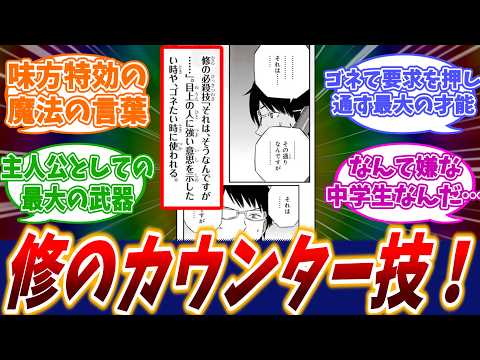
World Trigger, a shonen manga series that ran in Weekly Shonen Jump from 2013 to 2018 before resuming serialization in 2020, introduced a protagonist fundamentally different from the genre’s traditional archetype. Osamu Mikumo, the main character, possesses below-average combat abilities compared to his peers within the Border organization, yet consistently advances through what he calls “aggressive push” tactics—a combination of logical persistence, psychological negotiation, and unwavering commitment to his objectives within organizational rules.
This approach has generated significant discussion within the anime and manga community regarding whether such tactics constitute genuine strategy or represent an irresponsible disregard for organizational hierarchy. The character’s methods involve presenting increasingly severe alternatives to force acceptance of his proposals, coupled with sophisticated negotiation techniques that acknowledge opposing viewpoints before asserting his own position.
Why It Matters
Osamu Mikumo represents a significant departure from established shonen protagonist conventions. Rather than possessing innate talent or overwhelming power, he embodies a more realistic portrayal of human determination—one grounded in acknowledgment of personal limitations rather than denial of them. This characterization reflects broader shifts in manga readership demographics during the 2010s, where audiences increasingly connected with protagonists who began from positions of weakness rather than hidden strength.
The character’s aggressive push tactics raise important questions about the nature of heroism, organizational responsibility, and the ethics of persistence. His methods challenge viewers to consider whether determination within established rules constitutes virtue or whether it represents a form of manipulation that exploits organizational structures and the goodwill of superiors.
Background
World Trigger was created by Daisuke Ashihara and serialized in Weekly Shonen Jump beginning in 2013. The series deliberately subverts the convention of the all-powerful protagonist, instead positioning Osamu as one of the Border organization’s lowest-ranked combatants. His abilities measurably lag behind those of his peers, including fellow recruits Yuma Kuga and Chika Amatori.
The anime adaptation, produced by Toei Animation, emphasizes this weakness through deliberate directorial choices—repeated failures, persistent struggle, and the constant visual reinforcement that Osamu operates at a disadvantage. This production approach ensures viewers internalize his fundamental limitations as central to his character rather than temporary obstacles to overcome through hidden potential.
Osamu’s aggressive push tactics appear to derive from his father’s personality and approach to challenges. His father reportedly employed even more extreme versions of this persistence, suggesting that Osamu’s refined, rule-based approach represents an adaptation of inherited traits into a more socially acceptable framework.
Key Points
- Osamu’s “aggressive push” functions as a personality trait and life philosophy rather than a conventional combat technique, inherited from his father’s approach to overcoming obstacles.
- His negotiation strategy employs psychological techniques, including initial agreement with opposing viewpoints before presenting his own position, creating psychological comfort that facilitates acceptance of his proposals.
- Unlike emotionally-driven protagonists such as Eren Yeager from Attack on Titan, Osamu makes logical, calculated decisions to pursue his objectives, distinguishing his approach as more deliberate than reactive.
- Organizational superiors including Shinoda, Kido, and Yūma appear to accommodate Osamu’s proposals not through indulgence but through pragmatic recognition that preventing his actions would require unacceptable measures.
- Osamu demonstrates humility by crediting his mentors rather than claiming personal credit for learned techniques, building trust that lends credibility to his assertions and proposals.
- The tactic’s effectiveness depends entirely on operating within organizational rules and facing rule-respecting opponents; it would fail against adversaries unconstrained by such limitations.
Timeline
- 2013: World Trigger begins serialization in Weekly Shonen Jump with Osamu Mikumo as protagonist.
- 2014: Anime adaptation begins airing in autumn season, introducing Osamu’s character to broader audiences.
- 2016: Manga readers begin analyzing Osamu’s aggressive push tactics as a philosophical approach rather than combat strategy.
- 2018: Original manga serialization concludes after five years.
- 2020: Manga serialization resumes, allowing continued character development and tactical evolution.
Comparative Analysis: How Osamu Differs from Similar Protagonists
Osamu’s aggressive push tactics distinguish themselves through logical deliberation rather than emotional impulse. Eren Yeager from Attack on Titan pursues his objectives driven by anger and revenge, whereas Osamu operates from calculated assessment of available options. Deku from My Hero Academia emphasizes analysis and self-improvement, but Osamu combines these elements with willingness to pursue dangerous alternatives when conventional approaches prove insufficient.
Shoyo Hinata from Haikyuu prioritizes team dynamics and collective effort, while Osamu frequently prioritizes individual conviction and personal judgment. Tanjiro Kamado from Demon Slayer demonstrates moral conviction and perseverance, but Osamu incorporates tactical calculation alongside ethical motivation. Gintoki Sakata from Gintama, perhaps the closest parallel as a “push-type” protagonist, operates outside organizational structures entirely, eliminating the complex dynamics of organizational accommodation that define Osamu’s situation.
| Series | Protagonist | Tactical Approach | Distinction from Osamu |
|---|---|---|---|
| Attack on Titan | Eren Yeager | Emotionally-driven advancement | Osamu employs logic rather than emotion; his push tactics are calculated rather than reactive |
| My Hero Academia | Izuku Midoriya | Analysis and incremental improvement | Osamu combines analysis with willingness to employ dangerous alternatives; more risk-tolerant |
| Haikyuu! | Shoyo Hinata | Team coordination and collective effort | Osamu prioritizes individual conviction; less dependent on team consensus |
| Demon Slayer | Tanjiro Kamado | Moral conviction and endurance | Osamu incorporates tactical calculation alongside ethical motivation |
The Psychology Behind Osamu’s Negotiation Tactics
Osamu’s aggressive push strategy operates through three distinct psychological mechanisms. First, he presents organizational superiors with binary choices: accept his proposal or implement more severe alternatives. This framework forces decision-makers toward his preferred option by making it the lesser of two undesirable outcomes.
Second, Osamu employs a sophisticated negotiation technique involving initial agreement with opposing viewpoints. His characteristic phrase “that’s true, but” (translated from the original Japanese) functions not as casual speech pattern but as deliberate psychological tool. By acknowledging the validity of opposing perspectives before asserting his position, he creates psychological comfort that facilitates acceptance of his proposals.
Third, Osamu builds credibility through consistent humility and credit attribution. By consistently acknowledging his mentors and superiors rather than claiming personal credit for learned techniques, he establishes himself as trustworthy and reliable. This reputation lends weight to his assertions and makes organizational leaders more inclined to accommodate his proposals.
Industry Context: The 2010s Shonen Trend Toward Weak Protagonists
Osamu’s characterization reflects broader industry trends within Weekly Shonen Jump during the 2010s. Analysis of serialized works from this period reveals increasing prevalence of protagonists beginning from positions of weakness rather than hidden strength. World Trigger pioneered this approach, with subsequent series including My Hero Academia and The Promised Neverland adopting similar frameworks emphasizing growth through effort and ingenuity rather than awakening of latent power.
This shift correlates with demographic changes in manga readership. 2010s audiences demonstrated increased capacity for empathy with protagonists who acknowledge personal limitations rather than deny them. Osamu embodies this readership preference perfectly—he never claims to be special or destined for greatness; instead, he accepts his ordinariness and proceeds anyway.
Perspectives: Community Reception and Debate
Supportive Interpretation: Fans viewing Osamu favorably emphasize that his aggressive push tactics represent authentic heroism grounded in realistic human experience. They argue that his willingness to persist despite acknowledged weakness, combined with his logical approach to problem-solving, creates a protagonist more relatable and inspiring than traditionally overpowered characters. This perspective values Osamu’s unconventional nature as innovative and psychologically sophisticated.
Critical Interpretation: Opposing viewpoints contend that Osamu’s tactics constitute irresponsible behavior enabled by organizational indulgence. Critics argue that his aggressive push approach manipulates superiors into accommodating dangerous proposals, that he places colleagues at unnecessary risk, and that his success depends entirely on fortunate circumstances rather than genuine capability. This perspective views Osamu as potentially dangerous and questions whether his methods deserve emulation.
Both interpretations possess validity. Osamu simultaneously represents authentic human determination and potential organizational liability. The series deliberately presents this ambiguity rather than resolving it, creating space for legitimate disagreement about his character’s moral status.
Predicted Evolution: The Limits of Aggressive Push Tactics
Osamu’s aggressive push strategy operates effectively within specific constraints: organizational hierarchy, rule-respecting opponents, and superiors capable of providing support. As the narrative progresses and Osamu confronts increasingly powerful adversaries and potentially rule-indifferent opponents, this tactic faces inherent limitations.
Future character development likely involves refinement rather than abandonment of these tactics. Osamu will probably develop more sophisticated applications of his aggressive push approach, learning to deploy it with greater efficiency and precision. This evolution would represent maturation from “weak protagonist employing persistence” toward “strategist who leverages persistence as deliberate tactic.”
The critical question remains whether Osamu will encounter situations where aggressive push tactics prove entirely ineffective, forcing genuine tactical innovation beyond his established approach.
The Role of Organizational Support and Mentorship
Osamu’s success depends fundamentally on organizational context. Shinoda, Kido, and other Border superiors accommodate his proposals not through weakness but through pragmatic assessment that preventing his actions would require unacceptable measures. They recognize that Osamu possesses sufficient determination to pursue his objectives regardless of official prohibition, making accommodation preferable to confrontation.
This dynamic differs significantly from protagonists operating outside organizational structures. Gintoki Sakata from Gintama, the closest parallel as a push-type character, faces no such organizational constraints. Osamu’s situation creates complex dynamics where his superiors must simultaneously support and control him—a balance requiring constant negotiation.
The question of whether this represents “indulgence” or “pragmatic management” remains genuinely ambiguous. Osamu’s superiors appear to make calculated decisions rather than simply accepting his demands, suggesting they view accommodation as strategically optimal rather than emotionally motivated.
Insights
World Trigger, through Osamu Mikumo’s characterization, interrogates fundamental questions about heroism, strength, and human determination. The series resists simple moral judgments, instead presenting a protagonist whose methods simultaneously inspire and concern, whose determination appears both admirable and potentially dangerous.
Osamu’s aggressive push tactics represent more than combat strategy—they constitute a philosophy of persistence grounded in realistic acknowledgment of personal limitation. Unlike protagonists who overcome obstacles through hidden power or exceptional talent, Osamu advances through logical persistence, psychological sophistication, and willingness to risk failure. This approach resonates with contemporary audiences because it reflects actual human experience more accurately than traditional shonen narratives.
However, the series also suggests that such tactics depend entirely on favorable circumstances. Osamu succeeds because he operates within organizational structures containing capable superiors willing to support him, because his opponents generally respect rules, and because his determination happens to align with organizational interests. Remove any of these conditions, and his approach potentially becomes merely reckless rather than heroic.
The broader implication concerns the nature of heroism itself. World Trigger suggests that genuine heroism may not require exceptional power or destiny, but rather the willingness to persist despite acknowledged weakness—provided that persistence operates within ethical boundaries and receives appropriate support from capable allies. Osamu embodies this vision: not the strongest, not the most talented, but genuinely heroic through commitment to his convictions and respect for the people around him.
How to Appreciate World Trigger
For viewers encountering World Trigger for the first time, several approaches enhance appreciation of Osamu’s character and tactics. First, pay deliberate attention to instances where Osamu asserts his position or makes proposals. Rather than accepting these moments passively, consider the psychological mechanics at work—why does he phrase things this way? What alternatives is he implicitly presenting? This analytical approach reveals the sophistication underlying his apparently straightforward persistence.
Second, compare Osamu’s interactions with different superiors. His approach to Shinoda differs from his approach to Kido, which differs from his approach to Yūma. These variations demonstrate that Osamu consciously adapts his tactics based on audience and context, suggesting far greater strategic sophistication than surface-level observation reveals.
Third, supplement anime viewing with manga reading. The original manga contains psychological depth and internal monologue that anime adaptation necessarily condenses. Osamu’s decision-making process, his doubts, and his reasoning appear more fully in manga form, providing essential context for understanding his aggressive push tactics as deliberate strategy rather than impulsive behavior.
Related series worth exploring include Gintama, which presents the ultimate expression of push-type protagonist behavior unconstrained by organizational structure, and My Hero Academia, which explores similar themes of growth through effort and ingenuity while maintaining more conventional organizational dynamics.
Community Reception and Online Discussion
Online communities discussing World Trigger demonstrate divided but thoughtful perspectives regarding Osamu’s character. Supportive fans emphasize his realistic portrayal of human determination, arguing that his aggressive push tactics represent authentic heroism grounded in acknowledged weakness rather than denial of limitation. These perspectives value his unconventional nature and psychological sophistication.
Critical perspectives raise legitimate concerns about organizational responsibility and the ethics of his methods. Some viewers argue that Osamu’s success depends on organizational indulgence that would not exist in realistic circumstances, and that his tactics constitute manipulation rather than genuine heroism. Others question whether his willingness to place colleagues at risk justifies his objectives.
The existence of both perspectives simultaneously indicates the series’ success in creating genuinely complex characterization that resists simple moral judgment. Osamu functions simultaneously as admirable and concerning, heroic and potentially dangerous—a characterization that generates productive disagreement rather than consensus.
Final Assessment
Osamu Mikumo represents perhaps the most realistic portrayal of human determination in contemporary shonen manga. His aggressive push tactics transcend simple combat strategy, functioning instead as expression of life philosophy grounded in acknowledged weakness and commitment to persistence within ethical boundaries.
The character’s significance extends beyond entertainment value. Through Osamu, World Trigger interrogates fundamental questions about heroism, organizational responsibility, and the nature of human strength. The series suggests that genuine heroism may not require exceptional power or destiny, but rather the willingness to persist despite acknowledged limitation—provided that persistence operates within ethical frameworks and receives appropriate support from capable allies.
Osamu is not always right. His aggressive push tactics occasionally place colleagues at unnecessary risk, and his success depends on organizational circumstances that might not exist elsewhere. However, these limitations do not diminish his characterization; rather, they deepen it. By presenting a protagonist whose methods inspire and concern simultaneously, World Trigger creates space for genuine moral complexity and thoughtful disagreement about what heroism actually means.