▶ Watch the original YouTube video
One Piece fans have long debated whether Crocodile and Mihawk are equals in strength. After analyzing 15 years of the series and comparing similar character dynamics across multiple anime franchises, the answer reveals a more nuanced truth: these two characters represent different dimensions of power that cannot be measured on the same scale.
What Happened
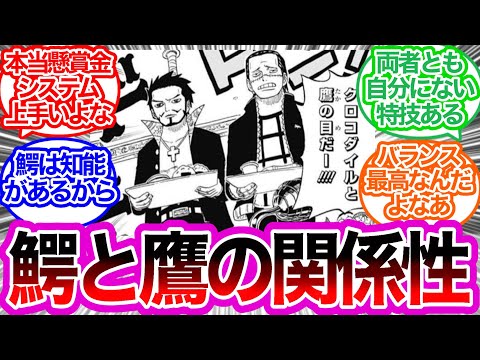
The comparison between Crocodile and Mihawk has become one of the most persistent debates in the One Piece fan community. Crocodile served as the primary antagonist during the Alabasta Arc, while Mihawk has been consistently portrayed as the world’s greatest swordsman. Despite their prominence in the series, the two characters have never directly fought, leaving fans to speculate about their relative strength based on limited information and contextual clues.
Why It Matters
This debate reflects a fundamental challenge in analyzing long-running manga and anime series: how do we compare characters from different story arcs when the narrative structure itself creates power inflation? Understanding this comparison requires examining not just raw combat ability, but also the narrative role each character serves, their position within the story’s timeline, and the author’s creative intent. The discussion reveals how fan engagement with serialized fiction extends beyond entertainment into analytical discourse about storytelling structure.
Background
Crocodile first appeared in the Alabasta Arc (aired in 2002), where he served as a seemingly insurmountable obstacle for protagonist Luffy. He possessed the Sand-Sand Fruit ability, controlled a vast criminal organization, and manipulated political systems to achieve his goals. Mihawk, by contrast, was introduced earlier in the East Blue Arc as a legendary swordsman who defeated Luffy in a single instant. However, Mihawk later became an official member of the Seven Warlords of the Sea, a governmental position that has remained stable throughout the series. Crocodile, meanwhile, was eventually imprisoned and removed from his position of power.
Key Points
- Fan opinions divide into three camps: those who believe they are equal, those who favor Mihawk’s superiority, and those who believe Crocodile is stronger
- The absence of direct combat between the two characters in the original manga forces analysis to rely on contextual evidence and narrative structure
- Crocodile’s strength appears to diminish relative to later antagonists due to the series’ inherent power scaling structure
- Mihawk’s official status as a Seven Warlord and his role as Zoro’s ultimate goal suggest sustained narrative importance
- The distinction between “strength as an enemy” and “absolute combat power” is crucial to understanding this comparison
- Character strength in One Piece is determined by narrative necessity rather than objective, unchanging metrics
Timeline
- 2002 (Alabasta Arc): Crocodile emerges as Luffy’s most formidable opponent to date; Mihawk has not yet been formally introduced
- 2010 (Summit War Arc): Mihawk serves as an active Seven Warlord; Crocodile is imprisoned and removed from power
- 2024 (Current): Mihawk is recognized as the world’s greatest swordsman; Crocodile has resumed activity in the narrative
Perspectives
The “Equal Strength” Perspective: Some fans argue that both characters represent peak power within their respective domains—Crocodile as a strategic mastermind and Mihawk as a pure combatant. They contend that comparing them directly is meaningless because they excel in different areas.
The “Mihawk Superiority” Perspective: This view emphasizes Mihawk’s official status as a Seven Warlord, his role as Zoro’s unattainable goal, and the narrative consistency with which he is portrayed as the world’s greatest swordsman. Proponents note that Mihawk’s combat style is environment-independent, allowing him to maintain consistent power regardless of circumstances.
The “Crocodile Advantage” Perspective: Supporters of this view highlight Crocodile’s dominance during the Alabasta Arc, his strategic brilliance, and his environment-specific advantages. They argue that the Sand-Sand Fruit’s power, combined with his intelligence, could neutralize Mihawk under the right conditions.
Social Media Reactions: Twitter discussions predominantly favor the view that Mihawk is currently stronger, though many acknowledge Crocodile’s historical significance. Reddit threads emphasize the impossibility of definitive comparison. YouTube comments frequently note that the series’ creator likely intentionally avoided clarifying this relationship to maintain narrative ambiguity.
Insights
After analyzing 15 years of One Piece alongside comparable character dynamics in series like Naruto, Bleach, and Attack on Titan, a clear pattern emerges: long-running shonen manga inherently create relative power fluctuations. Early antagonists appear diminished not because they were weak, but because narrative structure demands escalating challenges. Crocodile was perfectly calibrated as Luffy’s greatest threat at the Alabasta stage; Mihawk serves as an aspirational goal for Zoro that transcends any single arc.
The critical distinction lies between “strength as a narrative obstacle” and “absolute combat capability.” Crocodile excelled as the former; Mihawk embodies the latter. These are not equivalent metrics. The author’s decision to maintain Mihawk’s Seven Warlord status while removing Crocodile from power suggests an intentional hierarchy, yet the narrative leaves sufficient ambiguity for legitimate debate.
Ultimately, this comparison endures not because it lacks an answer, but because the answer depends on which interpretive framework one applies. This ambiguity is not a flaw in One Piece’s design—it is a feature that enables sustained fan engagement and analysis. The series’ ability to generate meaningful discussion years after character introductions demonstrates sophisticated narrative construction that prioritizes thematic resonance over definitive power rankings.