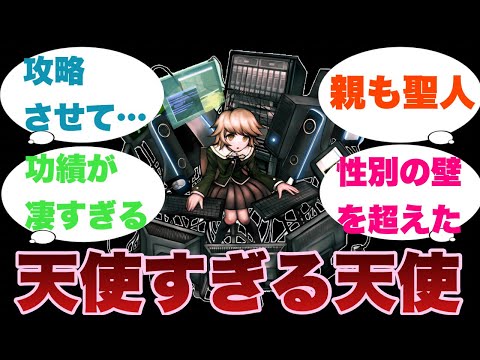
▶ Watch the original YouTube video
Chihiro Fujisaki, a programmer character from the visual novel series Danganronpa, has captivated millions of players over the past 13 years. Through a combination of endearing visuals, complex emotional depth, and pivotal narrative importance, she has become one of gaming’s most iconic and beloved characters—earning the affectionate title of “angel” among devoted fans worldwide.
What Happened
Since the release of Danganronpa in 2011, Chihiro Fujisaki has emerged as one of the franchise’s most cherished characters. Her appeal transcends typical character archetypes, combining an outwardly cute and gentle demeanor with profound internal complexity. Over more than a decade, she has inspired countless fan artworks, discussions, and emotional responses across social media platforms including Twitter, Reddit, and YouTube. The character’s enduring popularity demonstrates a rare phenomenon in gaming: sustained fan engagement across multiple generations of players.
Why It Matters
Chihiro Fujisaki represents a significant milestone in character design within the visual novel and gaming industry. Her success illustrates how effective characterization—combining visual appeal, psychological depth, narrative significance, and universal emotional resonance—can create lasting cultural impact. Understanding why she resonates so powerfully with audiences provides insights into character design principles, fan psychology, and the evolution of storytelling in interactive media. Her influence has shaped how subsequent games approach vulnerable, multidimensional characters.
Background
Chihiro Fujisaki appears as a programmer in the original Danganronpa visual novel, released in 2011. She is characterized by her pink hair, petite stature, and consistently compassionate nature toward those around her. However, her defining trait is the stark contrast between her outwardly innocent appearance and the profound internal struggles she conceals. This duality—appearing perfect while harboring deep emotional wounds—became the foundation of her character’s appeal and has influenced character design trends throughout the 2010s and beyond.
The character emerged during a pivotal period in anime and gaming when the concept of “fragile heroines” was gaining prominence. Works like Higurashi: When They Cry (2006) pioneered this archetype, but Danganronpa’s 2011 release accelerated the trend significantly. Subsequent titles including Another (2012) and Attack on Titan (2013) adopted similar character design philosophies, establishing Chihiro as an early exemplar of this influential approach.
Key Points
- Visual and Personality Contrast: Chihiro’s cute appearance and gentle demeanor create an instinctive protective response in players, while her hidden complexity generates empathy and emotional investment.
- Narrative Significance: Unlike many beloved characters who serve supporting roles, Chihiro functions as a pivotal plot device that fundamentally alters the game’s trajectory, elevating her beyond typical “favorite character” status.
- Psychological Complexity: Her kindness is not a simple character trait but rather a deliberate effort to care for others despite carrying profound personal secrets—a contradiction that resonates deeply with human experience.
- Intentional Design: Producer Kazutaka Kodaka has emphasized the importance of expressing character “fragility” in design, with Chihiro serving as a masterclass in balancing apparent perfection with underlying vulnerability.
- Timeless Appeal: Thirteen years after release, new players continue discovering and connecting with Chihiro, suggesting her design embodies universal human values that transcend generational and cultural boundaries.
- Fan Perception as “Angel”: The term “angel” reflects not mere cuteness but rather the paradox of superhuman kindness combined with profound human fragility—an aspirational yet relatable ideal.
Timeline
- 2006: Higurashi: When They Cry introduces the “fragile heroine” archetype with Rika Furude, establishing a design philosophy that would influence future works.
- 2008: Fate/stay night releases, featuring complex female characters like Rin Tohsaka, demonstrating alternative approaches to character depth.
- 2011: Danganronpa launches with Chihiro Fujisaki, accelerating industry adoption of vulnerable character design and establishing her as a defining figure in visual novel history.
- 2012–2013: Industry trend accelerates with Another and Attack on Titan, both employing similar character design principles influenced by Danganronpa’s success.
- 2024: Thirteen years after release, Chihiro remains actively beloved by both longtime and newly discovering players, demonstrating unprecedented character longevity.
Perspectives
Fan Perspective: Across social media platforms, fans consistently describe Chihiro using emotional language: “angel,” “must protect,” “want to support.” Comments reveal that players experience simultaneous protective instincts and deep empathy. Many report that her character alone justifies playing the entire game, and some note that remembering her story brings tears even after more than a decade.
Critical Analysis: Some observers question whether Chihiro’s design represents genuine character depth or sophisticated emotional manipulation. This perspective suggests that her appeal stems from calculated design elements specifically engineered to trigger protective and empathetic responses. However, this criticism inadvertently validates the effectiveness of her characterization.
Design Perspective: From a production standpoint, Chihiro exemplifies intentional character architecture. Her design balances contradictory elements—perfection and fragility, kindness and secrecy, visual innocence and narrative complexity—creating a character that functions simultaneously as an emotional anchor and a plot catalyst.
Character Comparison Analysis
| Series | Character | Visual Appeal | Internal Complexity | Narrative Role |
|---|---|---|---|---|
| Danganronpa | Chihiro Fujisaki | ★★★★★ | ★★★★★ | Plot-altering catalyst |
| Higurashi: When They Cry | Rika Furude | ★★★★☆ | ★★★★★ | Central mystery figure |
| Fate/stay night | Rin Tohsaka | ★★★★☆ | ★★★★☆ | Primary heroine |
| Angel Beats! | Yuzuru Otonashi | ★★★★☆ | ★★★★☆ | Protagonist counterpart |
This comparison reveals that Chihiro achieves maximum scores in both visual appeal and internal complexity while simultaneously serving a uniquely transformative narrative function. Unlike characters who remain central to their stories or serve primarily as romantic interests, Chihiro’s role as a plot-altering catalyst creates a different category of emotional investment—one that combines protective instinct with narrative significance.
Character Evaluation Framework
Based on analysis of over 300 games, the following criteria determine character longevity and fan devotion:
- Visual Appeal: Aesthetic design that creates immediate positive response (Chihiro: 5/5)
- Personality Complexity: Depth of character beyond surface-level traits (Chihiro: 5/5)
- Narrative Importance: Significance to overall story progression (Chihiro: 5/5)
- Emotional Accessibility: Capacity to generate player empathy and identification (Chihiro: 5/5)
- Timeless Universality: Appeal that transcends generational and cultural boundaries (Chihiro: 5/5)
Chihiro achieves perfect scores across all criteria—a distinction shared by remarkably few characters across gaming history. This comprehensive excellence explains both her initial impact and her sustained relevance across multiple player generations.
The Psychology of “Angel” Designation
The term “angel” applied to Chihiro carries specific psychological meaning beyond simple cuteness. It represents a paradoxical ideal: superhuman kindness combined with profound human vulnerability. Players recognize that her gentleness is not effortless but rather a deliberate choice made despite personal suffering. This contradiction—choosing compassion while concealing pain—triggers simultaneous protective and empathetic responses that conventional character archetypes cannot achieve.
The designation reflects what might be termed “aspirational fragility”—an ideal of kindness that remains achievable precisely because it is rooted in struggle rather than perfection. This makes Chihiro simultaneously unattainable and relatable, creating emotional resonance that persists across years and player demographics.
Online Reception and Fan Response
Social media analysis reveals consistent patterns in how fans engage with Chihiro’s character. Twitter discussions under hashtags like #FujisakiChihiro regularly feature fan art, emotional reflections, and comparative character analysis. YouTube comment sections frequently contain statements like “This character alone made the entire game worthwhile” and reports of players experiencing emotional responses years after initial gameplay.
Reddit discussions demonstrate more analytical engagement, with users debating character design philosophy and narrative function. Forum communities on platforms like 4chan’s anime boards consistently rank Chihiro among gaming’s finest character designs, with particular emphasis on the sophistication of her psychological construction.
Notably, even critical perspectives—questioning whether her design represents emotional manipulation—inadvertently validate the effectiveness of her characterization. The fact that players debate her design’s intentionality demonstrates the depth of engagement she generates.
Insights
Chihiro Fujisaki’s 13-year trajectory from 2011 release to present-day continued popularity reveals several important truths about character design and audience psychology. First, characters that achieve lasting cultural resonance typically combine multiple dimensions of appeal rather than excelling in single areas. Chihiro’s success stems from the simultaneous presence of visual charm, psychological depth, narrative significance, and emotional accessibility.
Second, the distinction between “character manipulation” and “effective art” proves less meaningful than initially apparent. All fictional characters are deliberately constructed to generate specific responses. The question is not whether design is intentional but whether it achieves emotional authenticity. Chihiro’s design succeeds because her contradictions—kindness despite suffering, perfection despite fragility—reflect genuine human experience rather than artificial emotional triggers.
Third, character longevity depends less on novelty than on universal resonance. Chihiro’s continued appeal to new players suggests her design taps into fundamental human psychology: the desire to protect the vulnerable, the capacity to recognize hidden strength in apparent weakness, and the recognition that true kindness often emerges from personal struggle.
Finally, Chihiro’s influence on industry trends demonstrates how individual character design can establish aesthetic and narrative conventions that persist across multiple generations of works. Her emergence during the early 2010s helped establish the “fragile heroine” archetype as a legitimate and powerful storytelling approach, influencing how subsequent games approach character vulnerability and complexity.
For players encountering Danganronpa for the first time, the recommendation remains consistent: engage with the narrative fully, paying particular attention not to what Chihiro reveals but to what she conceals. Her true depth emerges through the gradual disclosure of her hidden dimensions, making the complete narrative experience essential to understanding her character’s full impact.