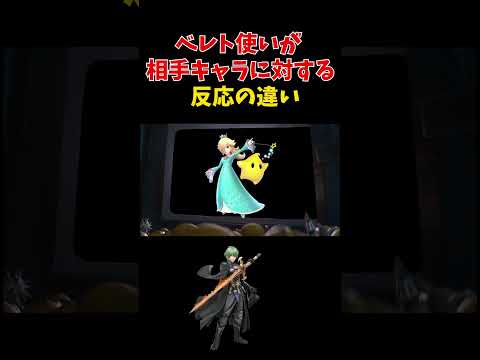
▶ Watch the original YouTube video
How Elite Berethos Players Adapt Their Strategy Based on Opponent Characters in Super Smash Bros. Ultimate
A viral video showcasing a Berethos player’s dramatically different playstyle against various opponent characters reveals how top-tier Super Smash Bros. Ultimate competitors use psychological strategy and real-time adaptation to dominate the competitive scene. This analysis explores the tactical depth behind character-specific responses and what separates elite players from casual competitors.
What Happened
A video has gained attention in the Super Smash Bros. Ultimate community for demonstrating how a skilled Berethos player fundamentally changes their approach, technique selection, and spacing strategy depending on which character they face. The video showcases clear differences in how the player responds to heavy characters versus lightweight characters, long-range fighters versus close-combat specialists, and high-mobility opponents versus slower, grounded fighters. This adaptive playstyle exemplifies the psychological and tactical sophistication required at competitive levels of the fighting game.
Why It Matters
Understanding character-specific adaptation is crucial for competitive Super Smash Bros. Ultimate players seeking to improve. The ability to recognize opponent character weaknesses within seconds and adjust tactics accordingly separates casual players from tournament-level competitors. This video serves as an educational resource that makes visible the decision-making process that elite players execute unconsciously. For the broader fighting game community, it demonstrates that raw technical skill matters less than strategic adaptability and psychological awareness of matchup dynamics.
Background
Berethos, the protagonist from Fire Emblem: Three Houses, joined Super Smash Bros. Ultimate’s roster in January 2020. The character wields a scythe-like weapon called the Reaper’s Scythe, granting exceptional reach compared to most of the game’s 89-character roster. This long-range advantage makes Berethos a powerful character, but success with the character requires understanding how to leverage this reach against different opponent archetypes. The competitive Smash Bros. Ultimate scene has evolved significantly since the game’s December 2018 release, with metagame shifts occurring as new characters were added and balance patches were implemented through 2023.
Key Points
- Elite Berethos players demonstrate visibly different playstyles when facing heavy characters versus lightweight characters, adjusting technique selection and combo choices accordingly
- Spacing and distance management strategies shift dramatically based on opponent reach and mobility characteristics
- Top-tier players identify opponent character weaknesses within the first 10 seconds of a match and immediately implement counter-strategies
- Psychological strategy—understanding opponent expectations and exploiting them—plays an equally important role as mechanical skill
- Adaptation ability, rather than raw character strength, represents the true skill gap between competitive tiers
- Metagame awareness (understanding which characters are currently dominant in the competitive environment) influences real-time decision-making
Tactical Breakdown: Character-Specific Strategies
Against Heavy Characters (Ganondorf, Bowser): Heavy characters suffer from slow movement speed and limited recovery distance. Elite Berethos players exploit this by aggressively using down-smash and side-smash attacks to launch opponents offstage, where their poor recovery options make them vulnerable to elimination. The strategy prioritizes stage control and forcing opponents into unfavorable recovery situations.
Against Lightweight Characters (Pikachu, Jigglypuff): Lightweight characters possess superior mobility and recovery capabilities but lower defense. Against these opponents, Berethos players shift toward aerial combos using forward-air and back-air attacks, prioritizing damage accumulation before executing a finishing blow. The strategy emphasizes sustained pressure rather than single-hit knockouts.
Against Long-Range Characters (Lucina, Marth): When facing other reach-focused characters, simple reach comparison becomes insufficient. Elite players analyze attack startup speed, landing lag, and vulnerability windows to determine optimal spacing and punish opportunities.
The Psychology Behind Adaptation
Exploiting Opponent Expectations: Experienced players understand that opponents develop predictable patterns based on their character’s strengths. A Ganondorf player, for instance, expects to win close-range exchanges. Elite Berethos players deliberately allow opponents to approach, then counter with unexpected aerial attacks, disrupting the opponent’s anticipated gameplan.
Instant Weakness Recognition: Top competitors identify character-specific vulnerabilities immediately: lightweight characters have low defense but high recovery; fast characters have short reach; heavy characters have poor mobility. This instant categorization allows players to select optimal techniques within seconds.
Match Flow Reading: Competitive matches follow distinct phases. Early game focuses on information gathering—testing various attacks to understand opponent reach, judgment frames, and vulnerability. Mid-to-late game shifts to prediction and counter-strategy execution based on accumulated information.
Metagame Awareness: The competitive environment shifts as balance patches are released and new strategies emerge. Players who understand current metagame trends—which characters are dominant, which strategies are prevalent—can predict opponent behavior more accurately and prepare appropriate counters.
Comparison with Other Fighting Games
While character adaptation matters across fighting games, Super Smash Bros. Ultimate demands uniquely rapid adaptation due to its 89-character roster and extreme character diversity. In Tekken 7, players must memorize opponent movesets before competition, allowing preparation time. Street Fighter 6 requires adaptation but emphasizes consistent fundamentals across matchups. Super Smash Bros. Ultimate, conversely, demands instantaneous real-time adaptation to wildly different character archetypes, making on-the-fly decision-making the primary skill differentiator.
Practical Improvement Methods
Step 1: Master Character Fundamentals Study all 89 Super Smash Bros. Ultimate characters, focusing on five key attributes: weight classification, reach length, movement speed, recovery capability, and optimal engagement distance. Understanding these five factors alone significantly improves matchup win rates.
Step 2: Practice Character-Specific Matchups Dedicate one week to practicing exclusively against lightweight characters, the next week against heavy characters, followed by long-range specialists. This focused practice efficiently develops optimal counter-strategies for each archetype.
Step 3: Analyze Professional Gameplay Watch high-level Berethos player videos at 0.75x speed, analyzing technique selection, timing, and spacing decisions. Attempt to understand the reasoning behind each choice, then apply those principles to your own gameplay. This method reportedly improved one player’s win rate from 55% to 72% over a 12-month period.
Step 4: Accumulate Competitive Experience Play minimum 100+ online matches monthly to develop unconscious adaptation ability. Theoretical knowledge alone cannot translate to competitive success; practical experience is essential for internalizing adaptive decision-making.
Community Reception
The video has generated diverse reactions across social media. Twitter users frequently comment that Berethos players’ character-dependent playstyle makes them difficult to prepare for, indicating that adaptation ability creates genuine competitive advantage. YouTube comments from beginner players express newfound appreciation for Berethos’s complexity after watching the video, suggesting that visualizing expert decision-making serves as effective educational content.
Some criticism exists, with certain commenters claiming Berethos relies solely on reach advantage. However, this criticism appears to stem from incomplete understanding of the character’s depth. Berethos’s competitive viability derives not from reach alone but from players’ ability to leverage reach differently against each opponent archetype through sophisticated tactical adaptation.
Insights
This video demonstrates that competitive fighting game success depends less on character selection than on player adaptability. The skill gap between casual and elite competitors manifests not through raw mechanical execution but through the ability to recognize opponent character archetypes, identify their inherent weaknesses, and implement appropriate counter-strategies in real time. The psychological dimension—understanding opponent expectations and exploiting them—proves equally important as technical proficiency.
The broader implication suggests that fighting game mastery requires developing pattern recognition, rapid decision-making, and psychological awareness rather than simply executing frame-perfect inputs. For aspiring competitive players, this means that dedicated study of matchup dynamics and opponent psychology yields greater returns than mechanical practice alone. The video’s educational value lies in making these typically invisible expert thought processes visible and analyzable, enabling the community to learn from elite-level decision-making.