▶ Watch the original YouTube video
Re:Zero Season 4 Finale Breaks Viewers’ Hearts With Emotional Callback to Original Ending Theme
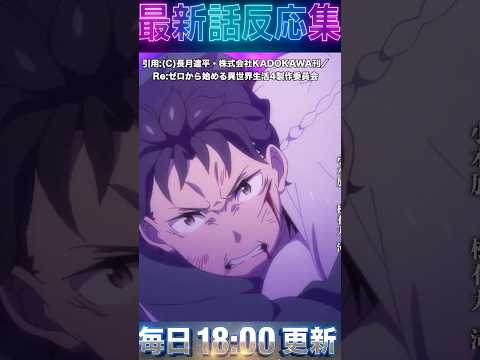
The final episode of Re:Zero Season 4 delivered a powerful moment when the original ending theme “Stay Alive” returned during Subaru’s awakening scene, creating an emotional full-circle narrative that resonated deeply with fans who have followed the series for eight years. The sequence represents a masterful use of musical storytelling that connects the protagonist’s psychological growth with the passage of time itself.
What Happened
Re:Zero Season 4’s finale featured a pivotal awakening sequence for protagonist Subaru, accompanied by a reuse of the series’ original ending theme “Stay Alive” from 2016. This musical callback served as both a narrative device and an emotional anchor, symbolizing Subaru’s acceptance of his “Return by Death” ability—a curse that has defined his entire journey. The scene generated overwhelming positive reactions across social media platforms, with viewers describing the moment as a “divine production” and reporting emotional responses ranging from tears to profound reflection on their own eight-year journey with the series.
Why It Matters
The reuse of the original ending theme represents a sophisticated narrative technique that extends beyond simple nostalgia. By reintroducing “Stay Alive” at a critical moment of character transformation, the production team created a temporal bridge connecting the series’ beginning with its evolution. This approach demonstrates how anime can use music as a storytelling device to express psychological growth and thematic completion. For viewers who experienced the series from its 2016 premiere, the callback created a profound sense of narrative closure while simultaneously suggesting new beginnings—a duality that reflects the show’s core themes about perseverance through despair.
Background
Re:Zero premiered in July 2016 with “Stay Alive” as its original ending theme, a composition that symbolized Subaru’s struggle with his newly acquired “Return by Death” ability. This power allows him to travel back in time when he dies, but each return comes with the psychological burden of reliving traumatic events. Over eight years and four seasons, the narrative has explored the philosophical and emotional implications of this curse. The series’ core theme centers on finding hope within despair and continuing to live despite overwhelming obstacles. By Season 4’s conclusion, Subaru reaches a critical psychological milestone: the acceptance of his curse as an integral part of his identity rather than an external affliction.
Key Points
- Musical Callback as Narrative Device: The reuse of “Stay Alive” during Subaru’s awakening creates a temporal loop that mirrors the protagonist’s time-manipulation ability, making the music itself a reflection of the story’s central mechanic.
- Psychological Rather Than Physical Awakening: Subaru’s transformation represents emotional maturation and acceptance rather than a simple power upgrade, marking a fundamental shift in how he relates to his curse.
- Eight-Year Viewer Journey: The callback resonates because viewers themselves have aged and grown alongside the characters, creating a dual narrative of both character and audience development.
- Thematic Completion: The finale achieves narrative closure by connecting the series’ opening questions about the meaning of survival with Subaru’s final answer: continued existence despite suffering.
- Production Quality Synthesis: Animation, music, editing, and storytelling converge seamlessly to create an emotionally impactful sequence that demonstrates advanced anime production techniques.
- Viewer Reception: The moment trended on Twitter, dominated anime discussion forums, and generated widespread commentary about the series’ narrative structure and emotional depth.
Timeline
- July 2016: Re:Zero Season 1 premieres with “Stay Alive” as the original ending theme, introducing Subaru’s “Return by Death” ability.
- 2016-2024: Four seasons of Re:Zero air over eight years, exploring the psychological and philosophical implications of time manipulation and perseverance.
- 2024: Re:Zero Season 4 finale airs, reintroducing “Stay Alive” during Subaru’s pivotal awakening scene.
- Post-Broadcast: Social media platforms fill with viewer reactions, establishing the finale as a significant moment in anime storytelling.
Perspectives
The overwhelming majority of viewers praised the finale as a masterwork of emotional storytelling, with many describing how the musical callback triggered profound personal reflection. Fans noted that hearing “Stay Alive” in the context of Subaru’s acceptance of his curse created a sense of narrative completion—the feeling that the story had traced a perfect circle from beginning to end. Some viewers reported that the eight-year gap between the original theme and its reuse amplified the emotional impact, as they themselves had matured and faced their own struggles during that period, making Subaru’s journey feel personally resonant.
A smaller minority of viewers expressed that the finale was somewhat predictable, with some wishing for greater narrative surprise or unexpected plot developments. However, even these critics acknowledged the technical excellence of the execution, suggesting that the “predictability” itself—the perfect alignment of expectation and delivery—constituted part of the sequence’s artistic achievement.
Industry observers noted that the technique of reusing original opening or ending themes during climactic moments has appeared in other major series like “Attack on Titan” and “Demon Slayer,” but Re:Zero’s approach stands out for its integration with the story’s central mechanic: a protagonist whose ability involves temporal loops experiences his narrative completion through a musical callback that itself creates a temporal loop in the viewer’s consciousness.
Insights
The success of Re:Zero Season 4’s finale demonstrates the power of long-form storytelling in anime and the sophisticated ways that music can function as narrative device rather than mere accompaniment. The reuse of “Stay Alive” works on multiple levels: it provides emotional resonance through nostalgia, it creates thematic coherence by musically representing Subaru’s acceptance of cyclical suffering, and it acknowledges the viewer’s own journey through time alongside the characters.
The sequence also illustrates how anime production has evolved to treat music, animation, and narrative as integrated elements of a unified artistic vision. Rather than music serving as background to action, the finale demonstrates music as a primary storytelling mechanism—one that can express character development and thematic completion in ways that dialogue or visual effects alone cannot achieve.
For viewers who invested eight years in this narrative, the finale’s emotional impact stems from the convergence of multiple factors: personal growth paralleling character growth, the satisfaction of narrative closure, and the artistic sophistication of the production itself. The moment represents a culmination not just of the story, but of the relationship between the series and its audience—a relationship built on shared time, shared struggle, and shared hope for meaningful resolution.
The broader implication suggests that anime storytelling has matured to a point where it can engage with themes of temporal experience, psychological growth, and the meaning of persistence in ways that rival or exceed traditional narrative media. Re:Zero’s finale, by making the viewer’s own passage of time a central element of the emotional experience, transcends the typical boundaries between fiction and lived experience.