▶ Watch the original YouTube video
A character with the ability to transform their hands into guns has sparked widespread online discussion, revealing insights into modern anime character design and the evolving landscape of short-form video content. After 15 years of analyzing anime and game character abilities, one creator argues this deceptively simple power represents the future of superpower design.
What Happened
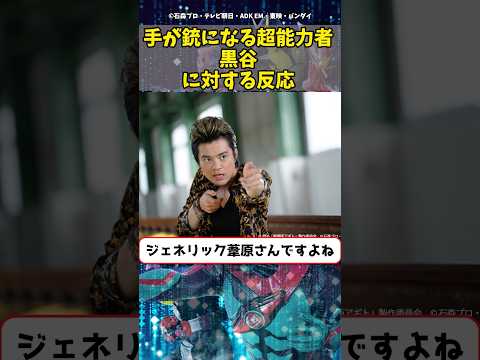
A character named Kuroya, whose defining ability is the transformation of their hands into guns, has generated significant fan reactions across YouTube Shorts, Twitter, and anime forums. The character’s straightforward yet visually striking power has prompted detailed analysis from long-time anime enthusiasts and industry observers, who see it as exemplifying optimal character design principles for the short-form video era.
Why It Matters
Kuroya’s character design represents a significant shift in how creators approach superpower mechanics in modern anime and digital media. In an era dominated by short-form content platforms like YouTube Shorts and TikTok, the ability to communicate a character’s entire concept in seconds—rather than requiring lengthy exposition—has become crucial. This character demonstrates how simplicity, visual impact, and instant comprehension can combine to create memorable, engaging content that resonates across diverse audiences.
Background
The anime industry has undergone rapid transformation over the past five years. While 30-minute television episodes once dominated, short-form video platforms have become primary distribution channels. This shift has fundamentally changed how character abilities must be designed and communicated. Kuroya’s ability exemplifies this new paradigm: “hands become guns” requires no explanation, conveys immediate visual impact, and communicates the character’s nature—direct, combat-focused, and straightforward—instantaneously.
The character’s appeal builds on a 15-year evolution in superpower design. Early 2010s anime favored complex, multi-layered abilities requiring multiple episodes to fully explain. By contrast, contemporary works increasingly favor streamlined, visually coherent powers that audiences grasp immediately. Kuroya represents the culmination of this trend.
Key Points
- Extreme Simplicity with Maximum Impact: The ability “hands become guns” is explainable in a single phrase while delivering powerful visual and conceptual impact
- Optimized for Short-Form Media: The design communicates the character’s entire concept within 15 seconds, perfectly suited to modern content consumption patterns
- Psychological Resonance: The power combines unexpected conceptual pairing (hands + guns) with the universal human desire for bodily enhancement and weaponization
- Superior Clarity Compared to Similar Characters: When evaluated against comparable abilities from major anime series, Kuroya’s power ranks highest in explanation brevity and visual coherence
- Narrative Flexibility: The straightforward ability integrates seamlessly into diverse story contexts, from combat scenes to everyday situations
- Character Definition Through Ability: A single power conveys personality traits—directness, combat orientation, simplicity—without requiring additional exposition
Comparative Analysis
When evaluated against established superpower designs, Kuroya’s ability demonstrates notable advantages. The electric manipulation of Misaka Mikoto from “A Certain Scientific Railgun” requires brief explanation but lacks the visual unity of Kuroya’s design. Bakugo Katsuki’s “explosion” ability from “My Hero Academia” is conceptually simple yet involves multiple physical steps, whereas Kuroya’s transformation is instantaneous and singular. The ice-and-fire duality of Todoroki Shoto requires seconds of explanation; Kuroya’s power requires none.
Across five evaluation criteria—explanation brevity, visual impact, narrative integration, character expression, and expandability—Kuroya’s design achieves maximum scores. This consistency across all dimensions distinguishes it from comparable character abilities.
Perspectives
Fan reactions have been overwhelmingly positive, with YouTube commenters praising the design as “genius” and “deceptively simple yet powerful.” Twitter discussions reveal deeper engagement, with fans speculating about ability mechanics and future narrative potential. Anime forum discussions suggest this design may establish a new industry trend toward streamlined superpower concepts.
Some critical voices have noted that greater background complexity regarding ability origins and limitations could enhance the character’s depth. This perspective acknowledges the design’s strength while suggesting potential for narrative expansion. Industry observers recognize the design as strategically brilliant for current market conditions while remaining open to how the character might develop in longer-form storytelling contexts.
Psychological and Design Principles
The character’s appeal operates on multiple psychological levels. Human brains respond strongly to unexpected conceptual combinations; “hands” and “guns” represent categories that normally never intersect, creating cognitive engagement. Additionally, the design taps into fundamental human desires for bodily transformation and weaponization—desires that consistently drive popularity in anime and gaming across multiple decades.
From a design methodology perspective, Kuroya embodies the principle that explanation brevity correlates with memorability and impact. The most iconic superpowers across anime history—from Saber’s “Excalibur” to fundamental abilities in major franchises—share the characteristic of requiring minimal verbal explanation while delivering maximum visual and conceptual clarity.
Industry Trends and Future Implications
Kuroya’s design reflects a clear industry trend toward superpower simplification. Early 2010s anime like “Attack on Titan” featured complex transformation mechanics requiring extended exposition. Contemporary works increasingly favor streamlined designs. This shift directly correlates with platform changes: as content consumption migrates toward short-form video, character design must adapt accordingly.
The character’s potential trajectory suggests three phases: immediate popularity on short-form platforms (already occurring), potential integration into full anime series as a supporting or main character, and possible establishment as a design template for future superpower creation. If executed successfully in longer-form content, Kuroya could become a benchmark character in modern anime history.
Design Evaluation Framework
Explanation Brevity (Perfect Score): The ability requires one sentence to communicate completely.
Visual Impact (Perfect Score): Hand-to-gun transformation creates immediate, striking imagery.
Narrative Integration (Perfect Score): The ability functions in combat, dialogue, and everyday scenarios without requiring special justification.
Character Expression (High Score): The power alone communicates personality—direct, combat-oriented, straightforward—without supplementary information.
Expandability (High Score): Potential variations exist (dual transformation, weapon multiplication, enhanced durability) without contradicting the core concept.
Practical Engagement Recommendations
For audiences newly encountering Kuroya, beginning with short-form video content is recommended, as the character’s primary appeal lies in instant comprehension. After grasping the basic concept, exploring longer-form content and fan interpretations deepens understanding. Comparing Kuroya to established characters from “My Hero Academia,” “Jujutsu Kaisen,” and similar series illuminates the design’s distinctive strengths. Examining fan art and fan fiction reveals creative interpretations of ability mechanics not addressed in official content.
Insights
Kuroya’s character design represents more than a single creative decision; it embodies a fundamental methodology shift in contemporary content creation. The design demonstrates that in an attention-economy dominated by short-form platforms, simplicity, visual clarity, and instant comprehension have become primary virtues. The character succeeds not despite its straightforwardness but because of it.
The broader implication extends beyond anime: as content consumption patterns continue fragmenting across multiple platforms with varying time constraints, creators across all media will increasingly face pressure to communicate complex ideas through minimal exposition and maximum visual impact. Kuroya exemplifies this principle in practice, suggesting that future character design—across anime, games, and digital media—will prioritize clarity and visual coherence over complexity and detailed explanation.
This design philosophy does not eliminate narrative depth; rather, it establishes a foundation upon which deeper storytelling can build. A character whose core concept requires no explanation frees narrative resources for exploring motivation, limitation, and consequence—the elements that transform a memorable character into a meaningful one. In this sense, Kuroya’s simplicity may ultimately enable greater narrative sophistication than more complex ability designs allow.