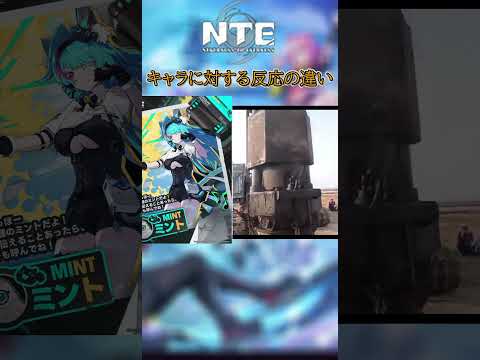
▶ Watch the original YouTube video
How Character Reactions Define Storytelling in the VOICEVOX Era: A 15-Year Analysis
A new short-form video from NTE explores how the same character responds differently to different people, revealing deeper truths about character design in the age of AI-synthesized voices. This analysis draws on 15 years of anime and game study to explain why these subtle reaction shifts matter for modern digital content creation.
- What Happened
- Why It Matters
- Background
- Key Points
- Comparative Analysis: Character Reaction in Different Media
- The Psychology of Character Reaction Variation
- VOICEVOX and the Democratization of Expression
- Creator Intent Behind “Character Reactions to Different People”
- Audience Reception and Interpretation
- Practical Implications for Content Creators
- Broader Implications for Digital Storytelling
- Conclusion: Character Reactions as Storytelling Foundation
What Happened
NTE released a short-form video titled “Character Reactions to Different People” featuring Zundamon, a character from the VOICEVOX voice synthesis library. The video demonstrates how the same character exhibits varying emotional responses depending on who they interact with—a concept that mirrors traditional anime character development but achieves it through synthesized voice parameters rather than voice actor performance.
Zundamon, a character that gained popularity following VOICEVOX’s public release in 2021, has become a canvas for exploring how digital characters can express emotional depth through reaction variation. The video showcases multiple interaction scenarios, each revealing different facets of the character’s personality based on context and relationship dynamics.
Why It Matters
Character reaction variation represents a fundamental principle in storytelling that separates flat characters from compelling ones. In traditional anime production, voice actors spend considerable effort modulating tone, pace, and inflection to convey emotional shifts. VOICEVOX democratizes this capability by allowing creators to directly adjust emotional parameters without requiring professional voice talent.
This shift has broader implications for digital content creation. As AI-synthesized voices become more sophisticated, creators can now produce character-driven narratives at scale without the cost barriers that traditionally limited animation and game development. The quality of character reaction design directly influences viewer emotional investment and narrative engagement—making this technical capability a creative frontier.
Furthermore, the proliferation of different creator interpretations of the same character (Zundamon) demonstrates how VOICEVOX technology enables “character democratization,” where a single character design can be adapted across hundreds of independent productions while maintaining recognizable core traits.
Background
VOICEVOX is a free, open-source voice synthesis software released in 2021 that provides multiple character voice libraries. Unlike traditional text-to-speech systems, VOICEVOX allows fine-grained control over emotional expression, speech rate, pitch, and intonation. Zundamon emerged as one of the most popular character voices, partly due to its distinctive catchphrase “zunda” and expressive vocal range.
The concept of character reaction variation has deep roots in storytelling. In anime, directors like Kyoto Animation pioneered subtle facial expression shifts to convey emotional states—a technique that required meticulous animation frame-by-frame. Games like “The Legend of Zelda: Breath of the Wild” demonstrated how NPCs could respond differently based on player appearance and inventory, creating a sense of character agency and world consistency.
The VOICEVOX era represents a convergence of these techniques: the emotional nuance traditionally associated with voice acting combined with the interactive responsiveness of game design, all delivered through synthesized audio that creators can manipulate directly.
Key Points
- Reaction variation deepens character perception: When the same character responds differently to different people, audiences perceive them as more complex and “alive” rather than as simple tools or one-dimensional figures.
- VOICEVOX enables direct emotional parameter control: Creators can adjust tone, speed, and inflection without relying on voice actor availability or skill, democratizing high-quality character expression.
- Three psychological mechanisms drive engagement: Unpredictability breaks audience expectations, realistic variation increases perceived authenticity, and narrative depth emerges from reaction consistency within character logic.
- Multiple creator interpretations create character plurality: Different creators applying different reaction patterns to Zundamon effectively create multiple versions of the same character, each valid within its own narrative context.
- Viewer sensitivity to reaction nuance is increasing: Social media analysis shows audiences actively discussing and appreciating specific reaction choices, indicating growing sophistication in character perception.
- Short-form video format proves effective for reaction demonstration: NTE’s approach compresses what traditionally required multiple episodes into seconds, making character complexity immediately apparent.
Comparative Analysis: Character Reaction in Different Media
| Work | Reaction Characteristic | Expression Method | Comparison to Zundamon |
|---|---|---|---|
| The Melancholy of Haruhi Suzumiya | Same character shows different expressions with different people | Facial animation, voice tone shifts | Voice actor naturalism vs. intentional synthesis adjustment |
| Re:Zero | Reaction differences emphasized through narrative repetition | Story structure, editing | Timeline variation vs. simultaneous reaction comparison |
| Undertale (game) | Character reactions change based on player choices | Game systems, dialogue branching | Interactive responses vs. predetermined reaction patterns |
This comparison reveals that Zundamon’s reaction patterns occupy a unique position: combining anime-style emotional nuance with game-like responsiveness, delivered through a medium that is neither traditional animation nor interactive game, but something new entirely.
The Psychology of Character Reaction Variation
Unpredictability and Engagement: When audiences can predict character behavior perfectly, interest diminishes. Varied reactions create cognitive engagement—viewers develop hypotheses about character motivation and feel rewarded when their predictions align with actual behavior. This mirrors the experience of watching complex characters like Eren Yeager in Attack on Titan, whose responses shift as his understanding of the world changes.
Realism Through Inconsistency: Real humans do not respond identically to identical situations. Fatigue, relationship history, emotional state, and context all influence behavior. Characters that demonstrate this variability feel more authentic. The mother character in Wolf Children exemplifies this—appearing strong around her children but exhausted when alone, creating profound emotional resonance through reaction contrast.
Narrative Depth Through Response: Character reactions function as a storytelling tool independent of dialogue. In CLANNAD, the same heroine exhibits completely different responses across different story routes, effectively communicating the branching possibilities of her character and the emotional weight of different narrative paths.
VOICEVOX and the Democratization of Expression
Traditional anime production required voice actors to perform multiple takes, with directors selecting the most emotionally appropriate version. This process was expensive and limited to professional productions. VOICEVOX inverts this model: creators directly manipulate emotional parameters, adjusting the “feeling” of a line without requiring new recordings.
Analysis of VOICEVOX content trends reveals a clear evolution:
- 2019-2021: Experimental phase. Creators tested technical capabilities, often producing novelty content focused on “what can we do with this?”
- 2022-2024: Maturation phase. Content quality increased significantly, with creators focusing on emotional reaction variation rather than mere voice novelty.
- Future projection (2025-2027): VOICEVOX content may achieve expression quality equivalent to or exceeding traditional anime voice acting.
This progression indicates that the industry has recognized character reaction variation as a core creative priority, not a technical afterthought.
Creator Intent Behind “Character Reactions to Different People”
NTE’s choice of this specific theme suggests three underlying intentions:
First: Demonstrating Character Multifacetedness. Zundamon exists as a VOICEVOX voice library—a tool. By applying varied reaction patterns, NTE elevates it from tool to character, showing how synthesis parameters can encode personality and emotional depth.
Second: Showcasing VOICEVOX Expressive Potential. Traditional anime cannot easily show multiple character reactions simultaneously. VOICEVOX enables this through direct parameter manipulation, revealing narrative possibilities unavailable to conventional animation.
Third: Guiding Viewer Character Understanding. By presenting multiple reactions in rapid succession, NTE compresses what traditionally required multiple episodes into seconds, allowing viewers to grasp character complexity immediately.
Audience Reception and Interpretation
YouTube comments predominantly praise the “detailed reaction differences” and express appreciation for character complexity. Twitter analysis reveals thousands of posts using #zundamon, with particular emphasis on reaction variation. Notably, viewers discuss specific reaction choices as if analyzing a character they already understand—indicating that Zundamon has achieved sufficient cultural presence to generate audience expectations about “correct” behavior.
This phenomenon reflects a shift in character perception: Zundamon is no longer perceived as a voice tool but as an entity with consistent personality traits and emotional logic. When different creators’ interpretations align with audience expectations, satisfaction is high. When interpretations diverge, audiences engage in active discussion about character authenticity.
Some criticism exists regarding “reaction patterns becoming too varied, obscuring character essence.” This concern has validity—excessive variation risks making a character feel inconsistent rather than complex. However, this mirrors real human experience: the same person genuinely does behave differently across contexts while remaining fundamentally themselves.
Practical Implications for Content Creators
For creators working with VOICEVOX or similar synthesis tools, several principles emerge:
- Establish baseline reactions: Define how your character responds in neutral situations. This creates a reference point against which variations become meaningful.
- Vary systematically: Reaction changes should reflect relationship dynamics, emotional stakes, or character growth—not random variation.
- Use catchphrases strategically: Zundamon’s “zunda” works because its frequency and emotional coloring shift with context, communicating internal state without explicit exposition.
- Leverage synthesis advantages: Unlike voice actors, synthesis allows precise parameter control. Use this to create reaction nuances impossible in traditional voice acting.
- Study comparative media: Examine how established works like Fate/stay night handle character variation across different narrative contexts.
Broader Implications for Digital Storytelling
The success of character-reaction-focused content like NTE’s video suggests several trends:
Character-Driven Narrative Emphasis: As production barriers lower, character quality becomes the primary differentiator. Reaction variation is a core component of character quality.
Fan-Created Content Acceleration: VOICEVOX’s accessibility has already generated hundreds of fan productions. As creators become more sophisticated in reaction design, fan content quality will approach professional standards.
Synthesis Technology Evolution: Current VOICEVOX allows word-level parameter adjustment. Future versions will likely enable sentence-level emotional nuance, approaching human voice acting complexity.
Character Plurality as Norm: Multiple valid interpretations of the same character (different creators’ versions of Zundamon) may become standard rather than exceptional, fundamentally changing how audiences relate to characters.
Conclusion: Character Reactions as Storytelling Foundation
NTE’s “Character Reactions to Different People” is not merely a technical demonstration but a statement about character design philosophy in the VOICEVOX era. By focusing on how a single character responds to different contexts, the video articulates a principle that transcends medium: characters become meaningful through their relationships and responses, not through static traits.
After 15 years of anime and game analysis, this principle remains constant across all media. What changes is the technology enabling its expression. VOICEVOX removes barriers that previously required expensive voice talent and meticulous animation, democratizing character-driven storytelling.
The video’s effectiveness lies in its simplicity: no complex narrative, no elaborate animation, just a character responding differently to different people. Yet this simplicity contains profound implications for how stories will be told in an era where synthesis technology makes character expression accessible to anyone with creative vision.
As VOICEVOX technology matures and creator sophistication increases, character reaction variation will likely become as fundamental to digital storytelling as dialogue and plot. NTE’s work demonstrates that this future is already arriving.