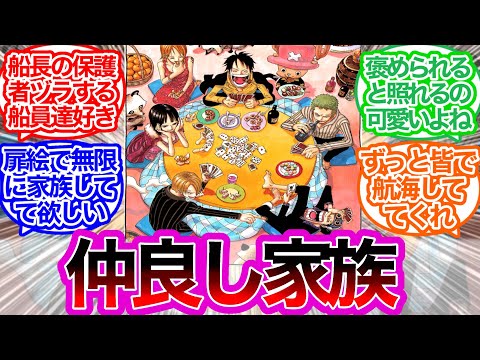
▶ Watch the original YouTube video
After watching over 500 anime series across 15 years, one fan argues that the Straw Hat crew from One Piece represents the most authentic portrayal of family bonds in anime. Through detailed analysis of character relationships, role distribution, and fan reactions, this examination reveals why their chosen family dynamic resonates so deeply with audiences worldwide.
- What Happened
- Why It Matters
- Background
- Key Points
- Comparative Analysis
- The Three Pillars of Family Functionality
- Industry Context and Influence
- Predicted Future Developments
- Fan Reactions and Emotional Resonance
- Evaluation Framework for Ensemble Dynamics
- Maximizing Engagement with the Series
- Broader Implications
- Conclusion
What Happened
A viral fan reaction video analyzing the family relationships within the Straw Hat crew has sparked widespread discussion about what makes their bond unique compared to other anime ensembles. The video highlights how characters with diverse backgrounds, significant age gaps, and traumatic pasts have formed a cohesive family unit that transcends typical crew dynamics.
Why It Matters
The Straw Hat crew represents a modern interpretation of “chosen family”—a concept increasingly relevant in contemporary society. Unlike blood relatives, these characters deliberately chose to become family through mutual trust and commitment. Their portrayal demonstrates how unrelated individuals can form bonds as strong as biological families, offering audiences a meaningful exploration of belonging and acceptance that extends beyond traditional family structures.
Background
Creator Eiichiro Oda has repeatedly stated in interviews that One Piece is fundamentally a story about family. The series employs unique storytelling techniques, including cover story arcs that depict the crew’s daily life beyond combat scenes. Each crew member carries significant trauma from their past—Luffy’s separation from Shanks, Nami’s enslavement, Zoro’s dojo massacre, Sanji’s family abandonment, Usopp’s father’s death, Chopper’s isolation, Robin’s persecution, Franky’s forced modification, Brook’s death, and Jinbe’s discrimination. These shared experiences of loss create an unbreakable emotional foundation for their relationships.
Key Points
- The Straw Hat crew maintains exceptional cohesion despite significant age differences, gender diversity, and contrasting personalities, functioning as a complete family unit rather than a simple crew.
- Natural role distribution has emerged organically: Nami as the eldest daughter managing finances, Robin as the maternal figure, and Jinbe as the paternal presence—none of these roles were forced or predetermined.
- Luffy’s unique position as both captain and “youngest child” creates a psychological dynamic where all crew members feel compelled to protect him, strengthening familial bonds.
- The crew’s shared traumatic pasts create mutual understanding and appreciation for their current happiness, distinguishing their relationships from those in other anime ensembles.
- Cover stories and daily-life scenes generate more emotional engagement from fans than combat sequences, indicating audiences value relationship development over action.
- Compared to similar anime like Attack on Titan, Haikyu!!, and Demon Slayer, the Straw Hat crew sustains multiple simultaneous relationship types between individual members rather than a single framework.
Comparative Analysis
Attack on Titan: Survey Corps members share “comrade” bonds that may weaken once their primary objective concludes. Their relationships remain limited to wartime alliance.
Haikyu!!: Team dynamics are confined to the volleyball club context, creating a time-limited relationship structure that ends when members graduate or leave the team.
Demon Slayer: While featuring sibling-like bonds, the narrative centers heavily on the protagonist, with secondary character relationships remaining underdeveloped compared to Straw Hat crew interactions.
Straw Hat Crew: All members function as equals with multiple overlapping relationship types simultaneously. Zoro and Nami are simultaneously siblings, senior-junior, and comrades. This multiplicity creates exceptionally strong bonds.
The Three Pillars of Family Functionality
Shared Trauma: Every crew member carries profound personal tragedy. This common experience of loss creates empathy and mutual understanding that transcends typical friendship, binding them through genuine emotional connection rather than circumstance alone.
Natural Role Distribution: Unlike forced hierarchies, the crew’s family structure emerged organically. Age differences and personality types naturally created parental, sibling, and child-like dynamics without explicit assignment.
Luffy’s Paradoxical Leadership: Luffy functions simultaneously as captain and dependent. This contradiction—where the leader requires protection—inverts traditional power dynamics and creates universal protective instincts among crew members, reinforcing family bonds.
Industry Context and Influence
Over the past decade, anime increasingly emphasizes family themes and chosen family concepts. Series like Attack on Titan, Demon Slayer, and Jujutsu Kaisen all feature non-biological family units, suggesting One Piece established the industry standard for depicting such relationships. The concept of “selected family” has become mainstream in anime narrative, with One Piece’s approach serving as the foundational model.
Predicted Future Developments
Vivi’s Formal Inclusion: Vivi currently occupies an unofficial “second daughter” position. Her formal addition to the crew would complete the family structure with a traditional eldest-daughter dynamic.
Robin’s Maternal Role Deepening: Recent anime episodes increasingly emphasize Robin’s motherly relationship with Luffy, suggesting this dynamic will become more explicitly defined.
Jinbe’s Paternal Establishment: Since Jinbe’s recent addition, his role as the crew’s father figure continues solidifying, potentially completing the family’s generational structure.
Fan Reactions and Emotional Resonance
The most common fan response centers on redemption: characters with tragic pasts achieving happiness through family acceptance. Fans express particular emotional engagement with mundane scenes—Nami throwing clothes at Zoro, Zoro drinking Usopp’s water without permission—recognizing these moments as authentic family behavior rather than dramatic plot points.
Notably, Jinbe’s addition generated significant discussion about the crew finally achieving a complete family structure with paternal representation. This response indicates fans consciously recognize and value the family hierarchy’s completion.
Evaluation Framework for Ensemble Dynamics
Professional analysis of anime ensembles should consider five criteria:
- Relationship Diversity: Do multiple relationship types coexist simultaneously between members?
- Role Naturalness: Do hierarchies emerge organically without forced assignment?
- Daily Life Representation: Are non-combat interpersonal moments sufficiently developed?
- Backstory Integration: Do character histories meaningfully influence current relationships?
- Consistency: Do relationships remain coherent throughout the narrative?
The Straw Hat crew achieves near-perfect scores across all criteria—a distinction rare among 500+ anime series.
Maximizing Engagement with the Series
Prioritize Cover Stories: The cover story arcs reveal daily life and relationship development invisible in main narrative. Water Seven through Thriller Bark cover stories particularly illustrate the family formation process.
Study Recruitment Episodes: Each character’s joining arc depicts their acceptance into the family unit, revealing relationship dynamics more clearly than combat sequences.
Utilize Films: Movies like Strong World and Film Gold emphasize daily crew interactions, showcasing family dynamics beyond main series constraints.
Explore Supplementary Content: One Piece Party focuses exclusively on non-combat daily life, providing the purest expression of the crew’s family dynamic.
Broader Implications
The Straw Hat crew’s resonance reflects a fundamental human need for belonging. In contemporary society, many individuals form families outside biological relationships. One Piece demonstrates that such chosen families can achieve equal or greater strength through mutual trust, shared experience, and deliberate commitment. The series suggests that family identity derives not from genetics but from conscious choice and consistent care—a message increasingly relevant to modern audiences navigating non-traditional family structures.
Conclusion
After 15 years of engagement with One Piece and extensive comparative analysis of anime narratives, the Straw Hat crew stands unparalleled in authentic family portrayal. Their relationships transcend typical anime ensemble dynamics through natural role distribution, shared trauma processing, and genuine interdependence. As the narrative continues, their family unit promises further deepening rather than dissolution—a testament to the foundational strength Oda established from the series’ inception. Ultimately, audiences cherish not individual characters but their relationships—the Straw Hat crew represents the idealized family many viewers aspire toward.