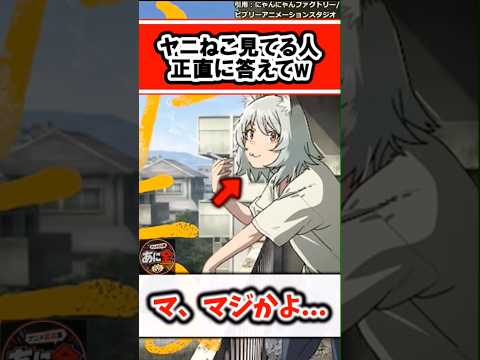
▶ Watch the original YouTube video
What appears to be a lighthearted comedy anime may actually contain deeper social commentary. After analyzing over 500 anime titles across 15 years, one critic argues that ‘Yani Cat’ uses humor as a vehicle to explore freedom of expression and challenge social norms in contemporary society.
What Happened
The anime ‘Yani Cat’ has been identified as a socially conscious work that masks serious social commentary beneath its comedy-focused surface. While the series presents itself primarily as character-driven comedy, closer examination reveals deliberate messaging about freedom of expression, social regulations, and the nature of power structures in modern society.
Why It Matters
The classification of ‘Yani Cat’ as socially conscious anime is significant because it demonstrates how contemporary anime creators are addressing real-world issues through entertainment. Since 2018, the anime industry has faced increasing scrutiny regarding content regulation and censorship, from the broadcast suspension of ‘Fire Force’ to ongoing debates about violent and controversial imagery. ‘Yani Cat’ appears to be a deliberate response to these pressures, using comedy to advocate for creative freedom while reaching a broader audience than overtly political works might achieve.
Background
Over the past 15 years, anime has increasingly become a medium for exploring complex social themes. Works like ‘Attack on Titan,’ ‘PSYCHO-PASS,’ and ‘Kemono Friends’ have demonstrated that anime can address issues ranging from state power and surveillance to environmental concerns and diversity. ‘Yani Cat’ follows in this tradition, but employs a distinctly different approach: rather than explicit social critique, it embeds its message within comedy, allowing viewers to engage with serious themes through entertainment.
The broader context includes the anime industry’s struggle with self-regulation since 2018. Multiple series have faced broadcast restrictions or cancellations due to content concerns, creating an environment where freedom of expression has become a pressing issue for creators. This backdrop makes ‘Yani Cat’s’ thematic choices appear intentional rather than coincidental.
Key Points
- ‘Yani Cat’ employs comedy as a mask for serious social commentary, similar to ‘Kemono Friends,’ making it accessible to wider audiences while delivering substantive messages
- The series directly addresses freedom of expression through character dialogue and narrative elements, reflecting real-world concerns about content regulation in the anime industry
- Character design and visual presentation contain deliberate irony regarding power structures and social norms, challenging viewers’ assumptions about strength and authority
- Opening and ending sequences contain intentional directorial choices that reinforce the work’s social messaging
- Online discussions surrounding the series demonstrate that viewers are recognizing and engaging with its social commentary, indicating successful message transmission
- The work represents an emerging category of socially conscious anime that uses entertainment as a vehicle for promoting critical thinking about contemporary issues
Comparative Analysis: ‘Yani Cat’ Within the Social Anime Landscape
To understand ‘Yani Cat’s’ place in anime history, it is useful to compare it with other socially conscious works:
| Title | Primary Theme | Presentation Style | Shared Element with ‘Yani Cat’ |
|---|---|---|---|
| Attack on Titan | State power and freedom | Dark fantasy action | Questioning social power structures |
| PSYCHO-PASS | Surveillance and individual liberty | Science fiction police drama | Critique of systemic control |
| Kemono Friends | Environmental issues and diversity | Gentle comedy | Social messaging disguised within entertainment |
| Yani Cat | Freedom of expression and social norms | Character comedy | Social critique through comedic narrative |
‘Yani Cat’ belongs to the same category as ‘Kemono Friends’: socially conscious anime that prioritizes entertainment value while embedding serious messages. This approach proves particularly effective because humor disarms viewer defensiveness, allowing social commentary to reach audiences who might otherwise resist overtly political content.
Deeper Analysis: The Strategic Use of Comedy
The decision to present social commentary through comedy appears strategically intentional. The phrase “prohibited by rules,” which appears in the series, functions as both joke and social critique, referencing real-world content restrictions that anime creators face. This dual functionality—entertaining while simultaneously critiquing—represents a sophisticated approach to social commentary.
Character design choices also warrant attention. The concept of “strong character aesthetics” mentioned in the series is not merely visual styling but rather an ironic commentary on power dynamics. This technique, similar to approaches used in ‘Mob Psycho 100’ and ‘One Punch Man,’ questions the nature of strength and authority by presenting them in unexpected contexts.
The series demonstrates five key characteristics of socially conscious anime:
- Interrogation of freedom of expression—serving as a warning against increasing regulatory pressure
- Challenge to social norms—questioning established values and conventions
- Relativization of power structures—examining the true nature of authority and strength
- Affirmation of diversity—emphasizing the importance of multiple perspectives and values
- Social messaging through entertainment—promoting critical thinking through accessible, enjoyable content
Audience Reception and Social Impact
Online responses to ‘Yani Cat’ reveal that viewers are engaging with its social dimensions. Comments such as “Can this really continue broadcasting?” indicate that audiences recognize the series as containing socially significant content beyond simple comedy. Positive reactions to the freedom of expression theme demonstrate that the creator’s message is reaching its intended audience.
However, not all viewers recognize the social commentary. Many engage with ‘Yani Cat’ purely as entertainment, which is neither problematic nor unexpected given the series’ comedic presentation. This dual reception—simultaneous entertainment and social critique—may represent the intended design.
Social media discussions, particularly on platforms like Twitter, show growing recognition of the series’ socially conscious elements, suggesting that awareness of its deeper themes is expanding among the viewing community.
Viewing Recommendations
For viewers encountering ‘Yani Cat’ for the first time, approaching it as more than simple comedy enhances appreciation. Three specific viewing strategies are recommended:
1. Analyze opening and closing sequences carefully. Visual presentation choices in these segments contain deliberate messaging about power and social structures. Attention to directorial details reveals creator intent more clearly.
2. Consider the context behind character dialogue. When freedom of expression themes appear, consider what contemporary social issues the creators are addressing and why this message matters at this particular moment.
3. Compare with ‘Kemono Friends.’ Viewing both works together illuminates the specific techniques used to embed social commentary within entertainment formats, making the methodology more apparent.
Insights: A New Form of Social Anime
‘Yani Cat’ represents an emerging category within anime: socially conscious works that prioritize accessibility through entertainment. This approach addresses a genuine challenge facing creators who wish to address social issues: overtly political content often triggers audience resistance, while entertainment-focused messaging reaches broader demographics.
The anime industry’s regulatory environment since 2018 provides crucial context. As creators face increasing pressure regarding content restrictions, works like ‘Yani Cat’ serve dual purposes: entertaining audiences while advocating for creative freedom. This strategy appears particularly effective because it allows serious themes to reach viewers who might not engage with explicitly political content.
One concern remains: whether the series’ social dimensions receive adequate recognition. Many viewers may engage with ‘Yani Cat’ purely as entertainment without recognizing its deeper messaging. This represents both a success—the comedy is genuinely effective—and a potential limitation of the approach.
Looking forward, this category of socially conscious comedy anime is likely to become increasingly important within the industry. As regulatory pressures continue, creators will likely develop more sophisticated methods of embedding social critique within entertainment. ‘Yani Cat’ exemplifies this emerging trend, demonstrating that anime can simultaneously entertain and promote critical thinking about contemporary social issues.
Ultimately, ‘Yani Cat’ merits recognition as a work that expands the possibilities of socially conscious anime. By presenting themes of freedom of expression, social norm questioning, and power structure examination through accessible comedy, it achieves what more overtly political works often cannot: it reaches audiences broadly while promoting substantive engagement with real-world issues. This represents a sophisticated and effective use of anime as a medium for social commentary.