▶ Watch the original YouTube video
Ultraman Zero Cosmorize: Analyzing Fan Reactions to a Form Evolution Without Limits
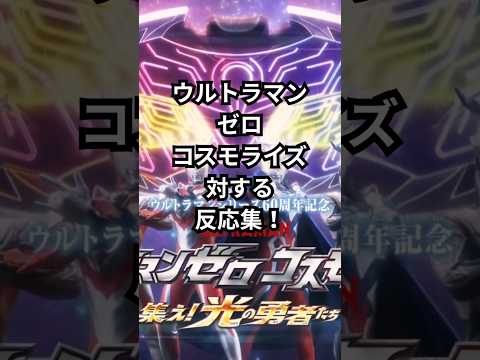
Ultraman Zero has unveiled a new transformation form called Cosmorize, sparking intense debate within the fan community about whether the character’s form evolution has exceeded reasonable limits. The new form has generated mixed reactions ranging from excitement about its cosmic design to concerns about excessive form proliferation in the series.
What Happened
Ultraman Zero has introduced a new transformation form called Cosmorize, marking another significant milestone in the character’s evolution. This announcement has triggered widespread discussion across social media and fan communities, with viewers expressing both enthusiasm and concern about the character’s ever-expanding arsenal of forms. The new form reportedly embodies cosmic-scale power and features a design philosophy distinct from Zero’s previous transformations.
Why It Matters
The introduction of Cosmorize represents a broader trend in the Ultraman franchise regarding form proliferation and character development. Over the past 15 years, Ultraman Zero alone has accumulated more than 20 distinct transformation forms, each with unique visual designs and narrative purposes. This expansion raises important questions about creative sustainability, fan engagement, and how long-running franchises balance commercial interests with storytelling coherence. The mixed fan reactions highlight a growing divide in how audiences perceive the franchise’s direction.
Background
Ultraman Zero first appeared in 2009 and has since become one of the most frequently transformed characters in the Ultraman series. The character’s form evolution has followed a pattern of escalating power levels and increasingly complex designs. Previous notable forms include Ultimatum (2010), which was initially considered the ultimate form, and various other specialized transformations developed across multiple films and series. The introduction of forms like Exceed in Ultraman X (2015) demonstrated the franchise’s willingness to continuously expand a character’s capabilities. Cosmorize continues this trend, though with apparent emphasis on cosmic-scale themes rather than conventional power scaling.
Key Points
- Form Proliferation: Ultraman Zero now possesses more than 20 distinct transformation forms, with Cosmorize adding to an already extensive arsenal
- Design Philosophy Shift: Cosmorize appears to represent a departure from traditional “stronger and more beautiful” evolution, instead embodying cosmic concepts
- Fan Reaction Divide: The fanbase has split into three groups: enthusiasts celebrating the new form, critics concerned about excessive proliferation, and confused viewers questioning narrative necessity
- Commercial Motivation: New form introductions consistently drive merchandise sales and represent significant marketing opportunities for the franchise
- Narrative Questions: Fans are seeking clarity on the story-based justification for Cosmorize’s existence and its role in the broader narrative
- Industry Trend: Form multiplication extends beyond Ultraman Zero, reflecting a broader special effects industry trend toward character diversity and multiple form options
Timeline
- 2009: Ultraman Zero debuts, establishing the character’s form evolution trajectory
- 2010: Ultimatum form introduced, initially perceived as the ultimate transformation
- 2010s Early Period: Form additions average 1-2 new forms annually
- 2015: Ultraman X Exceed form debuts, representing fusion of multiple forms
- 2015 Onward: Form addition pace accelerates to 3-4 new forms per year
- 2020 Onward: Multiple new forms debut simultaneously; form proliferation reaches unprecedented levels
- 2023 Onward: Cosmorize form announced, continuing the acceleration trend
Perspectives
Enthusiast Perspective: Supporters of Cosmorize praise its visual design, particularly its cosmic aesthetic and color palette. They view the new form as evidence of the franchise’s continued creativity and willingness to explore fresh visual concepts. These fans appreciate the ongoing expansion of possibilities and see each new form as an opportunity for renewed engagement with the character.
Critical Perspective: Long-time fans express concern that form proliferation has become excessive, potentially diluting Ultraman Zero’s core identity. Critics argue that the character’s essence becomes obscured when too many variations exist, and they question whether each new form serves genuine narrative purposes or merely serves commercial interests. Some worry that the franchise has abandoned the concept of “ultimate forms” that once provided narrative closure.
Analytical Perspective: Observers note that Cosmorize’s introduction reflects broader industry trends toward character diversity and multiple form options. They point out that similar proliferation occurs in other franchises like Kamen Rider, suggesting this represents a deliberate strategic shift rather than isolated phenomenon. These analysts emphasize that form additions require narrative justification and that the franchise’s sustainability depends on maintaining story coherence alongside visual innovation.
Commercial Perspective: Industry observers recognize that new form introductions consistently drive merchandise sales and represent crucial marketing moments. Bandai’s financial reports regularly cite new Ultraman forms as sales drivers, indicating that Cosmorize’s introduction serves clear business objectives alongside creative ones.
Insights
The Cosmorize announcement reveals a franchise at an inflection point. The Ultraman series has successfully maintained relevance for over a decade by continuously expanding character capabilities and visual designs, but this strategy now faces diminishing returns. The divided fan response suggests the franchise risks alienating portions of its audience if it continues prioritizing form quantity over narrative depth.
The acceleration of form introductions—from 1-2 annually in the early 2010s to multiple simultaneous debuts by 2020—indicates the franchise has shifted from viewing forms as climactic narrative moments to treating them as regular content offerings. This represents a fundamental change in how the series approaches character development.
The emergence of three distinct fan groups (enthusiasts, critics, and confused viewers) suggests the franchise faces a critical decision: continue expanding form variety to satisfy commercial interests and innovation-seeking fans, or consolidate existing forms and deepen their narrative significance to satisfy traditionalists concerned about character coherence.
Cosmorize’s cosmic theme, distinct from previous power-scaling approaches, hints that the franchise may be attempting to shift from “stronger” to “different,” potentially addressing criticism about endless power escalation. However, whether this philosophical shift will satisfy critics or merely delay the underlying concerns about form proliferation remains uncertain.
The franchise’s future likely depends on balancing three competing demands: maintaining commercial viability through new product offerings, preserving narrative coherence and character identity, and respecting fan expectations shaped by 15 years of increasingly complex form evolution.