▶ Watch the original YouTube video
For decades, Dragon Quest’s Haughtling Metal Slime has been debated as a game balance-breaking element that trivializes level grinding. However, a deeper analysis of game design philosophy, player psychology, and the franchise’s intentional mechanics suggests the opposite: it may be one of the most thoughtfully designed optional systems in RPG history.
- What Happened
- Why It Matters
- Background
- Key Points
- The Design Philosophy Behind the Haughtling Metal Slime
- Redefining “Balance Collapse”
- Comparative Analysis: Metal Slimes vs. Other RPG Systems
- The Psychology of Rare Encounters
- The Real Problem: Tedious Level Grinding
- Practical Guidance for Players
- Community Perspectives
- Insights
What Happened
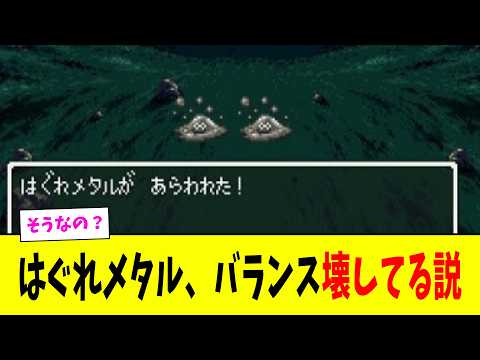
The Dragon Quest community has long discussed whether the Haughtling Metal Slime—a rare enemy that grants massive experience points but is difficult to defeat and appears infrequently—constitutes a balance-breaking mechanic. A recent video examining this debate has sparked renewed discussion, with many players arguing that the Haughtling Metal Slime is actually a well-designed, intentional feature rather than a flaw in game balance.
Why It Matters
This debate touches on fundamental questions about game design philosophy: How should developers balance player freedom with game difficulty? Should optional systems be available if they can trivialize core mechanics? The answer reveals how Dragon Quest’s creator Yuji Horii approached player psychology and the concept of choice in single-player RPGs. Understanding this design philosophy offers insights applicable to modern game development and player engagement strategies.
Background
The Haughtling Metal Slime has been a staple of the Dragon Quest series since the early entries on the Famicom. These rare enemies are characterized by three key traits: extremely low spawn rates, high difficulty in defeating them (they frequently flee), and disproportionately high experience rewards. Over 15 years of gameplay experience across the franchise reveals a pattern: players who engage in “metal slime hunting” do so as a deliberate choice to bypass traditional level grinding, not because the game forces them to.
The core tension is this: if the Haughtling Metal Slime grants so much experience, doesn’t it break the game’s difficulty curve? The answer, according to community analysis and game design principles, is more nuanced than it first appears.
Key Points
- The Haughtling Metal Slime’s balance-breaking reputation may be overstated due to its low spawn rate and high escape probability, which significantly reduce its practical time-saving benefits.
- Yuji Horii intentionally designed the system to respond to player desire for shortcuts, not to force them—making it an optional content choice rather than a mandatory exploit.
- The distinction between “unintended balance collapse” and “intentional design flexibility” is critical; Dragon Quest employs the latter.
- Compared to other RPG franchises like Persona or Final Fantasy, Dragon Quest’s metal slime system is uniquely optional and player-driven rather than mandatory or story-integrated.
- The psychological appeal of rare encounters creates engagement through variable reward schedules, a proven game design principle.
- The real balance problem in RPGs is tedious level grinding itself, not the existence of alternatives to it.
The Design Philosophy Behind the Haughtling Metal Slime
Yuji Horii has stated that “everyone likes to cheat a little,” and this philosophy is embedded in Dragon Quest’s design. The Haughtling Metal Slime is not a bug or oversight—it is a deliberate response to player psychology. Players who seek to grind levels face a tedious, repetitive task. Rather than forcing all players through this experience equally, Horii created an optional escape route with built-in limitations.
The three-layer design structure is evident:
- Response to Player Desire: Acknowledges that level grinding is psychologically painful and offers an alternative.
- Freedom of Choice: Metal slime hunting is entirely optional; players can complete the game without it.
- Balance Maintenance: Low spawn rates and low defeat rates ensure that casual players won’t accidentally break the game’s difficulty curve.
This contrasts sharply with other RPG franchises. In Persona, efficient enemy grinding is nearly mandatory because high-experience enemies spawn reliably. In Final Fantasy, major experience rewards are tied to story progression. Dragon Quest’s approach is unique: it offers the option without making it necessary.
Redefining “Balance Collapse”
The debate hinges on how “balance collapse” is defined. Three distinct interpretations exist:
- Competitive Balance: All players should experience identical difficulty—irrelevant for single-player games.
- Efficiency Balance: Playtime-to-reward ratios should be equitable—undermined by the Haughtling Metal Slime’s low spawn and defeat rates, which reduce actual time savings.
- Experiential Balance: Players should freely choose their preferred experience—fully supported by the optional nature of metal slime hunting.
Evaluated against these criteria, the Haughtling Metal Slime fails to qualify as a balance breaker under any rigorous definition.
Comparative Analysis: Metal Slimes vs. Other RPG Systems
| Game Series | Efficient Enemy | Characteristics | Balance Assessment |
|---|---|---|---|
| Dragon Quest | Haughtling Metal Slime | Rare spawn, low defeat rate, high XP | Optional (player choice) |
| Persona | High-level specific enemies | Reliable spawn, high XP | Quasi-mandatory |
| Final Fantasy | Boss encounters | Story-integrated, massive XP | Mandatory |
| Dragon’s Dogma | Specific strong enemies | Huntable, high XP | Explicit (hunting-focused) |
Dragon Quest’s system stands alone in its optionality. This design choice prioritizes player agency over enforced progression paths.
The Psychology of Rare Encounters
The emotional response to encountering a Haughtling Metal Slime differs markedly from encountering a Metal Slime or Metal King. This difference is rooted in game psychology’s “variable ratio reinforcement schedule”—a proven mechanism for creating engagement and anticipation.
Low-probability encounters generate excitement precisely because they are rare. Players report genuine excitement upon seeing a Haughtling Metal Slime appear, an emotional response absent from guaranteed encounters. This psychological dimension is often overlooked in balance discussions but is central to why the system works.
The Real Problem: Tedious Level Grinding
A critical insight emerges from this analysis: the actual balance problem in RPGs is not the existence of efficient grinding methods—it is the tedium of mandatory level grinding itself. Dragon Quest’s traditional level progression requires repetitive combat against standard enemies, a psychologically exhausting experience.
The Haughtling Metal Slime does not create this problem; it provides an optional solution to it. Players who find traditional grinding unbearable can pursue metal slime hunting as an alternative form of engagement. Players who enjoy the standard progression can ignore metal slimes entirely. This flexibility is the system’s strength, not its weakness.
Practical Guidance for Players
For Players Who Find Level Grinding Tedious: Metal slime hunting is a legitimate alternative. However, efficiency increases significantly in late-game when abilities like “Kamikazing” become available, making late-game metal slime hunting more rewarding than early attempts.
For Story-Focused Players: Standard level progression provides adequate challenge and deeper narrative immersion. Avoiding metal slime hunting often results in stronger emotional engagement with the story.
Related Design Patterns: Similar “optional efficiency” mechanics appear in Dragon’s Dogma’s pawn system and Monster Hunter’s targeted hunts, both employing comparable psychological principles.
Community Perspectives
The video examining this debate reveals diverse player viewpoints. The most common response argues that “players who pursue grinding exploits already want to break balance—metal slimes simply answer that desire.” This perspective reframes the Haughtling Metal Slime from a design flaw to a design feature responding to player intent.
Dissenting opinions note that metal slime hunting can overshadow other gameplay elements, such as item drops, reducing overall engagement variety. Some players report that excessive metal slime hunting diminished their enjoyment of the broader game experience.
In MMO environments like Dragon Quest X, players naturally gravitated toward efficient enemies when given the choice, demonstrating that balance concerns are contextual to game structure and player motivation.
Insights
The Haughtling Metal Slime debate illuminates a fundamental principle of modern game design: optimal games accommodate diverse player preferences rather than enforcing singular progression paths. Yuji Horii’s design philosophy—acknowledging that “everyone likes to cheat a little”—demonstrates sophisticated understanding of player psychology.
The system is not a balance breaker but rather a balance choice. It exists as optional content, comparable to casino minigames in Dragon Quest, which are entirely separate from core progression. This optionality is precisely what makes it effective: it serves players who want it without penalizing those who don’t.
The broader implication extends beyond Dragon Quest: games that succeed long-term often provide multiple valid playstyles and progression paths. The Haughtling Metal Slime, despite four decades of debate, remains a model of this principle. Its continued presence in new Dragon Quest titles—including Dragon Quest III HD-2D—suggests that developers and players alike recognize its value as intentional design rather than exploitable flaw.
Ultimately, the Haughtling Metal Slime is not a design problem to be solved but a design solution to be appreciated: it elegantly balances player freedom with game integrity, offering choice without coercion. This is why Dragon Quest has remained beloved for nearly 40 years.