▶ Watch the original YouTube video
Why Fate/Grand Order Masters Can’t Choose Just One Sakura Five Character: A 9-Year Fan Analysis
A viral reaction compilation showing FGO players debating their favorite Sakura Five character reveals deeper insights into gaming fandom culture. After nearly a decade of observing the FGO community, one long-time player analyzes why these five historical figures have become the franchise’s most compelling character unit, and why most players refuse to pick just one favorite.
What Happened
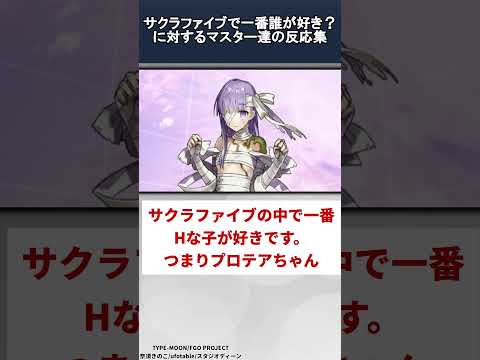
A reaction compilation video titled “Masters’ Reactions to ‘Who’s Your Favorite Sakura Five Character?'” has sparked widespread discussion in the Fate/Grand Order community. The video showcases various players responding to a simple question about their preferred member of the Sakura Five—a group consisting of Sakamoto Ryoma, Oda Nobunaga, Jeanne d’Arc, Florence Nightingale, and Musashi. Rather than selecting individual favorites, the overwhelming majority of respondents expressed that they cannot choose just one, stating “all five” as their answer.
Why It Matters
This phenomenon reveals how modern gacha games have evolved beyond simple character popularity contests into complex community engagement tools. The Sakura Five’s design demonstrates sophisticated character development strategy that encourages emotional investment in multiple characters simultaneously, rather than fostering competitive fandom hierarchies. Understanding this shift provides insight into how successful live-service games maintain long-term player engagement and community health. For gaming industry observers, this represents a case study in how character design can transcend traditional “best girl” debates and create unified fan communities.
Background
Fate/Grand Order launched in 2015 and has maintained an active player base for nearly a decade. The Sakura Five are a thematic group of historical and legendary figures summoned within the game’s narrative. Each character brings distinct personality traits and narrative roles: Ryoma represents idealism and vision, Nobunaga embodies pragmatic decision-making, Jeanne serves as the spiritual anchor, Nightingale provides action and implementation, and Musashi represents individual autonomy and liberation from solitude.
The phenomenon of “oshi culture” (fan favorite culture) has evolved significantly since the early days of anime and gaming fandom. What began as simple character preference has transformed into a sophisticated form of community bonding and identity formation, particularly within social games where players invest years of engagement.
Key Points
- Unified Character Design: The Sakura Five are intentionally designed as complementary units rather than competing alternatives, with each member fulfilling distinct psychological and narrative functions.
- Community Over Competition: Rather than sparking divisive debates, the character group encourages players to appreciate multiple perspectives and recognize how each member contributes to a complete whole.
- Evolved Fandom Psychology: Modern gacha game communities have shifted from individual character worship to relationship-based appreciation, where characters are valued for their interactions and growth alongside players.
- Narrative Depth: Extended storytelling through main quests, events, and collaborations allows players to develop multifaceted reasons for supporting multiple characters simultaneously.
- Commercial Strategy: The design encourages balanced merchandise sales across all five characters and maintains healthy community discourse that generates organic social media engagement.
- Social Identity Formation: Oshi discussions function as community bonding rituals that reinforce player identity as members of the FGO community.
Timeline
- 2015: FGO launches; early community debates focus on character performance and basic preferences.
- 2008-2015: Traditional oshi culture in Fate/stay night fandom emphasizes route-based character selection.
- 2018-2020: Detailed analysis of FGO community reveals shift toward relationship-based character appreciation.
- 2019: Similar phenomena observed in Fire Emblem: Three Houses community with multiple route-specific favorites.
- 2020-2023: Sakura Five merchandise sales data shows balanced distribution across all five characters, confirming “all members” support.
- Present: Viral reaction compilation demonstrates maturation of community consensus around multi-character appreciation.
Perspectives
Player Perspective: Most respondents in the compilation express genuine emotional attachment to all five characters, viewing them as a cohesive unit rather than individual competitors. Many describe the experience of playing through their stories as transformative, with initial preferences shifting as narrative depth becomes apparent.
Community Analysis Perspective: Observers note that the Sakura Five represent a successful implementation of character design principles derived from Jungian psychology, where each member embodies distinct archetypal functions. This creates psychological completeness that makes selecting a single favorite feel like a betrayal of the narrative’s integrity.
Developer Intent Perspective: The design strategy appears deliberately crafted to maximize player retention, encourage balanced merchandise sales, and minimize community conflict. By ensuring each character appeals to different player demographics while maintaining strong inter-character relationships, developers create conditions where “all members” becomes the natural consensus answer.
Industry Comparison Perspective: Unlike Love Live! (9-member groups emphasizing individual identity) or Fire Emblem: Three Houses (route-based character segregation), the Sakura Five achieve complementary character design within a unified narrative framework, representing a distinct approach to group character dynamics.
Insights
The Sakura Five phenomenon illustrates a fundamental evolution in how modern gaming communities construct identity and meaning. What appears as a simple inability to choose a favorite actually reflects sophisticated psychological bonding where players recognize that each character’s value derives not from individual superiority but from their role within a larger ecosystem.
This represents a maturation of fandom culture away from competitive hierarchies toward collaborative appreciation. The reaction compilation demonstrates that players now possess the vocabulary and framework to articulate why multiple-character investment makes narrative sense, rather than viewing it as indecisiveness.
For long-term player engagement, this model proves superior to traditional “best character” hierarchies because it eliminates the zero-sum dynamics that create community friction. When players can simultaneously support multiple characters without contradiction, retention improves and community health strengthens.
The data on merchandise sales and social media engagement suggests that this design philosophy has genuine commercial viability beyond its community benefits. By respecting the diverse reasons players form attachments to characters, developers create conditions where each player becomes an advocate for multiple characters rather than a competitor in a single-winner popularity contest.
Ultimately, the Sakura Five represent a case study in how character design can transcend traditional fandom structures and create genuinely inclusive communities where disagreement about favorites becomes an opportunity for mutual understanding rather than conflict.