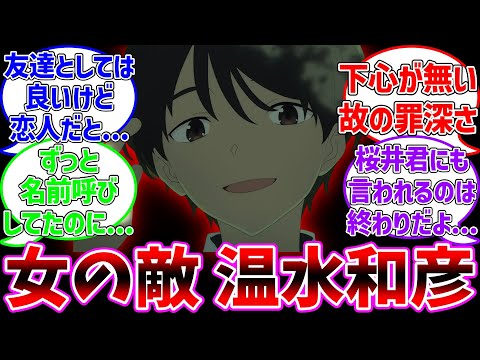
▶ Watch the original YouTube video
After 15 years of anime analysis, one protagonist stands out as uniquely destructive: Nukumizu from ‘Too Many Losing Heroines’ achieves the rare feat of being called “the enemy of women” not through malice, but through unconscious kindness. This article explores how pure-hearted obliviousness can cause more damage than deliberate cruelty, and what this reveals about modern romance anime tropes.
- What Happened
- Why It Matters
- Background
- Key Points
- Comparative Analysis: Nukumizu vs. Other Anime Protagonists
- The Psychology of Unconscious Harm
- Yanagi’s Strategic Positioning
- Fan Reception and Community Analysis
- The Inversion of Harem Anime Tropes
- Broader Industry Implications
- Practical Guide to Deeper Engagement
- Personal Analysis: The Nature of Unconscious Harm
- Future Expectations and Narrative Possibilities
- Conclusion: Beyond the Harem Archetype
What Happened
The protagonist Nukumizu (nicknamed “Gomashio-kun”) from the anime and manga series ‘Too Many Losing Heroines’ has become the subject of intense criticism within fan communities. Unlike traditional harem anime antagonists who deliberately manipulate multiple love interests, Nukumizu’s problem is the opposite: he helps everyone who approaches him with genuine kindness, completely unaware that his actions are causing multiple heroines to develop romantic feelings for him—only to have those feelings inevitably crushed.
By volume 8 of the original manga, at least three heroines (Tiara, Yanagi, and Shikiya) have been emotionally wounded by his behavior. The criticism intensified when fans discovered that Nukumizu has been told “don’t call me by my name” eight times in a single volume—a clear indicator of how oblivious he is to the emotional impact of his actions.
Why It Matters
This series represents a significant shift in how anime addresses the “harem protagonist” archetype. Rather than celebrating a protagonist surrounded by admirers, ‘Too Many Losing Heroines’ critiques the inherent irresponsibility of such a character. The distinction is crucial: Nukumizu is not a villain, yet he causes genuine harm. This challenges viewers to reconsider what makes a character morally problematic—not intention, but impact.
The phenomenon also reflects broader audience fatigue with traditional harem anime. Viewers have grown tired of protagonists who passively accept romantic attention without consequence. By making the protagonist’s obliviousness the central problem rather than a comedic trait, the series forces a reckoning with a trope that has dominated anime for decades.
Background
The concept of “losing heroines” in anime typically refers to female characters who fail to win the protagonist’s affection. However, ‘Too Many Losing Heroines’ inverts this definition: the heroines are “losing” because the protagonist’s unconscious actions have wounded them, not because they were simply rejected in a fair romantic competition.
Nukumizu’s defining characteristic is his inability to refuse anyone in need. When a girl approaches him with a problem, he instinctively helps without considering the emotional implications. This mirrors the “savior complex” seen in other anime protagonists like Otonashi from ‘Angel Beats!’ However, unlike Otonashi, who had a clear goal (helping people find peace), Nukumizu has no overarching purpose—he simply responds to immediate needs.
The series also draws implicit comparisons to other romance anime protagonists. Shirou from ‘Fate/stay night’ had the explicit goal of becoming a “hero of justice,” which contextualized his helping behavior. Hachiman from ‘My Teen Romantic Comedy SNAFU’ maintained constant self-awareness about his actions. Nukumizu lacks both of these mitigating factors, making his obliviousness uniquely damaging.
Key Points
- Unconscious Kindness as Harm: Nukumizu helps multiple heroines without realizing his actions create romantic expectations, resulting in emotional damage to all of them.
- The Heroine Factory Problem: Heroines who might have had winning chances are systematically eliminated through his behavior, not through fair romantic competition.
- Complete Lack of Romantic Awareness: Nukumizu fails to recognize or appropriately respond to romantic advances, creating a cycle of false hope and disappointment.
- Yanagi’s Strategic Approach: In contrast to other heroines’ direct approaches, Yanagi maintains a long-term perspective, positioning herself as a “friend” while subtly building connection.
- The Irresponsibility Factor: Despite telling Yanagi he would reject her if she confessed, Nukumizu continues intimate interactions with other heroines, constituting a form of emotional infidelity.
- Fan Expectations for Consequences: The community widely expects Nukumizu to face painful consequences or become a “losing heroine” himself, experiencing the hurt he has caused.
Comparative Analysis: Nukumizu vs. Other Anime Protagonists
Shirou Emiya (Fate/stay night): While Shirou also helped multiple heroines, his actions were driven by an explicit philosophy of becoming a “hero of justice.” This gave his behavior a clear ideological framework, making it more understandable if not entirely forgivable.
Hachiman Hikigaya (My Teen Romantic Comedy SNAFU): Hachiman maintained constant self-awareness about his manipulative tendencies and the emotional consequences of his actions. He actively worked to understand what he was doing and why. Nukumizu lacks this reflective capacity entirely.
Raku Ichijo (Nisekoi): Another unconscious harem protagonist, but Raku eventually resolved his emotional confusion by clarifying his own feelings. Nukumizu has not reached this stage of development.
Makoto Itou (School Days) and Kazuki Tōma (White Album): These protagonists deliberately manipulated and betrayed multiple heroines, making them clear villains. Nukumizu’s unconscious harm is fundamentally different in nature, yet arguably more insidious because it cannot be dismissed as simple malice.
The Psychology of Unconscious Harm
Savior Complex: Nukumizu appears to experience genuine pleasure from helping others in distress. This creates a psychological incentive to maintain others in a state of need, potentially explaining why he unconsciously encourages romantic attachment.
Absence of Self-Awareness: Fan commentary notes that Nukumizu genuinely believes there are no girls in his literature club—a statement that reveals profound disconnection from social reality. This lack of self-awareness extends to his romantic desirability, making him unable to recognize or appropriately manage romantic interest.
Romantic Incompetence: When faced with a near-kiss situation with Shikiya, Nukumizu abruptly rejected her with “go home alone.” This demonstrates not cruelty but complete inability to navigate romantic situations, leaving the other person emotionally devastated by the sudden rejection.
Yanagi’s Strategic Positioning
In stark contrast to other heroines’ direct approaches, Yanagi employs a sophisticated long-term strategy. While appearing to be merely “eating all the time,” she maintains constant observation of Nukumizu. Her approach includes:
- Committing to a two-year waiting period, prioritizing long-term relationship building over immediate romantic progress
- Maintaining a “friend” position while other heroines compete directly, creating psychological distance from the conflict
- Continuing subtle gestures like homemade chocolate that go largely unnoticed by Nukumizu
- Demonstrating awareness of his interactions with other heroines, suggesting she is tracking his behavior
This strategy parallels Megumi Kato’s approach in ‘Saekano: How to Raise a Boring Girlfriend,’ where the seemingly least heroic character actually holds the strongest position through patient positioning and emotional intelligence.
Fan Reception and Community Analysis
Majority Critical Position: The overwhelming fan response characterizes Nukumizu as “the enemy of women,” “a complete idiot,” and someone who “deserves to suffer.” Comments like “it was funny at first, but by volume 8 it became genuinely cruel” indicate that fans recognize the escalating harm of his behavior.
Minority Defensive Position: Some fans argue that “his lack of ulterior motive is exactly what makes him so good at comforting people” and “it’s not about gender—he’s equally oblivious to everyone.” These comments acknowledge his good intentions while recognizing the problematic outcomes.
Analytical Position: The most sophisticated fan commentary notes that “Yanagi likes him precisely because he’s kind to everyone without ulterior motive, but now that kindness has become the source of his cruelty” and “his lack of self-awareness transforms his goodness into irresponsibility.”
The Inversion of Harem Anime Tropes
‘Too Many Losing Heroines’ fundamentally inverts the traditional harem anime formula. Conventionally, “losing heroines” are those rejected by the protagonist. Here, they are those wounded by his obliviousness. This creates a radical possibility: the protagonist himself could become a “losing heroine,” experiencing rejection and heartbreak as karmic consequence.
Fan speculation about future developments includes three primary scenarios:
- Nukumizu receives simultaneous confessions from multiple heroines, forcing him to hurt all of them at once
- Yanagi ultimately wins, but only after Nukumizu is forced to confront the damage he has caused to others
- Nukumizu experiences unrequited love himself, finally understanding the pain he has inflicted
This narrative structure represents a significant departure from typical anime, suggesting that the series intends to use Nukumizu’s suffering as a form of moral reckoning.
Broader Industry Implications
The rise of “unconscious protagonist” characters in anime since 2020 reflects viewer exhaustion with traditional harem narratives. ‘Too Many Losing Heroines’ occupies a unique position: it appears to be a conventional harem comedy while actually functioning as a critique of harem anime’s fundamental irresponsibility.
This represents a maturation of the medium’s approach to romance. Rather than celebrating a protagonist’s ability to attract multiple partners, contemporary anime increasingly examines the ethical problems inherent in such situations. The shift suggests that audiences now expect romantic narratives to grapple with emotional consequences rather than treating them as comedic fodder.
Practical Guide to Deeper Engagement
Read the Original Manga: The anime adaptation, while effective, omits crucial psychological nuance present in the manga. Yanagi’s strategic thinking and the precise emotional impact of Nukumizu’s rejections are far more detailed in the source material. Rereading the manga reveals numerous foreshadowing elements invisible in a first viewing.
Track Heroine Affection Levels: Monitor how each heroine’s feelings evolve across volumes:
- Tiara: Reaches peak affection through her confession, then faces potential collapse due to Nukumizu’s non-response
- Yanagi: Appears low-intensity but accumulates steadily through consistent presence
- Shikiya: Experiences sharp decline following the rejected near-kiss situation
- Yaki-Shio: Remains in early-stage friendship development
Analyze the “Name-Calling” Pattern: The eight instances in volume 8 where Nukumizu is told not to use someone’s name represent a quantifiable measure of his emotional obliviousness. Tracking these moments across volumes reveals which heroines feel most violated by his familiarity.
Compare with ‘My Teen Romantic Comedy SNAFU’: Rewatching this series alongside ‘Too Many Losing Heroines’ illuminates the crucial difference between a protagonist who understands his own manipulative behavior and one who remains completely unconscious of it.
Personal Analysis: The Nature of Unconscious Harm
After 15 years of anime analysis, the most significant insight is that unconscious harm often exceeds deliberate cruelty in its destructive capacity. Nukumizu is not “the enemy of women” in the traditional sense—he harbors no misogynistic intent. Rather, he represents the danger of “goodness without responsibility.”
His actions toward Tiara (postponing her confession), Shikiya (rejecting her near-kiss), and the others may each be individually justifiable as “kind” decisions. From the heroines’ perspectives, however, these actions constitute abandonment and betrayal. The gap between intention and impact is precisely where the moral problem resides.
The series functions as a mirror for viewers themselves. How many times have we caused harm through obliviousness? How many times have we prioritized our own comfort over others’ emotional needs? Nukumizu’s character forces uncomfortable self-examination.
Future Expectations and Narrative Possibilities
The community consensus anticipates that Nukumizu will face meaningful consequences. Whether through simultaneous confessions, forced confrontation with his victims’ pain, or his own experience of unrequited love, the narrative arc appears designed to transform him from an unconscious agent of harm into a conscious participant in his own suffering.
This potential trajectory distinguishes ‘Too Many Losing Heroines’ from traditional harem anime. Rather than celebrating romantic conquest, it appears positioned to critique the very concept, using Nukumizu’s journey as a vehicle for moral education—both for the character and the audience.
Conclusion: Beyond the Harem Archetype
‘Too Many Losing Heroines’ represents a significant evolution in how anime addresses romance and responsibility. By making the protagonist’s unconscious obliviousness the central problem rather than a comedic trait, the series challenges decades of harem anime conventions.
Nukumizu is not simply “the enemy of women.” He is the embodiment of a specific form of irresponsibility: the harm caused by goodness without awareness, kindness without accountability, and help without understanding. In this sense, he functions as a critique not just of anime tropes, but of real-world patterns of emotional negligence.
The series’ ultimate significance may lie not in which heroine “wins,” but in whether Nukumizu develops the self-awareness necessary to understand the damage he has caused. That journey from unconscious harm to conscious responsibility represents a narrative maturity that suggests anime’s approach to romance is finally evolving beyond simple wish-fulfillment fantasy.