▶ Watch the original YouTube video
Sony’s PS4 Trade-In Campaign Sparks Debate Over Gaming Industry Priorities
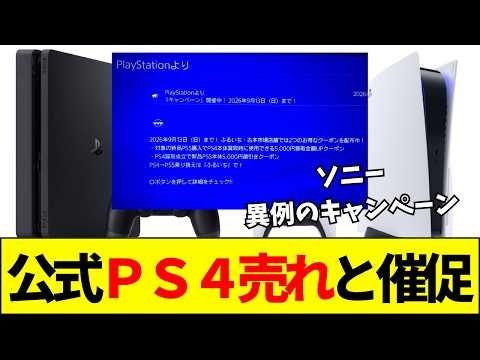
Sony has launched an official campaign encouraging PS4 owners to trade in their consoles at used retailers and apply discount coupons toward PS5 purchases—a move that has divided the gaming community between those who see it as savvy marketing and those who view it as a troubling sign of industry desperation.
What Happened
Sony has sent official emails to PS4 users promoting a trade-in campaign that combines higher buyback prices at major used game retailers with PS5 purchase discounts. According to reports, the combined incentives can save consumers over $100 on the upgrade. The campaign represents an unusual move for a hardware manufacturer—explicitly encouraging customers to sell their previous-generation console through official channels.
Why It Matters
This campaign reveals underlying tensions in the gaming industry regarding hardware transitions, consumer sentiment, and manufacturer priorities. The move has sparked broader questions about whether the PS5 offers sufficient compelling reasons for players to upgrade, and whether Sony’s approach signals a shift in how major console makers view their relationship with users. The campaign also highlights the contrast between Sony’s historical stance on the used games market and its current willingness to leverage it for sales.
Background
The PS5 launched in 2020 at $499 for the standard edition—$100 more than the PS4’s original $399 price point. Despite strong global sales exceeding 40 million units, the Japanese market has underperformed relative to PS4’s trajectory at the same stage, with approximately 3 million units sold domestically. Sony has repeatedly cited sluggish sales growth in Japan during recent earnings calls, suggesting the company faces pressure to accelerate adoption.
Historically, console manufacturers have promoted hardware upgrades by emphasizing new capabilities and exclusive games rather than encouraging trade-ins of previous hardware. The PS3-to-PS4 transition benefited from clear technical improvements and exclusive titles like “Bloodborne” and “Persona 5.” The PS5 transition, by contrast, has been marked by a less compelling exclusive lineup and incremental rather than revolutionary improvements.
Key Points
- Campaign Structure: Sony partnered with major used game retailers to offer above-market trade-in values combined with PS5 purchase discounts, totaling over $100 in combined savings.
- Market Context: PS5 sales in Japan have lagged expectations, with approximately 3 million units sold compared to stronger PS4 adoption at the same point in its lifecycle.
- Divided Reception: Online responses split between criticism of Sony’s apparent desperation and pragmatic support for the economic value proposition.
- Underlying Issue: The campaign highlights a fundamental problem—the lack of compelling PS5-exclusive titles that would naturally drive hardware adoption.
- Industry Comparison: Microsoft’s Game Pass strategy and Nintendo’s Switch approach both prioritize content and services over hardware replacement pressure.
- Philosophical Concern: The campaign potentially undermines the emotional connection between players and their gaming hardware, treating consoles as disposable commodities rather than platforms with lasting value.
Timeline
- 2013: PS4 launches at $399, becomes dominant platform with strong exclusive lineup.
- 2020: PS5 launches at $499 with promise of next-generation gaming experiences.
- 2023–2024: Sony reports sluggish PS5 adoption in Japan during multiple earnings calls.
- 2024: Sony launches official PS4 trade-in campaign encouraging hardware upgrade.
Perspectives
Critics argue that Sony’s campaign represents an unprecedented low for the gaming industry. They contend that encouraging users to sell their previous hardware is disrespectful to the emotional investment players have made in their PS4 libraries and memories. Many point out that PS4 still has active game releases and that the move signals Sony’s desperation rather than confidence in the PS5’s value proposition. This perspective emphasizes that gaming hardware represents more than consumer electronics—it embodies years of personal gaming history.
Supporters counter that trade-in campaigns are standard practice across consumer electronics, from smartphones to appliances, and that Sony is simply applying proven retail strategies to gaming. They note that the financial incentive is substantial and that consumers benefit from the opportunity to upgrade at reduced cost. This perspective treats the campaign as rational business strategy rather than a philosophical statement about hardware value.
Industry observers note that the campaign reflects a structural problem in modern game development. AAA titles for PS5 now cost over $100 million to develop, forcing publishers to focus on proven franchises rather than new intellectual property. Combined with extended PS4 support and the proliferation of alternative entertainment options (mobile gaming, streaming services, VR), the traditional hardware upgrade cycle has weakened.
Insights
Sony’s campaign exposes a critical gap between manufacturer intentions and consumer psychology. While the trade-in offer is economically rational, it fundamentally misunderstands what drives hardware adoption: the desire to play new games, not the pressure to discard old ones.
The contrast with competitors is instructive. Microsoft’s Game Pass strategy removes the pressure to buy new hardware by making content the primary value proposition. Nintendo’s Switch approach succeeds by maintaining hardware relevance through continuous exclusive releases rather than pushing users toward replacement.
The campaign also reveals how the gaming industry’s cost structure has shifted. When development budgets exceed $100 million per title, publishers cannot afford to take risks on new franchises. This creates a vicious cycle: fewer exclusive titles reduce incentive to upgrade, forcing manufacturers to resort to price-based incentives rather than content-based appeal.
For consumers, the campaign serves as a reminder that hardware decisions should be driven by genuine desire to play specific games, not by promotional savings. The most successful gaming transitions in history—from PS2 to PS3, or the Nintendo Wii’s mainstream breakthrough—succeeded because they offered experiences unavailable on previous hardware, not because manufacturers pressured users to trade in their old systems.
Sony’s approach risks short-term sales gains at the cost of long-term brand trust. Gaming communities remember how manufacturers treat them, and explicit encouragement to abandon previous-generation hardware may signal that the company views players as consumers to be managed rather than communities to be served.