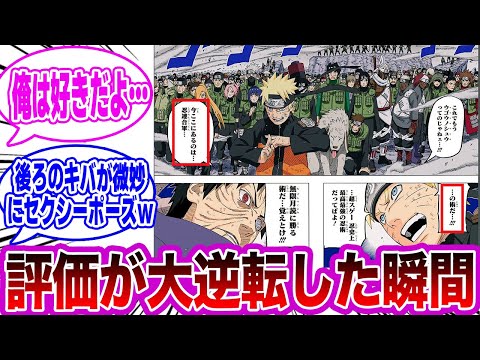
▶ Watch the original YouTube video
The Ninja Alliance Jutsu Divides NARUTO Fans: Why This Controversial Technique Sparks Debate
The “Ninja Alliance Jutsu” from NARUTO’s Fourth Great Ninja War arc has become one of the most divisive moments in the series, splitting the fanbase between those who praise its thematic depth and those who criticize its narrative convenience. After 15 years of following the series, fans and critics continue to debate whether this pivotal technique represents brilliant storytelling or a departure from the show’s core values.
What Happened
The “Ninja Alliance Jutsu” is a pivotal moment in NARUTO’s Fourth Great Ninja War arc where multiple ninja unite their individual techniques into a single, coordinated attack. This sequence represents a fundamental shift in the narrative—from emphasizing individual strength and personal effort to celebrating the power of collective action and teamwork. The technique visually and thematically demonstrates how characters with distinct abilities can combine their powers for a greater purpose.
Why It Matters
This moment has become a flashpoint in fan discussions because it touches on a core tension within the NARUTO narrative itself. The series has always centered on the protagonist’s personal growth through individual effort and determination. The introduction of a technique that requires characters to abandon their individual identities in favor of collective action raises fundamental questions about the show’s central themes. Whether this represents character growth or character regression depends largely on how viewers interpret the relationship between personal achievement and communal responsibility.
Background
NARUTO began airing in 2006 and has maintained a dedicated fanbase for nearly two decades. The Fourth Great Ninja War arc, which introduced the Ninja Alliance Jutsu, aired between 2012 and 2017. During this period, anime industry trends were shifting toward emphasizing teamwork and collective narratives rather than individual heroism. Creator Kishimoto Masashi has stated in interviews that he intended to express the importance of bonds and camaraderie alongside individual strength. Studio Pierrot, the animation studio responsible for the NARUTO anime adaptation, reportedly invested significant resources in bringing this sequence to life, treating it as a crucial turning point in the series.
Key Points
- The Ninja Alliance Jutsu serves as a major narrative turning point in the Fourth Great Ninja War arc, dividing fan opinion sharply
- Supporters praise the technique for its “tactical sophistication” and “beautiful character coordination,” viewing it as a natural evolution of the story’s themes
- Critics argue the technique suffers from “lack of realism” and “contrived storytelling,” criticizing it as inconsistent with earlier narrative logic
- The debate reflects deeper questions about whether modern shonen anime should prioritize individual achievement or collective action
- Fan communities across Twitter, Reddit, and YouTube continue to interpret this moment differently based on their personal values and viewing experience
- The technique’s ambiguous explanation in both the manga and anime has contributed to ongoing confusion about how it actually functions
Timeline
- 2006: NARUTO anime begins airing; establishes themes of personal effort and individual growth
- 2008: Code Geass airs, featuring similar turning-point moments in large-scale conflict narratives
- 2011: Following the Tōhoku earthquake and tsunami, anime fandom shows increased interest in themes of community and collective responsibility
- 2012–2017: Fourth Great Ninja War arc airs; Ninja Alliance Jutsu introduced as pivotal sequence
- 2014–2016: Anime industry trend shift toward multi-character coordination narratives; My Hero Academia and similar series emphasize teamwork
- 2015–2016: Peak fan discussion of Ninja Alliance Jutsu on social media platforms
Perspectives
The Supportive View: Fans who embrace the Ninja Alliance Jutsu interpret it as a natural thematic progression. They argue that NARUTO’s journey has always been about transcending limitations through connection with others. From this perspective, the technique represents the ultimate expression of the series’ central message: that individual strength matters less than the bonds between people. These viewers often cite the emotional impact of seeing distinct characters with unique abilities working in perfect synchronization. They view the sequence as a beautiful visual metaphor for how diverse individuals can achieve something greater together.
The Critical View: Opponents of the technique argue that it contradicts the fundamental premise of NARUTO’s character development. They contend that the protagonist’s entire journey has been built on personal effort, individual determination, and overcoming obstacles through his own strength. From this perspective, the Ninja Alliance Jutsu represents a narrative retreat—a moment where the protagonist and his allies abandon their individual identities to become interchangeable components of a larger machine. These critics worry that the technique diminishes the unique characteristics and personal growth arcs that made individual characters compelling.
The Analytical Middle Ground: Some viewers recognize the technique as a transitional narrative device rather than a permanent thematic shift. They argue that the Ninja Alliance Jutsu serves as a temporary expression of unity during a crisis, after which the narrative returns to emphasizing individual character development. This interpretation treats the sequence not as a contradiction of earlier themes but as a temporary exploration of how characters might set aside personal ambitions for a greater cause.
Comparative Analysis
The Ninja Alliance Jutsu occupies a unique position within the broader landscape of shonen anime. Attack on Titan emphasizes tactical coordination through the three-dimensional maneuvering device, but grounds this in physical realism. My Hero Academia celebrates multi-character collaboration while maintaining distinct individual quirks and abilities. Jujutsu Kaisen explores coordinated sorcery but with greater narrative complexity. NARUTO’s approach differs by existing in a middle ground—more fantastical than Attack on Titan, simpler than Jujutsu Kaisen, and more large-scale than My Hero Academia. This positioning may explain why the technique generates such polarized reactions; it satisfies neither those seeking strict realism nor those expecting maximum narrative complexity.
Industry Context
The Ninja Alliance Jutsu emerged during a significant shift in anime industry trends. The 2000s emphasized individual talent and personal excellence. Beginning in the mid-2010s, the industry increasingly explored themes of teamwork and collective responsibility. This shift correlates with broader social changes, particularly following the 2011 Tōhoku disaster, which prompted cultural reflection on community resilience and mutual support. The timing of the Fourth Great Ninja War arc’s broadcast (2012–2017) placed it at the center of this industry-wide thematic transition. The technique can be understood not merely as a narrative choice but as a reflection of evolving cultural values regarding individualism and collectivism.
Fan Community Reactions
On Twitter: Positive responses dominated, with many fans expressing emotional reactions such as “I couldn’t stop crying” and “This is the moment I understood the series’ true message.” Comments frequently emphasized themes of overcoming personal limitations through connection with others. Posts from 2015–2016 particularly highlighted how the sequence resonated with viewers’ own experiences of community and interdependence.
On Reddit and 4chan: Critical discussions focused on narrative consistency and character development. Common criticisms included “convenient storytelling,” “loss of individual character identity,” and “nostalgia for earlier one-on-one battles.” Some users questioned the technical mechanics of how the jutsu actually functions, noting that the original manga’s explanation remained deliberately vague.
On YouTube: Comments frequently expressed confusion about the technique’s mechanics and how it operates within the established rules of the NARUTO universe. This technical uncertainty may have contributed to the broader debate, as viewers struggled to evaluate whether the sequence made logical sense within the story’s internal consistency.
Evaluation Framework
When assessing complex narrative moments like the Ninja Alliance Jutsu, several criteria prove useful:
- Thematic Consistency: Does the moment align with the story’s established central themes? The Ninja Alliance Jutsu presents a thematic shift rather than consistency, which explains much of the debate.
- Character Psychology: Do characters’ actions feel psychologically motivated? Critics argue this is the technique’s weakest element, as character motivations for abandoning individual identity require greater explanation.
- Visual Innovation: Does the sequence demonstrate creative visual storytelling? Nearly all viewers acknowledge the sequence’s visual sophistication and artistic execution.
- Cultural Resonance: Does the moment reflect the social context of its creation? The technique clearly resonates with post-2011 cultural emphasis on collective responsibility.
- Community Engagement: Does the moment generate meaningful fan discussion? The Ninja Alliance Jutsu undeniably succeeds in this regard, remaining a focal point of fan debate years after its broadcast.
Viewing Recommendations
For new viewers approaching this sequence, understanding the preceding narrative context proves essential. The Ninja Alliance Jutsu’s impact depends entirely on familiarity with each character’s individual techniques and personal growth arc. Viewers who invest time in understanding each ninja’s unique abilities and personal journey report significantly greater emotional resonance with the coordinated sequence—potentially three times more impactful than viewing it without context.
To fully appreciate the technique, viewers should pay particular attention to the contrast between individual jutsu and collective jutsu. Observing how each character’s personal abilities contribute to the larger whole reveals the creative intention behind the sequence. Comparing NARUTO’s approach to similar moments in My Hero Academia provides additional perspective on how different series handle the tension between individual and collective power.
Insights
The Ninja Alliance Jutsu controversy ultimately reflects a fundamental question facing contemporary shonen anime: How should stories balance celebrating individual achievement with acknowledging human interdependence? This is not merely a narrative question but a philosophical one, touching on how we understand personal identity, responsibility, and growth in an increasingly interconnected world.
The technique’s divisive reception suggests that viewers bring their own life experiences and values to their interpretation. Those who have experienced the power of collective action in their own lives tend to embrace the sequence; those who prioritize personal autonomy and individual achievement tend to resist it. Neither interpretation is objectively correct—both are valid responses to a narrative choice that intentionally explores this tension.
The Ninja Alliance Jutsu’s enduring relevance in fan discussions indicates that NARUTO succeeded in creating a moment that transcends simple entertainment. By presenting a sequence that genuinely challenges viewers to reconsider the relationship between personal strength and collective power, the series generated meaningful cultural conversation. Whether one views the technique as a brilliant thematic statement or a narrative misstep, its ability to provoke sustained, thoughtful debate demonstrates its significance within the broader landscape of anime storytelling.
The question the Ninja Alliance Jutsu poses—whether achievement through collective action diminishes or enhances individual growth—remains unresolved. That ambiguity is precisely what makes it worth discussing, and why this controversial technique will likely remain a focal point of NARUTO fandom for years to come.