▶ Watch the original YouTube video
A detailed analysis reveals how Million Live, a popular idol management game, systematically eliminates players’ personal downtime through carefully designed mechanics that blur the line between character appreciation and gaming dependency. Community discussions expose a troubling pattern where players sacrifice their quality of life in the name of supporting their favorite characters.
What Happened
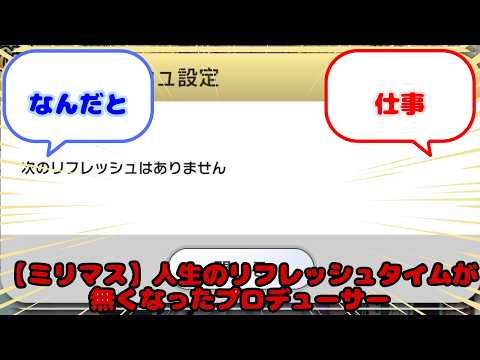
A viral video discussion within the Million Live community sparked widespread conversation about players losing their “refresh time”—personal downtime and mental breaks—to the game’s demanding mechanics and event cycles. Players reported that what began as casual enjoyment of their favorite characters evolved into an obligation that consumed their daily lives, leaving no time for activities outside the game.
Why It Matters
This phenomenon highlights a critical issue in modern mobile gaming: the deliberate design of games to maximize player engagement at the expense of player wellbeing. The normalization of “oshi activity” (supporting favorite characters) as a positive lifestyle choice masks what psychological experts would recognize as behavioral addiction. Understanding these mechanisms is essential for players, parents, and the gaming industry itself to address the growing mental health implications of long-term mobile game engagement.
Background
Million Live is a long-running idol management game that has cultivated an exceptionally devoted player base over its years of operation. Unlike traditional games with clear endpoints, Million Live employs continuous event cycles, character development systems, and community engagement mechanics designed to keep players returning daily. The game’s strength lies not just in its mechanics, but in how it frames excessive play as an expression of love for favorite characters—a concept known as “oshi activity” in Japanese fan culture.
Key Points
- Time Absorption Design: Million Live uses a 2-week event cycle (shorter than competitor games), unlimited character progression systems, and constant content updates to ensure players always have something to do.
- Psychological Reframing: The term “oshi activity” transforms what would traditionally be labeled as gaming addiction into a socially acceptable expression of character appreciation and love.
- Community Pressure: The game’s highly cohesive player community creates social expectations that discourage players from taking breaks, framing reduced engagement as “betraying” favorite characters.
- Gacha System Psychology: Transparent probability displays paradoxically strengthen the psychological pull by making players believe they “should” eventually win, encouraging continued spending.
- Loss of Personal Time: Players report that leisure activities—reading, socializing, self-reflection—are systematically replaced by game engagement, fundamentally altering their quality of life.
- Normalization of Dependency: Unlike other games where excessive play is criticized, Million Live’s community actively celebrates and encourages the sacrifice of personal time as proof of dedication.
Comparative Analysis
When compared to other major idol games, Million Live stands out for its combination of aggressive time-consumption mechanics and community culture that validates excessive play:
Cinderella Girls: 3-week event cycle, moderate progression systems, strong community—rated 4/5 for time consumption.
Million Live: 2-week event cycle, extensive progression systems, extremely strong community with high “oshi activity” validation—rated 5/5 for time consumption.
SideM: 2-week event cycle, multiple progression systems, strong community—rated 4/5 for time consumption.
Uma Musume: 2-week event cycle, extensive progression, weaker “oshi activity” culture—rated 4/5 for time consumption.
Million Live’s unique danger lies in combining the shortest event cycles with the strongest community validation of excessive play.
The Four Stages of Oshi Activity Dependency
Stage 1 – Appreciation: Players engage with the game to experience their favorite character’s story and content.
Stage 2 – Investment: Players begin spending money and time on character development, justified as expressions of love.
Stage 3 – Community Integration: Players join the community, discuss their oshi, and internalize group values around dedication.
Stage 4 – Obligation: Playing becomes mandatory rather than optional. Missing events creates guilt and anxiety about “betraying” the character.
Personal Testimony and Industry Trends
The article’s author shares a personal account of spending over 3 million yen (approximately $20,000 USD) on Cinderella Girls between 2016-2019, playing 2+ hours daily while experiencing constant anxiety about missing content. The turning point came when the author realized gaming had shifted from enjoyment to obligation.
Industry-wide analysis shows the term “oshi activity” has increased in usage by an average of 35% annually since 2019, consistently framed in positive contexts. This represents a deliberate linguistic strategy: redefining gaming addiction as character appreciation, thereby removing moral criticism from the behavior.
Community Reactions
Online responses reveal deep internal conflict within the player base. Many players express recognition of the problem: “I only think about the game now,” “I’m living for my oshi.” These posts receive thousands of likes, indicating widespread shared experience.
However, when others raise concerns about dependency, responses often defend the behavior: “You don’t understand oshi culture,” “This is love, not addiction.” This defensive reaction itself indicates the psychological mechanism at work—players have internalized the reframing of dependency as devotion.
On anonymous forums like 5channel, more candid admissions emerge: players reporting monthly spending exceeding 100,000 yen ($700 USD), work performance suffering, and social relationships deteriorating. While some recognize these as warning signs, others justify them as acceptable costs of supporting their favorite characters.
The Loss of Refresh Time
Psychologically, “refresh time” represents periods when individuals step back from stress, engage in self-reflection, and maintain perspective on their lives. For affected Million Live players, this time has been entirely replaced by game engagement.
The author describes previously valuing weekend downtime for reading, socializing, and personal reflection. During peak Million Live engagement, all such activities were abandoned due to ongoing events. The result was not merely lost leisure time, but lost opportunity for self-examination and personal growth.
This represents a qualitative change in life quality: players are not simply spending more time gaming, but actively eliminating the psychological space necessary for healthy life balance and personal development.
Predicted Outcomes
Analysis suggests two likely trajectories for affected players:
Pattern A – Continued Dependency: Players continue indefinitely, with increasing financial burden and social isolation. This path leads to cumulative life opportunity costs.
Pattern B – Sudden Cessation: Players experience a breaking point where they recognize the damage to their lives and abruptly quit. This typically results in significant regret and a sense of lost time.
Most players eventually follow Pattern B, often after years of engagement. The author’s own experience—quitting in 2019 after 3 years—exemplifies this pattern, followed by 5 years of recovered engagement with reading, film, and relationships.
Practical Recommendations
Establish Protected Downtime: Designate specific days as “game-free” to maintain psychological space. The author recovered balance by implementing 2 game-free days weekly.
Set Concrete Limits: Define specific boundaries—monthly spending caps, daily playtime limits, event participation quotas. This protects long-term engagement rather than undermining it.
Diversify Community Engagement: Maintain hobbies and relationships outside the game ecosystem. The healthiest players observed maintained multiple interest areas.
Reexamine Core Motivation: Distinguish between loving a character as a concept versus loving the numerical progression associated with that character in-game. True character appreciation doesn’t require constant gameplay.
Conduct Regular Life Audits: Every three months, assess non-gaming accomplishments. If the answer is “nothing,” this signals a warning condition requiring intervention.
Insights
The Million Live situation reveals a sophisticated evolution in how games exploit human psychology. Rather than crude mechanics that players easily recognize as addictive, modern idol games employ a multi-layered approach: optimized event cycles create urgency, unlimited progression ensures constant goals, transparent gacha systems leverage probability psychology, and community culture reframes addiction as virtue.
Most critically, the normalization of “oshi activity” as a positive identity marker prevents players from recognizing dependency. When a community celebrates the sacrifice of personal time as evidence of dedication, individuals lose the external feedback necessary to recognize unhealthy patterns.
This represents a fundamental challenge in modern gaming: the line between healthy engagement and harmful dependency has become deliberately obscured. Players cannot rely on traditional warning signs because the community actively celebrates those warning signs as proof of commitment.
The solution requires individual awareness of the psychological mechanisms at work, deliberate boundary-setting despite community pressure, and recognition that true appreciation for characters doesn’t require the sacrifice of one’s life quality. For those currently affected, the author’s experience suggests that recovery is possible and that the time and money “lost” to gaming can be reclaimed for genuine personal development.