▶ Watch the original YouTube video
Why Monster Hunter’s “Yuuta” the Tail-Cutter Is Actually a Veteran Hunter: The Evolution of a Gaming Meme
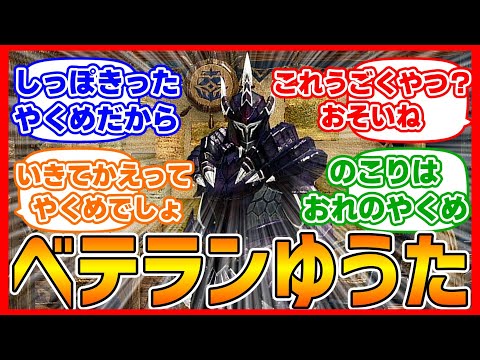
A long-standing Monster Hunter community meme about a character named “Yuuta” has undergone a dramatic reinterpretation. What was once a symbol of beginner mistakes is now understood as representing a skilled veteran hunter who deliberately takes support roles to educate newer players—a shift that reflects the maturation of gaming communities and generational change within the franchise.
What Happened
The Monster Hunter community has reframed its understanding of “Yuuta,” a character archetype that has existed since the early days of the franchise. Traditionally, Yuuta represented a novice hunter who fails at basic tasks—particularly failing to cut off monster tails—and becomes overwhelmed during hunts. However, a new interpretation has emerged, particularly following Monster Hunter: World, called “Light Attribute Yuuta.” This reimagining portrays Yuuta not as an incompetent beginner, but as an experienced veteran hunter who deliberately adopts a support role to educate newer players. The character now demonstrates advanced skills including paralysis ammunition management, stun timing optimization, and resource distribution—all while appearing to play a simple role.
Why It Matters
This reinterpretation reflects broader trends in gaming communities: the natural progression of player skill over time, the emergence of mentorship culture, and generational shifts within long-running franchises. Players who were children during Monster Hunter 4’s 2013 release are now adults, many of whom have become experienced hunters capable of guiding newcomers. The Yuuta archetype has evolved from a cautionary tale into a symbol of community maturity and the cyclical nature of gaming knowledge transfer. This shift demonstrates how gaming communities develop their own mythology and how that mythology adapts to reflect real-world player development.
Background
Monster Hunter has emphasized cooperative multiplayer since its 2004 debut, with teams of up to four players working together to hunt large monsters. The franchise has always encouraged role specialization and collaborative strategy. The “Yuuta” meme emerged organically from community forums and YouTube discussions as a way to describe common beginner mistakes. Over more than a decade, as the player base matured and new generations entered the franchise, the community began reinterpreting this archetype. The shift accelerated with Monster Hunter: World (2018) and its expansion Iceborne, which introduced larger player populations and more visible mentorship dynamics. The “Light Attribute Yuuta” concept represents the community’s recognition that experienced players were increasingly taking on educational roles.
Key Points
- Traditional Yuuta: A beginner hunter who fails at basic objectives like cutting tails and becomes a liability during hunts—a negative archetype representing common mistakes.
- Light Attribute Yuuta: A reinterpretation showing that skilled veterans deliberately adopt support roles, using paralysis ammunition, managing monster stun thresholds, and distributing resources to teach newer hunters.
- Advanced Support Skills: The new Yuuta demonstrates sophisticated gameplay including ammunition selection, crowd control management, stamina resource distribution, and strategic positioning—skills requiring hundreds of hours of experience.
- Generational Shift: Players who were children during Monster Hunter 4 (2013) are now adults, creating a natural cycle where former novices become mentors to current newcomers.
- Educational Intent: Light Attribute Yuuta teaches newer hunters critical skills: reading monster behavior, recognizing stun opportunities, managing resources, and understanding team role distribution.
- Community Maturation: The reinterpretation reflects how gaming communities develop sophisticated social structures and mentorship cultures as they age.
Timeline
- 2004: Monster Hunter launches, establishing cooperative multiplayer as core design.
- 2009: Monster Hunter Portable 2nd G era—early emergence of “Yuuta” as community meme describing beginner failures.
- 2013: Monster Hunter 4 releases; contemporary players are children who will later become experienced hunters.
- 2018: Monster Hunter: World launches with expanded player base; mentorship dynamics become more visible.
- 2022: Monster Hunter Rise: Sunbreak releases; “Light Attribute Yuuta” interpretation gains prominence as community reflects on generational change.
- 2024: Former Monster Hunter 4 players are now adults; the reinterpretation of Yuuta as a veteran mentor becomes widely accepted.
Perspectives
The Idealistic View: Light Attribute Yuuta represents the best of gaming communities—experienced players voluntarily taking time to educate newcomers, ensuring the franchise’s long-term health and creating positive social dynamics. This perspective sees the meme’s evolution as evidence of community maturation and the natural emergence of mentorship culture.
The Realistic View: While Light Attribute Yuuta is an aspirational ideal, many veteran players in actual Monster Hunter sessions do not prioritize teaching newcomers. The reinterpretation may represent what communities wish existed rather than what consistently occurs in practice. Traditional Yuuta—the incompetent beginner—still exists and remains a common experience in multiplayer sessions.
The Comparative Perspective: Similar mentorship dynamics appear across cooperative games. Dark Souls multiplayer features experienced players assisting novices; Final Fantasy XIV’s Roulette system pairs veterans with newcomers; and Monster Hunter: World’s multiplayer naturally creates teaching moments. The Yuuta evolution reflects a franchise-specific expression of a broader gaming phenomenon.
Insights
The transformation of Yuuta from a symbol of failure to a symbol of mentorship reveals how gaming communities construct and reconstruct their own mythology over time. The meme serves as a mirror reflecting the community’s self-perception and values. In its original form, Yuuta represented individual incompetence. In its evolved form, Yuuta represents collective responsibility and intergenerational knowledge transfer.
This evolution also illustrates a fundamental truth about long-running franchises: as player bases age, they naturally develop mentorship structures. The children who played Monster Hunter 4 in 2013 are now adults with hundreds or thousands of hours of experience. Their emergence as mentors is not a choice but an inevitable demographic progression. The Yuuta archetype captures this transition perfectly—it acknowledges that today’s veterans were yesterday’s novices, and that the cycle will continue as new players enter the community.
The community’s embrace of Light Attribute Yuuta also suggests a shift in how gaming communities value contribution. Rather than measuring success solely through individual performance metrics, the reinterpretation values teaching, support, and community sustainability. This represents a maturation of gaming culture itself, moving beyond purely competitive frameworks toward recognition of collaborative and educational roles.
Finally, the persistence and evolution of the Yuuta meme demonstrates the creative capacity of gaming communities to generate and refine their own cultural narratives. The meme has survived across multiple game generations, multiple platforms, and multiple player cohorts—not because it was created by developers, but because it genuinely reflects shared community experiences. This organic cultural evolution is one of the most valuable aspects of gaming communities and suggests that Yuuta will continue to evolve as Monster Hunter itself continues to develop.