▶ Watch the original YouTube video
Pikmin 4’s Mysterious Crash: Was It Really an Accident? A Deep Analysis of PNF404’s True Nature
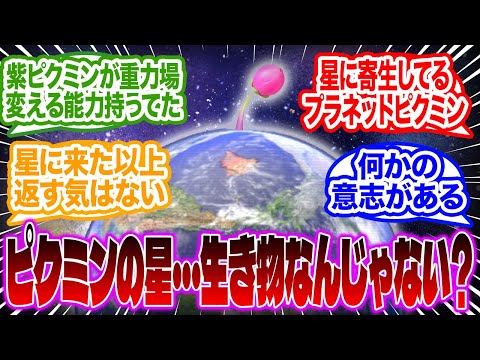
Multiple spacecraft have crashed on the mysterious planet PNF404 in Pikmin 4, yet official explanations remain incomplete. This analysis explores whether these incidents are genuine accidents or evidence of an intelligent force deliberately controlling events on the planet.
What Happened
Pikmin 4 presents a series of spacecraft crashes on PNF404, a mysterious planet. The Dolphin (piloted by Olimar), the Drake, and the Shepherd all experience unexplained landing incidents. While crew members generally survive, pilots undergo a bizarre transformation called “leafling conversion.” The game provides no official explanation for why these crashes occur or why pilots are specifically affected.
Why It Matters
The inconsistencies in Pikmin 4’s narrative raise important questions about game design, storytelling, and how developers embed deeper meanings within seemingly lighthearted titles. Understanding these narrative gaps reveals how Nintendo crafts complex themes beneath accessible gameplay. Additionally, this analysis demonstrates how gaming communities engage in collaborative interpretation and critical analysis of media.
Background
The Pikmin series began in 2001 on the GameCube, presenting a deceptively cheerful world of tiny creatures and exploration. However, the franchise has consistently hinted at darker undertones. Pikmin 4 intensified these elements by introducing multiple crash incidents and the unexplained leafling transformation phenomenon. The planet PNF404 itself remains largely mysterious, with its true nature never fully explained in official canon.
Key Points
- Pattern of Selective Damage: All three spacecraft crashes result in “conveniently” lost components—only the parts needed to prevent complete escape are damaged, suggesting deliberate intervention rather than random accident.
- Pilot-Specific Transformation: Only pilots undergo leafling conversion, while other crew members remain unaffected. This selective targeting indicates conscious selection rather than environmental hazard.
- Pikmin’s Hierarchical Nature: Pikmin require leaders (Onions) to function organizationally, suggesting they may actively seek new leadership figures and eliminate threats to their system.
- Light Pikmin’s Ambiguous Classification: Light Pikmin are explicitly stated to be classified “for convenience,” implying they may not be true Pikmin but rather a manifestation of PNF404 itself.
- Environmental Preservation: Treasures and structures remain inexplicably intact despite the planet’s apparent age, suggesting conscious maintenance by an intelligent force.
- Temporal Anomalies: The planet’s time structure shifts between visits, indicating possible manipulation of temporal mechanics by an aware entity.
Timeline
- 2001: Original Pikmin released on GameCube; series establishes the foundation of PNF404 lore.
- 2004-2009: Pikmin 2 and 3 expand the world but maintain surface-level explanations for phenomena.
- 2013: Pikmin 4 introduces multiple crash incidents and leafling conversion, deepening narrative mysteries.
- Present: Fan communities engage in detailed analysis of Pikmin 4’s hidden meanings and contradictions.
Perspectives
The Pikmin Hypothesis: Pikmin themselves may be the controlling force. As creatures requiring leadership, they could deliberately eliminate experienced pilots (who might resist their influence) while protecting newcomers who could serve as ideal new leaders. This represents an evolutionary strategy from the Pikmin’s perspective.
The Sentient Planet Theory: PNF404 itself may possess consciousness, similar to the planet Solaris from the Sega Saturn game of the same name. The planet could be selecting and testing visitors, maintaining environments, and manipulating time to achieve unknown objectives. The selective targeting of pilots and preservation of structures support this interpretation.
Light Pikmin as Planetary Manifestation: Light Pikmin’s ambiguous classification suggests they are not true Pikmin but rather direct manifestations of PNF404’s will. Their ability to function at night—transcending normal day-night cycles—indicates they operate outside standard biological constraints, supporting the theory that they represent the planet’s direct intervention.
Leafling Conversion as Assimilation: Rather than resurrection, leafling conversion may represent biological assimilation—the planet or Pikmin converting human consciousness into compatible forms. This parasitic-like process integrates visitors into PNF404’s ecosystem, explaining why converted individuals cooperate with the player afterward.
Game Design Perspective: Some analysts argue these elements reflect standard game design necessities rather than intentional narrative depth. Selective component loss ensures gameplay progression, and pilot-specific transformation creates narrative stakes. However, the precision of these mechanics suggests deliberate thematic integration.
Comparative Analysis
Similar narrative structures appear in other Nintendo titles. Fire Emblem: Three Houses presents surface-level conflict that masks deliberate manipulation by hidden forces. The Legend of Zelda: Majora’s Mask features a mysterious power controlling events while appearing as natural progression. These parallels suggest Nintendo intentionally embeds layered narratives within accessible games, rewarding deeper analysis.
Insights
Pikmin 4 appears designed to explore themes of coexistence with the unknown and acceptance of forces beyond human comprehension. Rather than presenting a simple rescue narrative, the game questions whether escape is truly possible or desirable. The ending, where players choose to coexist with PNF404 rather than escape, reinforces this theme.
The game’s narrative structure mirrors real-world challenges humanity faces: how do we coexist with systems and forces we don’t fully understand? PNF404 may represent nature, artificial intelligence, or any incomprehensible external force. By framing this through a seemingly innocent creature-collection game, Nintendo invites players to reconsider their assumptions about control, agency, and adaptation.
The community response demonstrates how modern gaming audiences engage in collaborative interpretation. Thousands of players have contributed theories, creating a shared analytical framework that extends the game’s meaning beyond its official text. This phenomenon reflects broader trends in how media is consumed and interpreted in the digital age.
If future Pikmin titles reveal PNF404’s true nature, the revelation could represent a significant moment in gaming narrative design—validating years of fan analysis and demonstrating that seemingly simple games can contain profound thematic complexity.